
Finding a bee colony in your attic is unsettling, and the instinct is to get rid of them as fast as possible. But if the colony is honeybees, killing them is usually the wrong call, both for the bees and for your house.
Why killing them backfires
A honeybee colony that’s been established for any length of time has built comb and stored honey, sometimes tens of kilograms of it. If the bees are killed but the comb is left in place, that honey has nothing holding it together anymore. It melts and seeps through drywall and insulation over the following weeks, leaving stains, odor, and a sticky mess that draws in ants, roaches, and other pests looking for an easy meal. You end up paying to fix damage the bees themselves never caused, and in a lot of cases that repair costs more than the removal would have in the first place.
The scale of the mess depends heavily on how established the colony was. A colony active for just a few weeks might have a small amount of comb and little stored honey, manageable if it does melt. A colony that’s been in place for a year or more, especially one that’s survived a winter, can have well over 9 kg of honey and a comb structure covering a few square metres of ceiling or wall cavity. That’s enough weight and volume that a botched extermination can mean not just staining but actual sagging or failure of the drywall it’s seeping through.
What removal actually involves
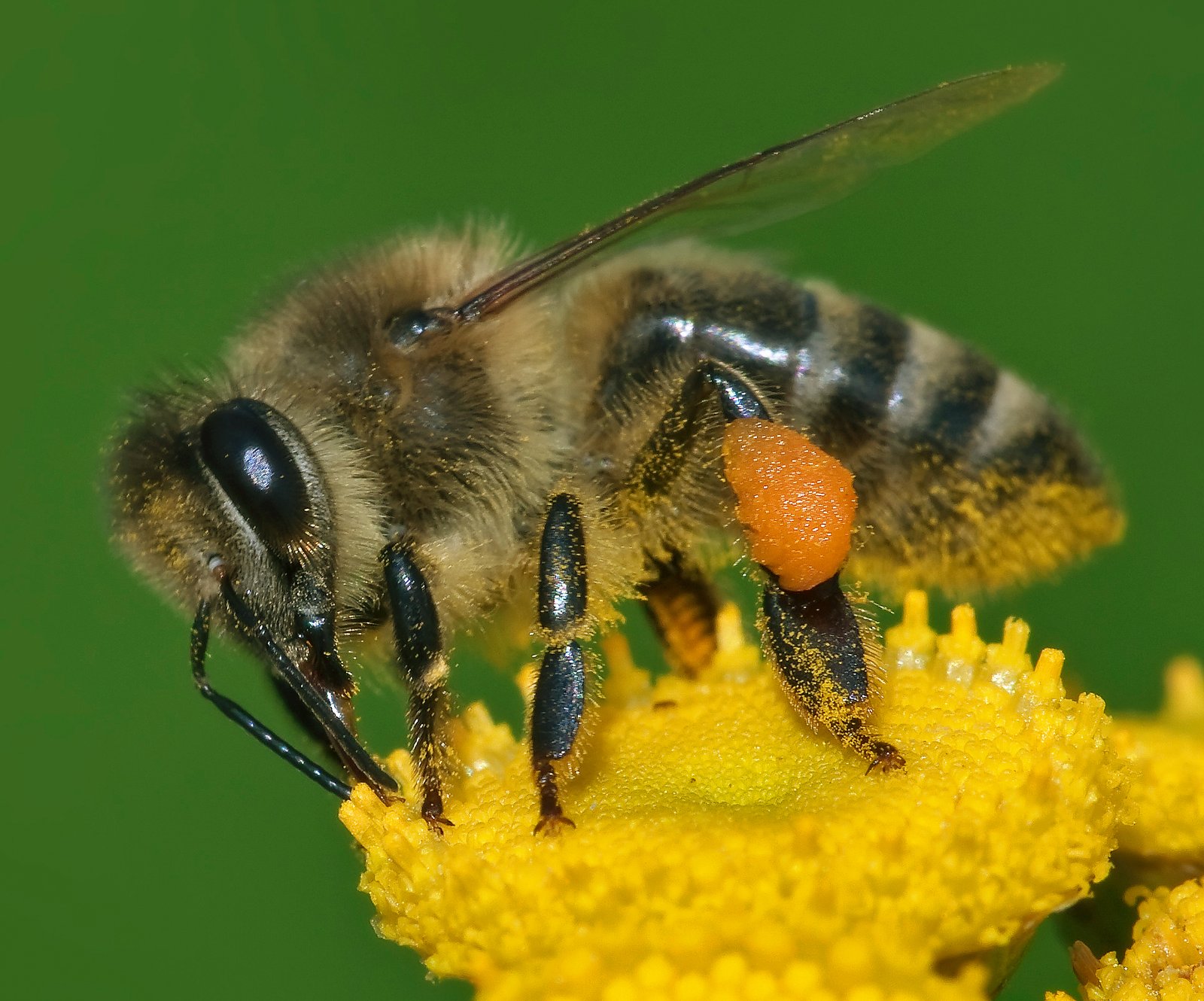
The first step is identifying what you’re dealing with. Honeybees are fuzzy, golden-brown, and build wax comb in visible layers. Bumblebees nest in small colonies, often in old rodent burrows or wall cavities, and rarely cause structural issues. Carpenter bees bore individual holes rather than colonizing a cavity. Each one calls for a different approach.
For an established honeybee colony, live removal means opening the affected section of wall or ceiling, cutting out the comb, and relocating the bees, often working with a local beekeeper who can rehome the colony. It’s more involved than spraying, but it’s the only method that actually solves the problem rather than just hiding it. A thorough job also includes removing every trace of wax and honey residue, since leftover comb scent can attract a new swarm to the same spot within a season or two.
Bumblebees need a different approach than honeybees
Because bumblebee colonies are much smaller than honeybee colonies, typically a few dozen to a couple hundred individuals rather than tens of thousands, and don’t store significant amounts of honey, they don’t carry the same structural risk. A bumblebee nest found in a wall cavity, an old rodent burrow, or under a shed can often simply be left alone until the colony naturally dies off in fall, since annual bumblebee colonies don’t persist through winter the way honeybee colonies do. If the location genuinely needs to be cleared right away, for renovation work or because it’s too close to a doorway, a bumblebee colony can generally be relocated with far less involved work than a honeybee cutout, since there’s no extensive comb structure to remove.
How to tell how established the colony is
A few bees investigating a gap under a soffit for a day or two might just be scouts checking out a potential site, not a colony yet. Consistent, heavy traffic in and out of the same opening over a week or more, especially paired with a faint buzzing sound audible from inside the room below, usually means a colony has already moved in and started building comb. The longer a colony has been established, the more comb and honey there is to deal with, which is part of why acting on early signs makes the eventual removal simpler and cheaper.
A note on protected species
In the UK and parts of Australia, certain native bee species have legal protections, and even honeybees are treated as valuable enough that many pest professionals default to removal over extermination as standard practice. It’s worth asking what your local regulations say before assuming extermination is even an option. In parts of the US, honeybee populations have also faced enough pressure in recent years that many local beekeeping associations will remove and rehome a colony at low or no cost, since a captured colony is a valuable addition to their own hives.
Common myths worth clearing up
A persistent myth is that honeybees found in a wall will eventually move out on their own if left alone long enough. They won’t, an established colony is building a permanent home, not a temporary one, and will keep growing and storing honey indefinitely unless something forces a change, a new queen swarming off with part of the colony, structural collapse of the space, or removal. Another common myth is that all bees found around a house are honeybees. Carpenter bees, bumblebees, and even some wasps get misidentified as honeybees regularly, and the removal approach genuinely differs between them, which is why correct identification matters before deciding on a course of action.
Don’t just seal the entrance
One more thing worth flagging: sealing up the entry hole without addressing the colony inside doesn’t work. Bees will often chew a new way out, sometimes into the living space, and a colony that dies inside a sealed cavity creates the same rot and secondary-pest problem as a poisoned one. The dead colony and abandoned comb still need to come out either way, sealing just delays the mess and makes it harder to find later.
What not to do
Don’t attempt a DIY spray treatment on an attic colony, especially with a store-bought wasp and hornet spray. These products aren’t designed for the volume of insects in an established honeybee colony, and disturbing the colony without fully eliminating it can provoke defensive behavior without solving anything. Don’t block the entrance at night thinking the bees will simply die off on their own either, a colony with stored honey reserves can survive for a surprisingly long time even if foraging is cut off. And don’t wait through an entire season hoping they’ll leave on their own, honeybee colonies are built to be permanent, not seasonal, so they generally don’t relocate voluntarily once established.
Timing matters for a smooth removal
Spring and early summer are when a lot of attic colonies get discovered, since that’s swarm season, when a colony that outgrew its previous location sends out a group to establish somewhere new. A colony found and removed early in the season, before it’s had months to build comb, is a much smaller job than one discovered in late summer or autumn after a full season of growth. If you’ve noticed increased bee activity around a soffit or roofline in spring, it’s worth a closer look before the colony has time to fully establish.
What to expect from a professional visit
A real inspection starts by confirming the species and estimating how long the colony has been active, usually based on the amount of visible comb and traffic patterns at the entrance. From there, the removal itself typically takes a few hours, opening the affected section, extracting comb section by section, and relocating the bees. Cleanup and repair of the opened area follow, along with treating the space to remove leftover pheromone and honey scent that could attract a future swarm.
What removal typically costs and how long it takes
Pricing for a honeybee cutout varies significantly based on colony size, how accessible the cavity is, and how much repair work follows, a colony behind an easily opened section of drywall costs considerably less to address than one requiring roof or extensive structural access. Most removals are completed in a single visit lasting a few hours, though very large, long-established colonies occasionally need a follow-up visit to confirm no residual bees or comb were missed. Because pricing depends so much on the specifics of a given job, a pest management company will typically need to see the location, or at least photos and a description of the traffic pattern, before quoting an accurate price, and most offer a free no-obligation quote for that initial assessment.
Quick questions
Can I just leave the colony alone if it’s not bothering anyone? An established honeybee colony in a wall cavity will keep growing indefinitely, and the honey and comb volume only increases the longer it’s left, making eventual removal more involved and more expensive the longer you wait. It’s rarely a problem that improves by waiting.
Will a beekeeper really take a wall colony for free? Many will, particularly for accessible cavities where comb can be removed largely intact, since a captured colony with existing comb is valuable to a beekeeper building out their own hives. Access difficulty and colony health affect this, so it’s worth asking rather than assuming either way.
If you’ve found bees in your attic, call us at 1-844-783-4821 and we’ll help you figure out what species you’re dealing with and the right way to handle it.