Services
Wasp & Hornet Control
Fast, safe removal of wasp and hornet nests — different pest, different approach than beehive removal, and not something worth handling yourself.
Natural, guaranteed pest control — free no-obligation quotes, no contract, safe around kids and pets.
Signs You Need This
How to tell it's time to call
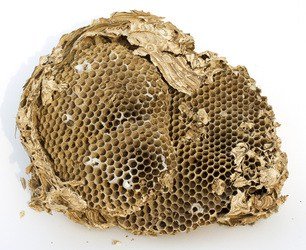
Visible nests under eaves, in sheds, or in trees — paper wasp nests look like an open honeycomb, hornet nests are enclosed and papery. Increased wasp activity around trash cans, outdoor food, or specific entry points into siding or the roofline. Ground-level holes with wasp traffic (often yellowjackets nesting underground). A nest near a door, patio, or high-traffic area is a call-today situation, not a wait-and-see one.
The Full Picture
Wasps and hornets aren't bees, and they don't get the same treatment. Where honeybees are protected and relocated whenever possible, wasp and hornet colonies (yellowjackets, paper wasps, bald-faced hornets) are aggressive, can sting repeatedly, and build nests in places that put people at real risk — eaves, sheds, wall voids, and underground burrows homeowners don't find until someone gets stung mowing the lawn.
As a pest control company, we identify the species and nest location first, since a paper wasp nest under a porch eave and a yellowjacket nest in a wall void need different approaches. Treatment is targeted to the nest itself, not a broad spray across your yard.
Our Approach
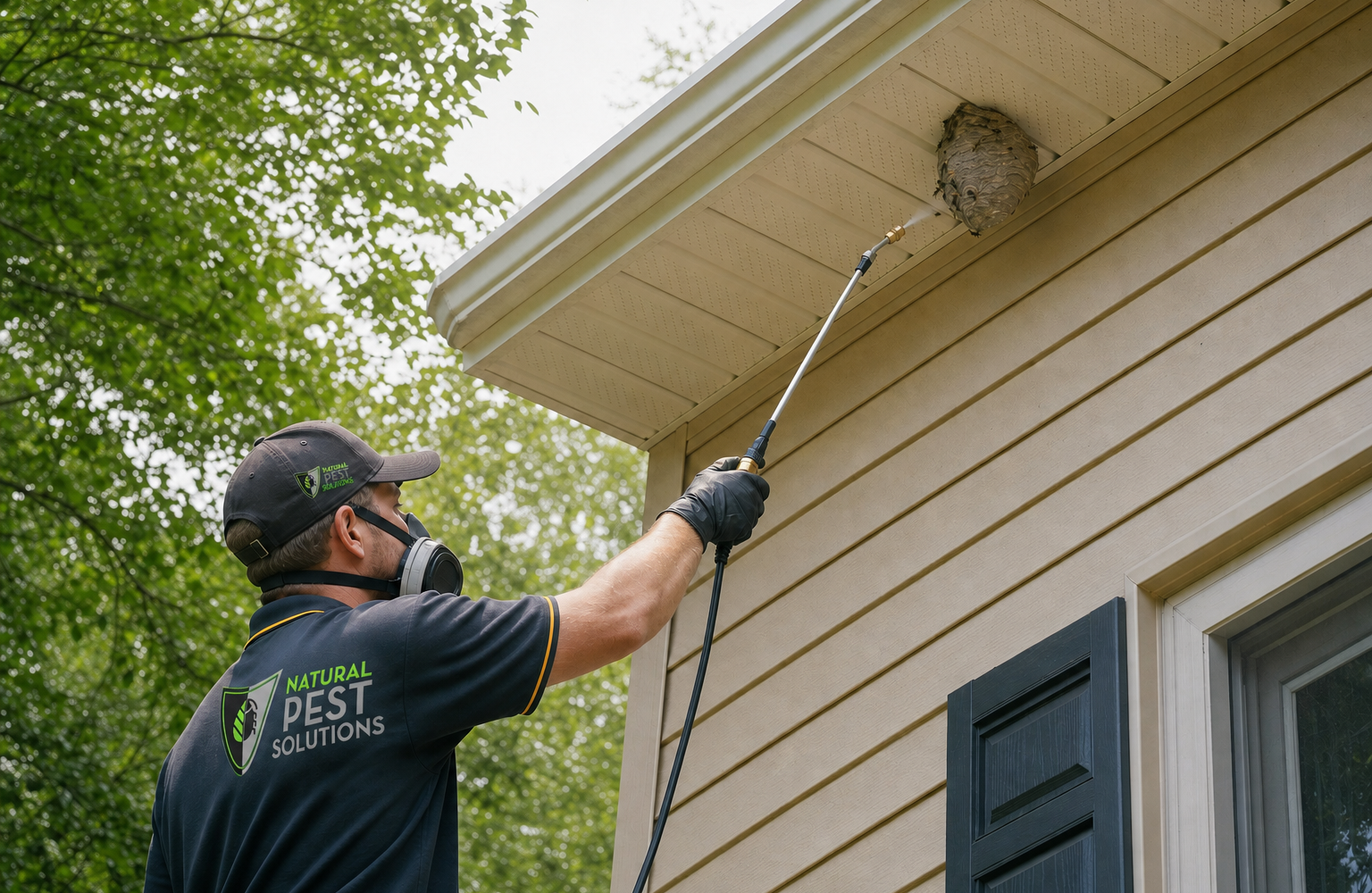
We treat and remove the nest directly, using methods matched to the species and location — not a blanket perimeter spray that leaves the nest itself active. Follow-up is included if activity continues, since a queen that survives will rebuild.
Satisfaction Guaranteed
If it's not gone, we come back — free.
Safe & Humane
Natural methods, safe around kids and pets.
No Contracts
Stay because it works — not because you're locked in.
The Details
Treatment Options & Products We Use
Treatment Options
Locating the nest is half the job. Visible nests under eaves or in trees are straightforward, but a large share of yellowjacket and hornet colonies build inside wall voids, attic spaces, or underground burrows where the entry hole is the only visible clue. We trace wasp flight paths back to their entry point and, for suspected void nests, use a stethoscope or thermal imaging to pinpoint where the colony sits inside the structure before opening anything up.
- Void nests (wall cavities, soffits, attic spaces): insecticidal dust is injected directly into the void through a small access hole, since dust clings to the nest surface and gets carried inward by returning workers, reaching the queen deep inside where a surface spray can't.
- Exposed nests (eaves, branches, porch rails): treated directly with a knockdown application, then physically removed once activity stops to prevent staining, odor, and secondary pests like dermestid beetles feeding on dead larvae.
- Ground nests (yellowjackets): treated at the burrow entrance in the evening when foragers have returned and activity is lowest, minimizing sting risk.
- Entry points on the structure are sealed after the colony is confirmed eliminated, since an old nest scent can attract a new colony to the same spot the following season.
Treatment timing matters as much as placement: we work at dusk or early morning when wasps are inside the nest and less defensive, which is safer for the technician and more effective against the colony as a whole, including the queen.
Products & Methods We Use
- Insecticidal dust formulations for wall voids and underground burrows, chosen because dust adheres to nest surfaces and gets tracked inward by the wasps themselves
- Aerosol knockdown foams for exposed, accessible nests
- Bulb dusters and extension applicators to reach voids and elevated nests without unstable ladder work
- Non-toxic, pet- and kid-safe application methods used whenever nest location allows, with stronger residual products reserved for void and underground nests where access is limited
- Protective bee suits, veils, and gloves for technicians working close to an active nest
- Exclusion sealant and foam to close entry points once the nest is confirmed inactive
- Targeted, nest-specific treatment rather than a blanket perimeter spray, since spraying the whole yard doesn't reach a colony hidden in a void
What Customers Say
Real reviews from our Google Business Profile.
“I am very happy with the service I received from Natural Pest Solutions, they took my call right away and came right out and inspected my home and found the source of my ant problem and since they were here I have not seen a single bug around. I would recommend these guys to anyone needing pest control services.”
Rick Gruenke — Google review
View on Google →“I am very happy with the results that Natural Pest Solutions was able to provide as far as the speed of their work and also the problem with ants in my home was able to be resolved quickly which gave me peace of mind. I would recommend this pest control company to anyone having issues with bugs.”
Stefano Merci — Google review
View on Google →Questions
Frequently Asked About Wasp & Hornet Control
How much does wasp or hornet nest removal cost?
Cost depends on the nest's size and location — a visible paper wasp nest under an eave is more straightforward than a yellowjacket colony in a wall void or underground burrow that takes more work to fully treat. Most single-nest removals run in the low-to-mid hundreds, with harder-to-reach nests or multiple colonies costing more.
Is wasp nest removal safe for kids and pets?
Removal itself is safe once it's done — the actual risk is beforehand, from an active nest near a door or patio, which is why we treat and remove the nest directly rather than a broad spray. We match the method to the species and nest location so the area is safe to use again quickly.
Should I remove a wasp nest myself?
We'd say no — this is exterminator work, not a DIY project. Yellowjackets and hornets can sting repeatedly, and nests in wall voids or underground burrows aren't visible from a can of spray on a ladder, which is how a lot of DIY attempts end up worse than when they started. A queen that survives a partial DIY treatment will just rebuild, so it becomes a repeat problem instead of a solved one.
How fast does wasp nest removal work, and will they come back?
Nest treatment typically stops activity within a day, since it's targeted directly at the nest rather than a general area. Follow-up is included if activity continues, because a surviving queen will rebuild — that's the scenario the guarantee is there for.
What are signs I have a wasp or hornet nest?
A visible nest under eaves, in a shed, or in a tree is the obvious one — paper wasp nests look like open honeycomb, hornet nests are enclosed and papery. Increased activity around trash cans or outdoor food, or ground-level holes with steady wasp traffic (usually yellowjackets nesting underground), are signs of a nest you haven't spotted yet.
What's the difference between wasp/hornet removal and bee removal?
Honeybees are protected in most places and get relocated whenever possible rather than exterminated, while wasps and hornets — yellowjackets, paper wasps, bald-faced hornets — are aggressive, sting repeatedly, and get treated and removed directly since there's no conservation reason to relocate them. Identifying which one you actually have matters before any treatment starts.
Learn More
Trusted resources on this topic
Guidance from health and regulatory bodies. In Canada, see Health Canada.
- National Pesticide Information Center ↗Pest-by-pest fact sheets from Oregon State University and the EPA.
- EPA: Controlling Pests ↗U.S. guidance on choosing and using pest control safely.
- Health Canada: Pesticides and Pest Management ↗Canadian guidance on pest control products.
Keep exploring
Related pest control services
Areas we serve
- Pest control in Lumberton
- Pest control in Merritt
- Pest control in Mesa
- Pest control in Naples
- Pest control in Nederland
- Pest control in North Scottsdale
- Pest control in Orangevale
- Pest control in Orillia
- Pest control in Paradise Valley
- Pest control in Phoenix
- Pest control in Pinnacle Peak
- Pest control in Port Neches
- Every location we serve
Ready to deal with it, for good?
Talk to a real expert — no pressure, no toxic chemicals, no contract required.
Recognized by the organizations that set the standard