There is nothing wrong with handling a single ant on the kitchen counter yourself. The trouble starts when a DIY fix gets applied to a problem that needed a different approach entirely, and by the time that becomes obvious, the pest has usually had weeks to settle in further.
Store-Bought Sprays Can Scatter, Not Solve
Many over-the-counter sprays are repellents rather than eliminators. Spray a visible ant trail and the colony often does not die, it splits. Worker ants sense the disruption and the colony relocates a portion of itself somewhere else in the wall or yard, sometimes making the problem harder to find and larger overall. The same pattern shows up with cockroaches: a spray that kills what you can see can push the rest of the population deeper into wall voids where no product reaches them.
This same splitting behavior, sometimes called budding, is one of the main reasons a homeowner can spray the same trail three or four times over a summer and still see ants a week later. Each spray kills the workers caught in the open, but a mature colony can have multiple satellite nests already, and a queen protected in one of them can rebuild the visible population faster than repeated surface treatments can knock it down. Wasps present a related but different problem: a spray aimed at a visible nest opening can agitate the colony without reaching the workers inside, which is how a manageable single-nest situation turns into a stinging incident. Products aren’t the enemy here, they’re doing exactly what the label says. The mismatch is between a contact spray built for individual insects and a nest structure built to survive exactly that kind of disruption.
Why This Pattern Keeps Repeating
Most consumer products are labeled and designed around killing individual insects on contact, which is a reasonable goal for a single spider or a stray beetle, but not for a colony-based pest with hundreds or thousands of members and multiple nest sites. The label doesn’t lie about what the product does, it’s just solving a smaller problem than the one most people actually have. That mismatch between the tool and the scale of the problem is where most DIY attempts go wrong, not the effort behind them.
Misidentifying the Pest
Carpenter ants and termites cause very different kinds of structural damage and need completely different treatments, but they are easy to mix up if you are not looking closely. Treating a termite problem with an ant product wastes time on a problem that is quietly getting more expensive every week it goes untreated.
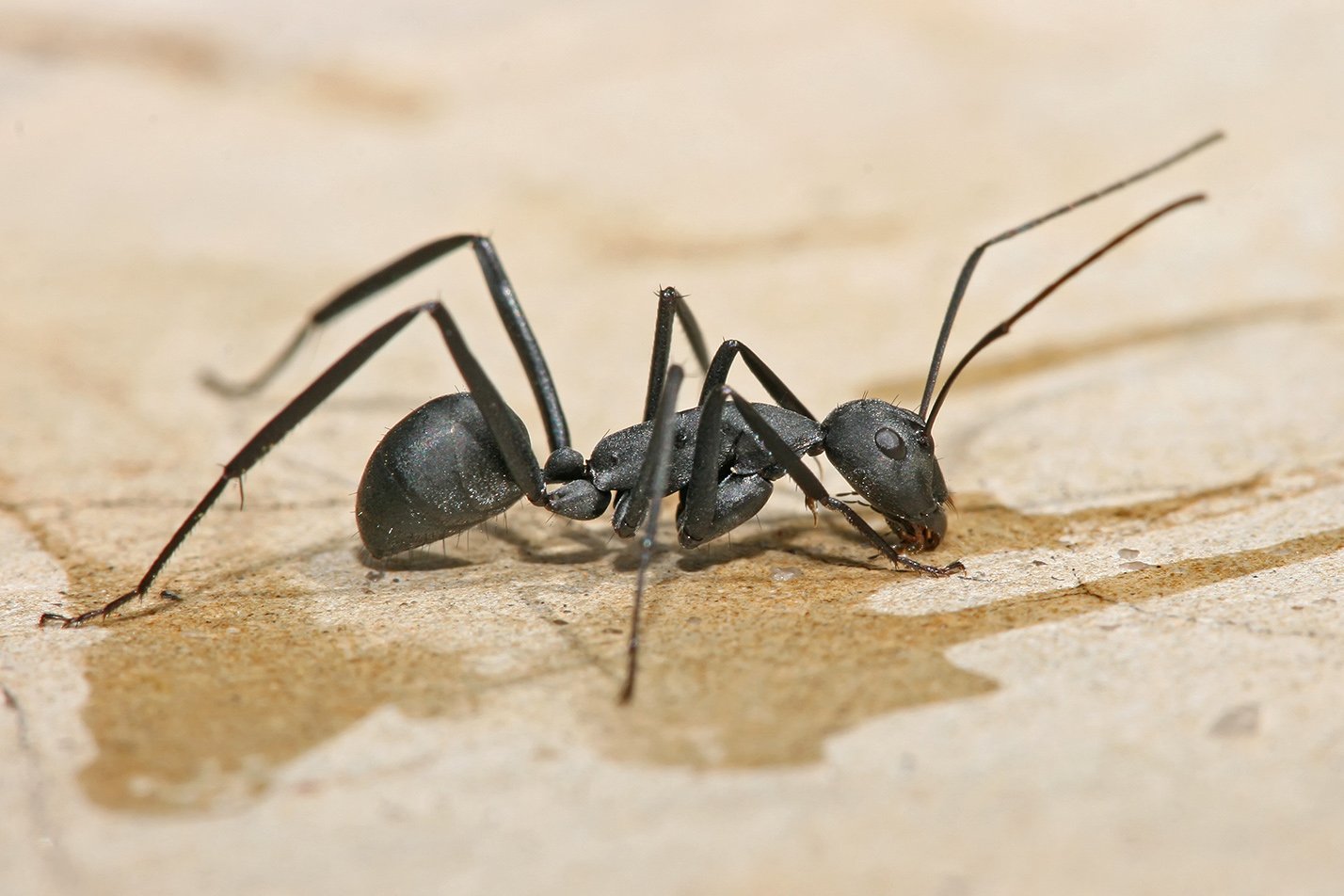
A few details help tell them apart before you buy the wrong product. Carpenter ants have a pinched, narrow waist, bent antennae, and wings of unequal length if they’re swarmers, and the wood they hollow out is smooth and clean inside because they excavate galleries rather than eat the wood itself, leaving small piles of sawdust-like frass pushed out near the damage. Termite swarmers have a straight, thick waist, straight antennae, and wings of equal length, and the damage they leave behind looks layered along the wood grain with mud tubes often visible along foundations or support posts. If you’re finding wings shed near windowsills but no sawdust piles, that points toward termites, and a carpenter ant bait probably won’t touch the actual problem.
Bed Bugs Are Especially Unforgiving
This is the category where DIY attempts go wrong most often. Bed bugs hide in seams, outlets, and baseboards well beyond the mattress itself, and an incomplete treatment does not reduce the population, it teaches the survivors to avoid whatever was used on them. We regularly see cases where an early DIY attempt made the eventual pest controller’s treatment take longer, because the bugs had dispersed into more of the room.
Why Foggers and “Bug Bombs” Rarely Solve the Problem
Total-release foggers are the single most common DIY mistake with bed bugs specifically. The fogger fills open air space with insecticide, but bed bugs spend most of their time flattened into cracks, seams, and voids the fog never reaches, and the fumes themselves can trigger the insects to scatter further into the room, into neighboring outlets, or through shared walls in an apartment. Foggers can also leave residue on surfaces that later complicates a professional treatment, since some products interact poorly with the targeted methods a pest management company would otherwise use. The same limitation applies, to a lesser degree, with roaches and pantry pests: a fogger kills what’s exposed in open air at the moment it’s set off and does little for anything tucked into a void, under an appliance, or inside a wall.
Rodents and the Sealing Problem
Snap traps can work for a small mouse presence, but if the entry point never gets found and sealed, you are removing individuals from a population that keeps replacing itself. Mice can squeeze through a gap the width of a pencil, and most homes have more of those gaps than an untrained eye will catch on a walk-through. Trapping without sealing is a bit like bailing water out of a boat without patching the leak, it works for a while, and then it doesn’t.
Bait stations bring their own set of DIY mistakes. Placing anticoagulant bait in the open, rather than in a locked or tamper-resistant station, creates a real risk for pets and, outdoors, for the birds of prey and other wildlife that can pick up a secondary dose from eating a poisoned rodent. Trap placement matters too: mice travel along walls and rarely cross open floor space, so a trap set in the middle of a room usually catches nothing, while the same trap set flush against a wall, perpendicular to the baseboard, has a far better chance. A trap that goes untouched for a week or two doesn’t necessarily mean the mice are gone, it often means the placement missed their actual travel path.
What This Actually Costs You
The real cost of a failed DIY attempt usually isn’t the product itself, it’s the time. Every week a colony-based pest goes untreated, it grows, and every week a bed bug population gets to disperse further into a room, the eventual treatment area gets larger. What would have been a single-room job at week one can become a whole-apartment job by week six, not because the pest got smarter, but because it had more time to spread while a store-bought fix quietly didn’t work.
The same logic applies in reverse for termites and carpenter ants: the damage those pests cause is cumulative and mostly hidden behind drywall, so the cost of a delay is not just a bigger treatment later, it’s structural repair that wasn’t necessary if the colony had been addressed sooner. A pest controller’s assessment fee is small compared to replacing a damaged sill plate or sub-floor section, which is the kind of cost that a few extra weeks of misidentified treatment can turn from theoretical into real.
Where DIY Genuinely Makes Sense
None of this means every pest needs a pest control contractor. A few pantry moths, an isolated spider, or general seasonal ant activity around an exterior door are reasonable to handle on your own with basic natural methods. The line to watch for is repetition: if you have tried the same fix twice and the pest is still there, that is usually a sign the underlying source or entry point has not actually been addressed. At that point, a proper assessment, not another spray, is what actually resolves it.
A Quick Gut Check
Have you treated the same spot more than once? That’s usually the clearest sign the problem is bigger than the visible activity.
Do you know exactly where they’re getting in or nesting? If not, any treatment is working with incomplete information.
Has it been more than two to three weeks with no real change? That’s the point where a second opinion tends to save more time than it costs.
Frequently Asked Questions
Why did the pest come back after I thought it was gone? In most cases it never fully left. A treatment that kills visible activity without addressing the nest, colony, or entry point usually just knocks the population back temporarily, and it rebuilds once the product’s effect wears off.
Can I mix leftover products from a past problem to treat something new? This is worth avoiding. Different pests respond to different active ingredients and application methods, and combining unrelated leftover products is both unlikely to work and, in some cases, unsafe to use together.
Is it too late to call a professional if I’ve already tried DIY methods? No, and it’s common. A pest professional can usually work with what’s already been tried, and knowing what didn’t work is actually useful information for figuring out where the actual nest or entry point is.
A Note on Natural and Low-Toxicity Options
DIY doesn’t automatically mean harsh chemicals, and hiring a pest professional doesn’t mean giving that up either. Diatomaceous earth, properly placed bait stations, and targeted exclusion work can all be part of a sound approach, DIY or professional. The failure point usually isn’t the philosophy behind the method, it’s applying a surface-level fix to a problem that needed the source addressed, whether that source is an entry point, a moisture issue, or a colony you never actually found.
Food-grade diatomaceous earth is a good example of a method that works well when used correctly and does very little when it isn’t. It needs to stay dry to work, since it kills insects by damaging their outer waxy layer through abrasion and dehydration, not through a chemical mechanism, which means it loses effectiveness quickly in humid conditions or after it gets damp from cleaning or cooking activity nearby. A light, even layer in cracks and voids works better than a heavy visible pile, which pests will often just avoid walking through.
What This Looks Like Across Different Homes
An apartment with a shared wall to a neighbor’s unit has different DIY limits than a detached house, since a pest problem next door can reintroduce whatever you just treated. Older homes with more settling and more gaps around foundations and utility lines tend to have more undiscovered entry points than newer construction, which is part of why the same DIY approach that worked in one house might quietly fail in another. It’s rarely about the product being used wrong, it’s about the house presenting a different set of conditions than the last one.
Seasonal Timing Makes DIY Harder Than It Looks
Spring swarming season is when carpenter ant and termite mix-ups happen most, since both species tend to release winged reproductives around the same warm, humid stretch of weather, and a homeowner reacting to a sudden cluster of flying insects rarely has time to identify them carefully before reaching for whatever’s under the sink. Late summer and early fall bring a different problem: rodents and some overwintering pests start moving toward structures as temperatures drop, and DIY exclusion attempted after they’re already inside just traps the population with you rather than keeping it out. Addressing gaps and entry points in late summer, before the seasonal push indoors starts, generally gets better results than reacting once activity is already showing up inside.
Give us a call at 1-844-783-4821 if you are past that point and want it done right the first time, or ask about a free no-obligation quote if you’d rather start with an assessment before committing to a treatment plan.