Services
Termite Control
Subterranean and drywood termite treatment that protects your home's structure — natural-first, guaranteed, and safe for the people and pets who live there.
Natural, guaranteed pest control — free no-obligation quotes, no contract, safe around kids and pets.
Signs You Need This
How to tell it's time to call
Mud tubes running along your foundation or crawl space walls. Wood that sounds hollow when you knock on it. Discarded wings near windowsills after a swarm. Paint that looks bubbled or cracked for no clear reason. If you're seeing any of these, the damage is usually further along than it looks from the outside.
The Full Picture
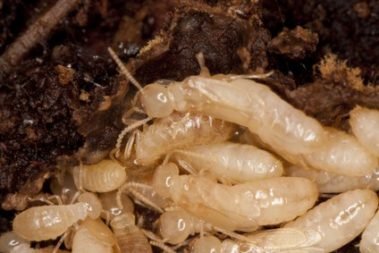
Termites don't announce themselves. By the time most homeowners notice a problem, colonies have often been active for months or years. We treat subterranean and drywood termites with a natural-first approach — targeted barrier and bait treatments that interrupt colony activity without blanket-spraying your home in chemicals you don't want your kids or pets anywhere near.
Every treatment starts with a real inspection, not a guess. As your exterminator, we identify the species, map the activity, and treat the actual problem — not just the room you happened to see damage in.
Our Approach
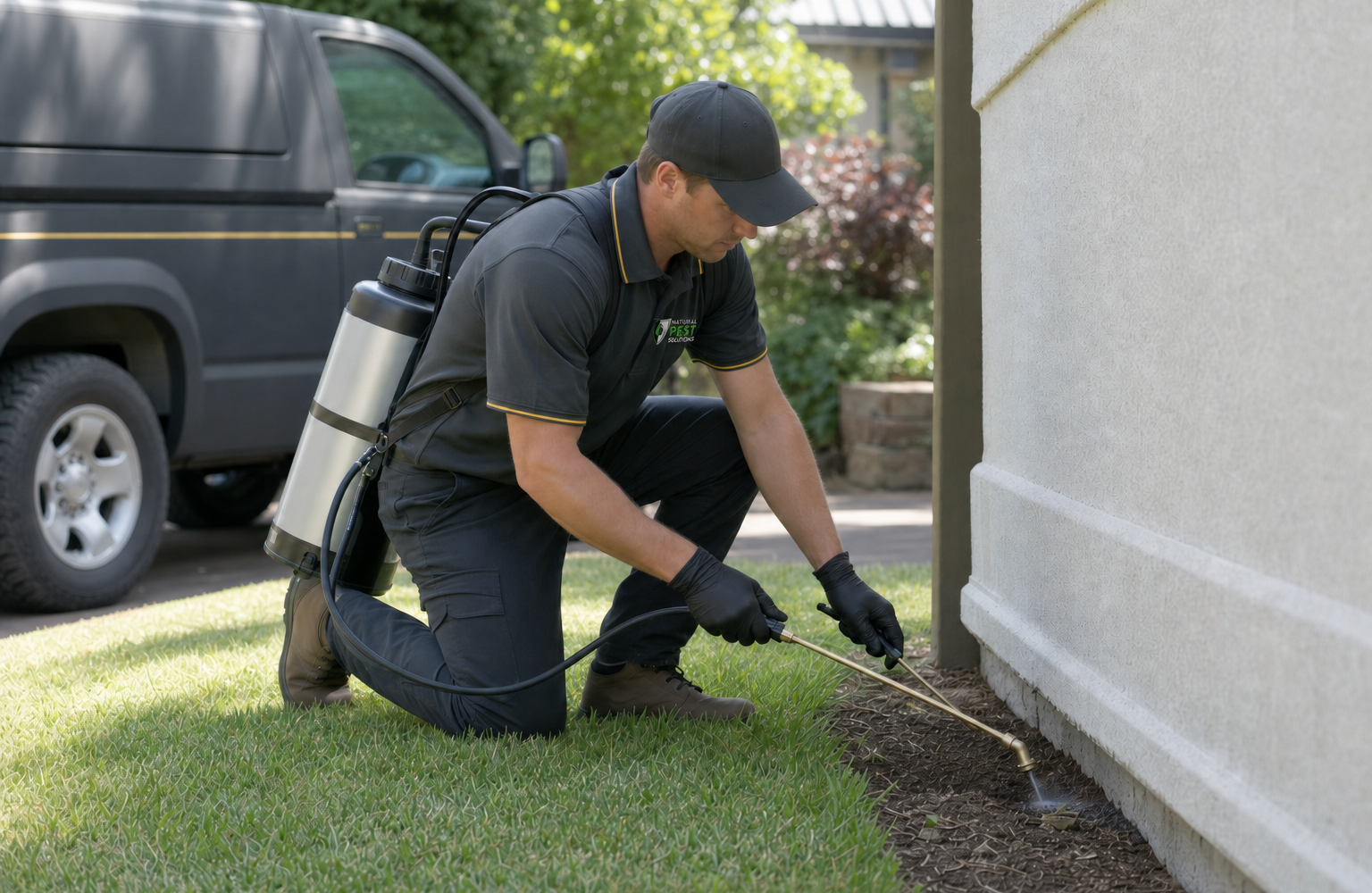
Natural doesn't mean weaker. It means targeted: as fumigators, we treat where the colony actually is, monitor it, and stand behind the result. If activity returns within the guarantee period, we come back and treat it again at no charge.
Satisfaction Guaranteed
If it's not gone, we come back — free.
Safe & Humane
Natural methods, safe around kids and pets.
No Contracts
Stay because it works — not because you're locked in.
The Details
Treatment Options & Products We Use
Treatment Options
Subterranean and drywood termites are structurally different problems, so the treatment plan branches early based on which one the inspection confirms. For subterranean termites, we work along the foundation perimeter and soil contact points, since that's the only path the colony has into the structure. For drywood termites, treatment has to reach inside the wood itself, since the colony never touches soil at all.
- Subterranean: a continuous treated zone is established in the soil along the foundation, either by trenching and rodding around the perimeter or by installing in-ground bait stations spaced at set intervals; stations are checked and refreshed on a recurring monitoring schedule until activity stops.
- Drywood: localized galleries get direct injection or foam treatment into the wood, targeting the specific section of framing, siding, or trim where activity was confirmed rather than the whole structure.
- Severe or widespread drywood cases that span multiple structural members may call for whole-structure fumigation, though most localized infestations don't require it.
- Follow-up monitoring visits track bait station activity or check treated wood for renewed frass and tubes, since termite colonies can take weeks to fully respond to bait.
Scope always follows the inspection: a single mud tube on an exterior slab gets a different response than active galleries found in three separate rooms, and the plan is scaled to match what's actually found rather than applying a fixed package to every job.
Products & Methods We Use
- EPA-registered non-repellent liquid soil termiticides for perimeter and foundation treatment
- In-ground bait stations with cellulose monitoring cartridges, checked on a recurring schedule
- Borate-based wood treatments for exposed or accessible framing as a preventive barrier
- Foam or direct-injection termiticide for treating galleries inside drywood-infested members
- Moisture meters and, where needed, infrared inspection tools to locate hidden activity behind walls and under flooring
- Whole-structure fumigation, reserved for extensive drywood infestations that localized treatment can't reach
Product choice depends on species and how far activity has spread, which is why the inspection findings drive the treatment plan rather than a standard package applied to every job.
What Customers Say
Real reviews from our Google Business Profile.
“Great company to deal with. They were courteous and they kept their appointment time to deal with my pest control problem. And they gave me a report of things I could do myself to help keep the pests away.”
Marlon Meginbir — Google review
View on Google →“Excellent advice and treatment of carpet beetles. Would recommend them.”
Kathleen Boulanger — Google review
View on Google →Questions
Frequently Asked About Termite Control
How much does termite treatment cost?
Cost depends on whether it's subterranean or drywood termites, how large the affected area is, and whether bait stations, barrier treatment, or both are needed. A single-structure treatment typically runs from several hundred to over a thousand dollars depending on scope, and the inspection that comes first is what determines the real number rather than a guess over the phone.
Is termite treatment safe for kids and pets?
Yes — we use targeted barrier and bait treatments rather than blanket-spraying the whole home, which keeps exposure minimal for kids and pets. Because the natural-first approach targets where the colony actually is instead of treating every room, there's far less chemical footprint than older whole-house fumigation methods.
Can I treat termites myself?
Store-bought termite treatments can knock back visible activity temporarily, but termites often go unnoticed for months or years before damage shows, and DIY products rarely reach or map the full colony. Professional treatment starts with an inspection that identifies the species and maps activity, which determines whether bait or barrier treatment is the right call.
How long does termite treatment take, and how long does it last?
Barrier and bait treatments typically start interrupting colony activity within a few weeks, though full colony elimination with bait systems can take a few months since it depends on termites carrying the treatment back to the colony. Results are monitored, and if activity returns within the guarantee period, we come back and treat it again at no charge.
What are the early signs of termites?
Mud tubes running along the foundation or crawlspace walls, wood that sounds hollow when tapped, discarded wings near windowsills after a swarm, and paint that looks bubbled or cracked for no clear reason are the main things to watch for. By the time most of these are visible, the colony has usually been active for a while.
What's the difference between subterranean and drywood termites?
Subterranean termites live in the soil and build mud tubes to travel into a structure, so treatment focuses on the ground and foundation contact points; drywood termites live entirely inside the wood itself with no soil contact, so treatment has to target the wood directly. Knowing which one you have changes the entire treatment plan, which is why species identification during the inspection matters.
Learn More
Trusted resources on this topic
Guidance from health and regulatory bodies. In Canada, see Health Canada.
- National Pesticide Information Center ↗Pest-by-pest fact sheets from Oregon State University and the EPA.
- EPA: Controlling Pests ↗U.S. guidance on choosing and using pest control safely.
- Health Canada: Pesticides and Pest Management ↗Canadian guidance on pest control products.
Keep exploring
Related pest control services
Areas we serve
- Pest control in Tucson
- Pest control in Vancouver
- Pest control in Vernon
- Pest control in West Kelowna
- Pest control in Abbotsford
- Pest control in Apache Junction
- Pest control in Archway
- Pest control in Armstrong
- Pest control in Barrie
- Pest control in Beaumont
- Pest control in Berwick
- Pest control in Brisbane
- Every location we serve
Ready to deal with it, for good?
Talk to a real expert — no pressure, no toxic chemicals, no contract required.
Recognized by the organizations that set the standard