This is one of the most searched bed bug questions there is, and the short answer is yes, but with enough caveats that it rarely holds up as a real solution.
Why It Kills on Contact
Isopropyl alcohol dissolves the waxy outer layer of a bed bug‘s exoskeleton, causing it to dehydrate and die. Sprayed directly on a bug, it works within minutes. That is where most of the online advice stops, and it is also where the problems start.
The Contact-Only Limitation
Alcohol has zero residual effect. It kills what it physically touches and does nothing to bugs or eggs hiding in the dozens of other places a bed bug population spreads to, mattress seams, box spring corners, headboard joints, baseboards, and behind outlet covers. A homeowner spraying visible bugs is realistically treating a small fraction of the actual population, and bed bugs are notorious for hiding in places people do not think to check.
Eggs Survive More Often Than You Would Expect
Bed bug eggs are more resistant to alcohol than adults, particularly if the spray does not fully saturate the egg’s surface. A treatment that looks successful can leave viable eggs behind, which hatch within one to two weeks and restart the cycle, often while the homeowner believes the problem is solved. A single female can lay one to several eggs a day over her lifespan, so even a handful of survivors is enough to rebuild a population within a couple of months.
The Real Risk: Fire
Isopropyl alcohol is highly flammable, and this is not a minor caveat. House fires linked to DIY bed bug treatments with alcohol have been documented by fire departments in multiple regions, usually when alcohol was sprayed near a pilot light, space heater, or even a nearby electrical outlet. Spraying it liberally across a mattress, in an enclosed bedroom, is a genuinely dangerous combination, not just an inconvenience if it does not work.
How Flammable Is It, Really?
The flash point of isopropyl alcohol sits around 12°C, well below normal room temperature, which means the vapor coming off a freshly sprayed mattress can ignite from a source that never touches the liquid itself: a pilot light across the room, a space heater cycling on, static electricity, or a wall switch being flipped. Spraying an entire mattress or box spring saturates a large surface area and fills an enclosed bedroom with vapor, which is a different situation than wiping a small spot with an alcohol swab. Fire departments have documented house fires and serious burns tied directly to DIY bed bug treatments using rubbing alcohol, often in bedrooms with a space heater running overnight, which is exactly the kind of ordinary household setup that makes this more than a theoretical risk.
Why people reach for it anyway
Alcohol is cheap, it’s already under most bathroom sinks, and watching a bug die on contact feels like progress. That immediate feedback is exactly why it’s such a persistent piece of advice: it looks like it’s working in the moment you use it, even though the population as a whole is barely dented. The same logic applies to a lot of contact-kill DIY methods, which is worth keeping in mind before spending a weekend spraying a bedroom down.
What NOT to do
- Don’t spray alcohol, or any flammable liquid, near an outlet, space heater, or any open flame source in the room.
- Don’t treat a mattress as “done” because you can’t see bugs on the surface; the population living in seams and joints is usually the larger share.
- Don’t skip washing and heat-drying bedding and clothing on the assumption that surface spraying reached everything.
- Don’t move infested furniture to another room “just to be safe,” since that’s one of the most common ways an infestation spreads to a second room.
Other DIY methods that share the same problem
Alcohol isn’t alone here. Diatomaceous earth kills bed bugs slowly through dehydration, but it needs to be applied precisely to cracks and seams and takes days to weeks to show results, during which the population keeps reproducing. Essential oil sprays marketed as natural bed bug killers generally share alcohol’s contact-only limitation without alcohol’s fast knockdown. None of these are useless as one piece of a larger plan, but none of them, alone, get ahead of an established infestation the way heat and thorough mechanical treatment do.
What Actually Works
Heat treatment is the gold standard for bed bugs because it reaches the hiding spots alcohol cannot, raising the temperature of an entire room high enough to kill bugs and eggs at every life stage in one pass. Targeted natural treatments combined with thorough vacuuming, steam on seams and joints, and mattress encasements address both the visible population and the places it is hiding. A mattress encasement left sealed for about a year, since bed bugs can survive many months without feeding, also traps and starves out anything left inside rather than letting it re-emerge later.
Cost and Timeline: What to Expect
A bottle of rubbing alcohol costs a few dollars and feels free by comparison to hiring help, but that comparison only holds if it actually solves the problem, and for an established infestation it usually does not. Professional heat treatment for a single bedroom typically runs from a few hundred dollars up into four figures depending on the size of the space and the extent of the infestation, and most jobs are completed in a single day since the heat reaches every hiding spot in one pass. Chemical or combination treatments plans often take two to three visits spaced a couple of weeks apart to catch newly hatched eggs, stretching the timeline to four to six weeks before a home is confidently clear. Compare that to the alcohol approach: a homeowner might spend several weekends over two or three months respraying visible bugs, washing bedding repeatedly, and still find new bites, all while the population keeps reproducing in the seams that were never treated. The upfront cost is lower, but the total time, laundry, and stress spent chasing a problem that keeps coming back often outweighs the savings.
A couple of common questions
Can I use alcohol as a stopgap while waiting for treatment? Spot-treating a bug you can actually see won’t hurt, but skip saturating fabric or furniture, and never use it near any heat or spark source.
Does alcohol work on eggs at all? Only with direct, thorough saturation, which is difficult to achieve reliably since eggs are often tucked into seams where spray doesn’t fully reach.
Will alcohol at least keep bed bugs from spreading to other rooms while I figure out next steps? Not reliably. Alcohol has no residual effect, so it does not create a barrier bugs avoid, and spraying doorways or baseboards as a deterrent gives a false sense of security. The better stopgap is isolating infested furniture in place, bagging washable items for hot laundering, and avoiding moving anything until you have a plan.
Is there a safer alcohol-based product made for bed bugs? Some registered pesticide products use alcohol or similar solvents as part of a formulated, tested mixture rather than straight rubbing alcohol, and those carry EPA registration numbers and label instructions for a reason. Straight isopropyl alcohol from the bathroom cabinet was never tested or labeled for this use, which is a meaningful difference even though both are technically “alcohol.”
If you are dealing with an active infestation, skip the alcohol bottle and have it assessed properly. It is faster, safer, and it does not risk your house in the process. Call 1-844-783-4821 if you want a straight read on what you’re dealing with before you try anything else.
How to know if it’s actually bed bugs
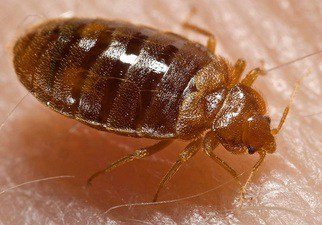
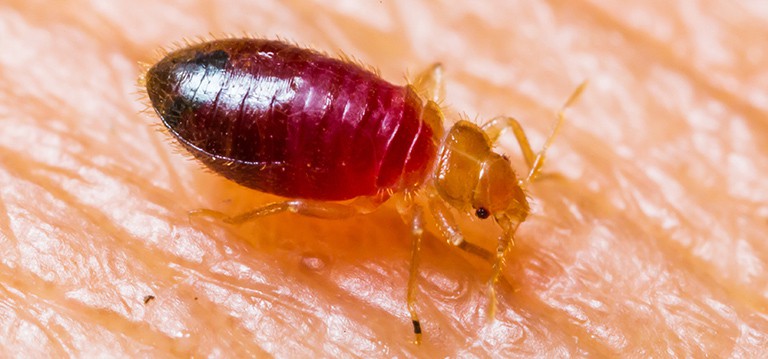
Small reddish-brown insects roughly the size and shape of an apple seed, found in mattress seams or furniture joints, are the clearest confirmation. Rusty spotting on sheets from crushed bugs or fecal marks, and small clusters of bites appearing in a line or cluster on skin after sleeping, are both common secondary signs, though bite reactions vary enough from person to person that they shouldn’t be the only thing you go on. If you’re unsure, a pest professional’s inspection is a faster way to confirm than trying to catch a bug in the act.
DIY vs. Professional: A Realistic Line
A single bug spotted on a mattress after a recent hotel stay or secondhand furniture purchase is reasonable to monitor yourself: wash and heat-dry bedding, vacuum thoroughly, and inspect seams over the next couple of weeks for any sign of spread. Once you are finding bugs in multiple locations, seeing bite clusters on more than one household member, or the problem has been going on for more than a few weeks despite cleaning efforts, that is the point where a pest control professional’s tools, thermal cameras, canine inspection, and access to properly labeled products, will get ahead of the problem faster and more safely than another round of spot treatments. Waiting rarely improves the odds with bed bugs, since the population grows the entire time you are experimenting with contact-kill methods.