
Most people’s first move when they spot bugs in the kitchen or bathroom is to grab whatever spray is under the sink. It’s understandable, but it usually treats the symptom, not the cause, which is why the same bugs tend to show up again a few weeks later.
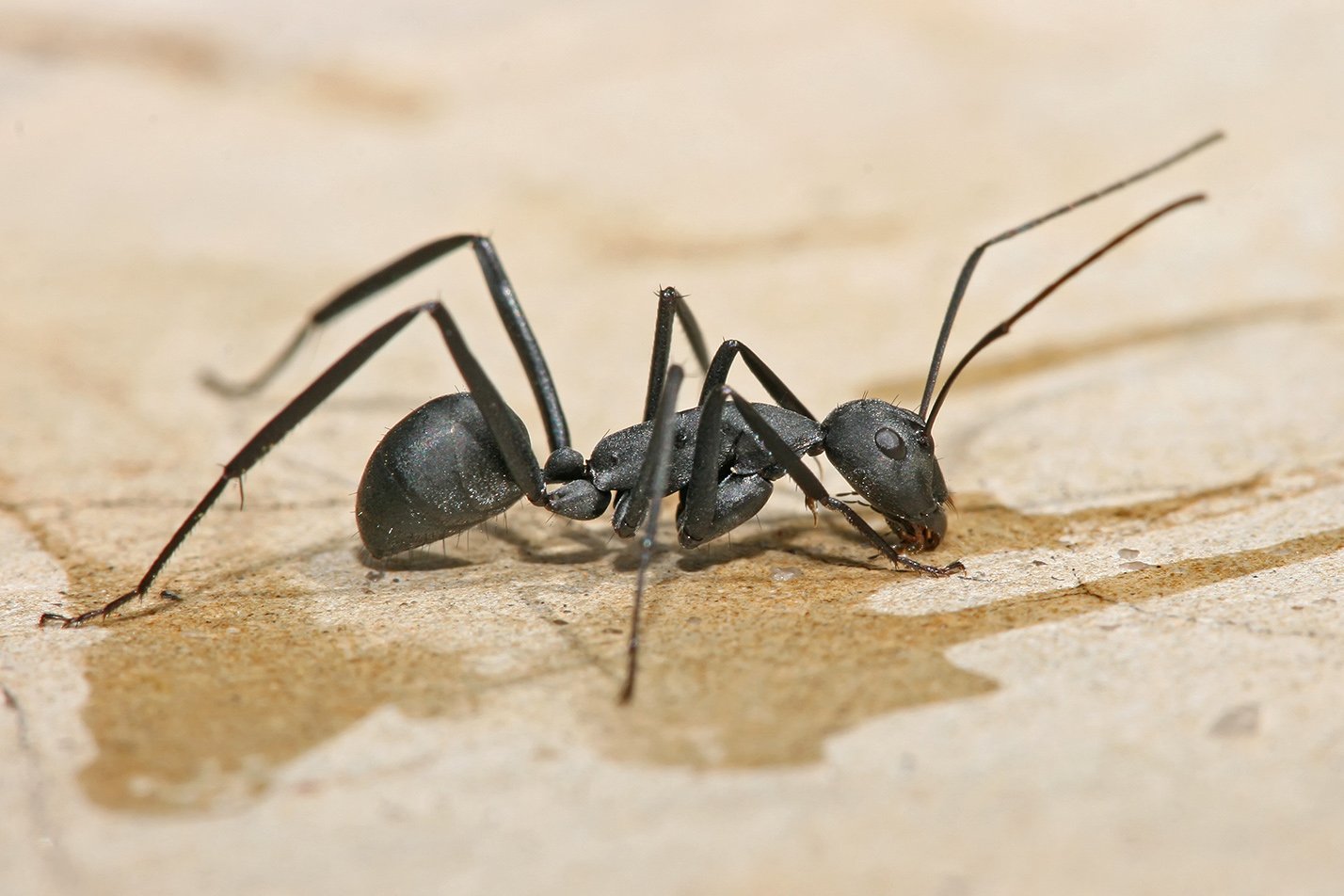
Figure Out What You’re Looking At
Ants, cockroaches, silverfish, and earwigs all get lumped together as “bugs,” but they behave very differently and respond to different fixes. A trail of small ants along a windowsill points to a food or moisture source nearby. A cockroach spotted in daylight usually means a larger population is already established, since they’re normally nocturnal. Silverfish favor damp, dark spots like basements and bathrooms. Earwigs tend to come in from mulch beds and damp soil close to the foundation and rarely establish a real indoor population, so a few near a door usually means an outside condition rather than an inside infestation. Knowing which one you’re dealing with changes everything about how you respond.
A Quick Way to Narrow It Down
- Seen mostly in the kitchen, especially near water or food? Ants or roaches are the most likely culprits.
- Seen mostly in a bathroom or basement, especially somewhere damp? Silverfish or sowbugs are common there.
- Seen mostly near doors or window frames after rain? Earwigs or ants coming in from outside are typical.
- Active during the day when you’d expect them to hide? That’s often a sign of a larger population than what you’re actually seeing.
Look for the Reason They’re There
Bugs show up for one of three reasons: food, water, or shelter. Check under sinks and around appliances for leaks, since a slow drip under the dishwasher can support a colony of pests for months without you noticing. Look at how food is stored, whether pet food is left out overnight, and where crumbs collect. Then check the outside of your home for gaps around utility lines, vents, and door thresholds, since most indoor pests came in from outside through an opening smaller than a pencil. A flashlight and twenty minutes walking your foundation at dusk, when a lot of these pests are more active, can tell you more than a daytime look.
Seal, Don’t Just Spray
Sprays kill what’s visible but do nothing about the gap in the siding or the cracked weatherstripping that let the bugs in to begin with. A tube of caulk and twenty minutes around your foundation and door frames often does more long-term good than a whole can of insecticide. Pay particular attention to where pipes and cables enter the house, since those penetrations are rarely sealed well during original construction. Door sweeps, weatherstripping, and screens with no tears are the low-effort fixes that keep working long after a spray has worn off.
What NOT to Do
- Don’t mix different store-bought pesticide products together hoping for a stronger effect. Combining products can be unpredictable and in some cases hazardous.
- Don’t spray directly on food prep surfaces or inside cabinets where food is stored, even with a product labeled for indoor use, unless the label specifically allows it.
- Don’t ignore a recurring pattern in the same spot. Bugs reappearing in the same corner of a room, week after week, almost always points to an entry point or moisture source you haven’t found yet.
- Don’t wait for warmer weather to deal with a problem you noticed in fall or winter, thinking it’ll resolve on its own. Many pests simply slow down in cold weather rather than disappearing, and pick back up in spring.
Keep a Simple Log
When a pest problem isn’t obviously solved by a quick look, a few days of simple notes make the pattern much easier to spot than relying on memory. Jot down where and when you’re seeing activity, roughly how many, and any conditions that seem connected, after rain, after cooking a particular meal, at a particular time of night. Patterns that seem random day to day often turn out to be tied to something specific once they’re written down over a week or two, whether that’s a nightly kitchen light left on, a leaking appliance that only drips after use, or a door that gets propped open during a specific chore. This kind of log is also genuinely useful if you end up calling a professional, since it gives them a head start on where to focus an inspection instead of starting from zero.
Common Misidentifications Worth Avoiding
A few mix-ups come up constantly and send people toward the wrong fix. Winged ants are frequently mistaken for termites, or the reverse, and the distinction matters enormously since one is a nuisance and the other can mean structural damage; ants have a pinched waist and bent antennae, while termites have a straight waist and straight antennae. Carpet beetle larvae are sometimes mistaken for bed bugs due to their small size and habit of hiding in fabric, but carpet beetles are a fabric and pantry pest, not a blood feeder, and the treatment approach is completely different. Booklice, tiny and pale, are often mistaken for bed bug nymphs but are actually drawn to mold and humidity rather than blood, and a dehumidifier solves them far more reliably than any insecticide would. Getting the ID wrong at the start doesn’t just waste time, it can mean weeks of treating for the wrong pest entirely while the real one keeps going.
Building a Habit Out of a One-Time Fix
Once a specific problem is solved, whether that meant sealing a gap, fixing a leak, or a professional treatment, it’s worth doing a quick check of the rest of the home for similar conditions rather than assuming the issue was isolated. A home with one gap around a utility line often has a few more that just haven’t produced a visible problem yet. A short annual walk-around, checking the same entry points, moisture spots, and food storage habits covered above, catches small issues before they turn into the kind of recurring pattern that eventually needs a bigger intervention. Homes with basements or crawlspaces are worth an extra look here, since those spaces tend to develop moisture and access issues quietly, well out of the way of everyday foot traffic, and can go unchecked for a year or more without anyone noticing.
What a Realistic Timeline Looks Like
People often expect a bug problem to resolve the moment they’ve cleaned or sealed something, and get discouraged when a few stragglers are still around a few days later. That’s usually normal rather than a sign the fix failed. Insects already present when a source is removed can take several days to a couple of weeks to die off or move on, since eggs and nymphs already laid don’t disappear the moment their food or moisture source does. A honest way to judge whether a DIY fix worked is to track the trend over ten to fourteen days rather than judging day to day. A steady decline, even if a few bugs are still showing up, means the fix is working. Activity holding steady or increasing over that same window is the clearer signal that the source hasn’t actually been addressed yet.
When to Bring in Help
A few ants on the counter is a Tuesday. Ants every day for two weeks, cockroaches in daylight, or bugs you can’t identify are signs the problem has outgrown a DIY fix. At that point, an exterminator who uses natural-first methods can identify the species, find the entry points and food sources you might have missed, and treat the actual source rather than just the bugs you can see.
A Few Common Questions
How long should I try DIY methods before calling someone? If sealing entry points and addressing food and moisture sources hasn’t made a visible difference within a couple of weeks, that’s a reasonable point to call in help rather than keep cycling through store-bought products.
Is it normal to see a few bugs even in a clean, well-maintained home? Yes, especially seasonally. An occasional ant or earwig finding its way in isn’t the same as an infestation. The distinction is frequency and pattern, not the occasional single insect.
Can I treat different rooms differently, or does the whole house need the same approach? Different rooms often do need different approaches, since the pest, the food or moisture source, and the entry point can all vary room to room. That’s part of why a whole-house generic spray tends to underperform compared to a targeted response.
Does the season affect what’s worth doing first? It does. Spring and early summer are worth the extra time sealing entry points, since that’s when a lot of pests are actively searching for a way in. Late summer into fall is when it’s worth a closer look for signs rodents are starting to test your foundation and vents for a way indoors before the weather turns.
We handle this kind of general pest control across residential and commercial properties, always starting with the least invasive method that will actually solve the problem, and if it’s not gone, we come back at no charge. Call 1-844-783-4821 to talk through what you’re seeing.