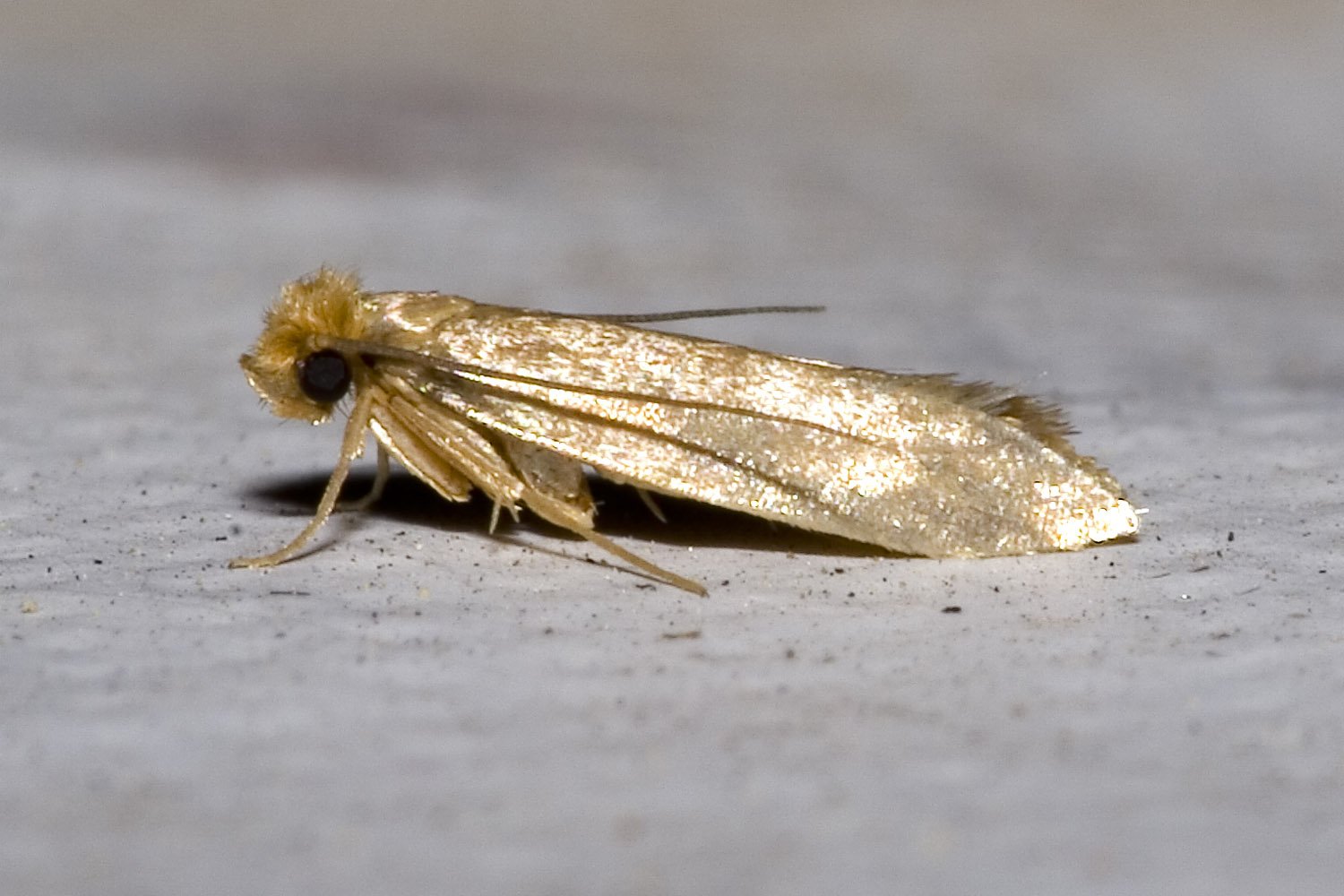
Finding small holes in a wool sweater or noticing fine silky webbing tucked into a closet corner usually means clothes moths, not the moths you see fluttering around a porch light, but a smaller, less noticeable species that spends most of its life as larvae rather than a flying adult. Getting rid of them takes a few specific steps done in the right order.
First, understand what they’re actually eating
Clothes moth larvae feed on keratin, a protein found in wool, cashmere, silk, fur, and feathers. They generally won’t touch cotton, polyester, or other synthetic fabrics unless those items are heavily blended with natural fiber or soiled with food or body oils, which the larvae are also drawn to. This is why an infestation can seem to target specific items in a closet and ignore others sitting right next to them, it isn’t random, it’s about what those larvae can actually digest.
Identify which type you’re dealing with
Webbing clothes moths (Tineola bisselliella) leave silky trails and cocoons on fabric, while casemaking clothes moths carry a small protective case as they move and feed, leaving behind a more scattered pattern of damage. Both respond to the same removal process, so precise identification matters less than thorough treatment. Both species also prefer dark, undisturbed spots, which is exactly what a closet provides, and both can complete a full life cycle in as little as two months under warm conditions, meaning an unaddressed problem can produce several overlapping generations within a single season.
Why closets are the perfect environment
Clothes moths avoid light and prefer still air, and a closed closet gives them both. Adding to that, closets tend to hold exactly the fabrics larvae feed on and go weeks or months without being fully emptied and inspected. A sweater worn once and hung back up without washing, carrying trace body oils, is often enough to draw egg-laying females to that specific spot over cleaner items nearby.
Remove and wash everything in the affected closet
Wash washable wool and natural-fiber items on a warm setting, or take them to a dry cleaner, since heat and cleaning solvents both kill eggs and larvae. Items that can’t be washed or cleaned should be sealed in plastic bags and placed in a freezer for at least 72 hours, which is effective at killing all life stages. For particularly valuable or delicate items, a second freeze cycle after a week at room temperature catches any eggs that survived the first round in a dormant state.
Vacuum the closet thoroughly, including cracks and corners
Larvae and eggs often end up in carpet fibers, baseboard gaps, and closet corners, not just on the clothing itself. A thorough vacuum, followed by immediately sealing and disposing of the vacuum bag or emptying the canister outside, removes a source of reinfestation that’s easy to overlook. Pay particular attention to the corners of shelving and the gap where the closet floor meets the wall, both common spots for larvae to pupate once they’ve finished feeding.
Where else moths hide besides the closet
A closet infestation rarely stays perfectly contained to the closet, so it’s worth checking a few other spots before calling the job done. Wool area rugs and rug pads, especially sections tucked under furniture that rarely gets moved, are a common secondary site, since the same still, undisturbed conditions that make a closet appealing apply just as well to a quiet corner of a rug. Upholstered furniture with wool or wool-blend fabric, particularly older pieces, can host larvae in seams and along the underside where the fabric meets the frame. Felt piano hammers, wool blankets stored in cedar chests that weren’t cleaned before being packed away, and any decorative item with feathers or natural fur are all worth a quick check if an infestation has been going on for a while before it was caught. None of these need the same intensity of treatment as the closet itself, but they do need a look, since a single missed source is enough to repopulate a closet that’s otherwise been fully cleaned.
Use natural deterrents for ongoing protection
Cedar blocks and lavender sachets don’t kill moths outright, but they do repel adult moths from laying eggs in the first place, which makes them useful for prevention once the closet is clean. Cedar loses its effectiveness as the oils fade, so blocks need light sanding or replacement every few months to stay useful. A light sanding exposes fresh oil beneath the surface and can extend a block’s usefulness by several more months before it needs replacing entirely.
Store off-season items properly
Clean natural-fiber clothing before long-term storage, since body oils and food residue attract moths even to items that look clean. Airtight bins or vacuum-sealed bags are more reliable than garment bags alone for anything stored for more than a season. Check stored items at least once every few months rather than leaving them completely untouched until the next season, a quick look catches a developing problem long before it spreads to everything in the bin.
Monitor with pheromone traps
Sticky pheromone traps designed for clothes moths won’t solve an infestation on their own, but they’re a useful way to confirm the problem is actually resolved and catch any resurgence early, well before new damage shows up on your clothes. Check traps every couple of weeks and note whether catch numbers are dropping over time, a steady or rising count means the source hasn’t actually been cleared yet.
DIY treatment versus calling a pest control professional
For an infestation caught early and confined to a single closet, the wash-freeze-vacuum routine above is usually enough on its own, and most homeowners can handle it without bringing in outside help. The point to consider a pest control professional is when the problem keeps resurfacing after a full cleanout, when damage shows up in more than one room, or when it’s spread into carpeting or upholstery across a larger area than a single closet can account for. At that stage, a technician can apply a labeled residual treatment to baseboards, carpet edges, and closet framing, areas that go beyond what washing and vacuuming alone can reach. A professional visit for clothes moths is typically a single treatment followed by a check-in visit a few weeks later to confirm the pheromone trap counts have actually dropped, rather than an ongoing monthly commitment.
What Not to Do
Don’t treat only the damaged items and leave the rest of the closet as-is; eggs and larvae spread beyond whatever’s visibly chewed. Don’t rely on mothballs as a long-term fix in a closet full of clothing you wear regularly, the odor transfers to fabric and takes real effort to remove afterward. And don’t assume dry cleaning alone handles everything in the closet, dry cleaning kills what’s on the item being cleaned, not what’s already established in the carpet or shelving nearby.
Seasonal timing worth knowing
Clothes moths are active year-round in heated homes, but egg-laying tends to pick up in late spring and summer when temperatures rise, which is also when wool and cashmere items get packed away for the season. That overlap makes early summer the highest-risk window for a new infestation to start in stored items, so it’s worth doing the wash-vacuum-seal routine above before boxing up winter clothing, not after pulling it back out the following fall and finding damage already done.
A couple of common questions
Do clothes moths spread from one closet to the rest of the house? They can, particularly if larvae finish feeding in one spot and wander to pupate elsewhere, or if infested items get moved before the problem is caught. That’s part of why a single damaged sweater is worth treating as a signal to check the whole closet, not an isolated incident.
Is it normal to still see a moth or two after cleaning everything? A stray adult a week or two after treatment isn’t unusual, since eggs already laid before the cleanout can still hatch. Ongoing sightings a month or more later suggest the source wasn’t fully addressed.
Do clothes moths bite people or pets? No. Adult clothes moths don’t feed at all in some species, and the larvae that do the damage are only interested in keratin fibers, not skin. Any bite-like irritation in a home with a moth problem almost always traces back to a different pest.
What temperature actually kills clothes moths in a dryer? A dryer set to a high heat setting, above roughly 49°C, for a full thirty minutes is enough to kill eggs, larvae, and adults on washable items. Lower heat settings or shorter cycles are less reliable, so it’s worth checking that the dryer is running hot rather than on a delicate or air-only setting when treating a suspected infestation.
If the infestation keeps coming back despite these steps, it may be established beyond the closet itself, in carpets, upholstery, or wall cavities. We treat clothes moth infestations with natural-first methods and a real guarantee behind the work. Call 1-844-783-4821 for help clearing it for good.