
Finding a bee nest in the yard or a swarm resting on a tree branch tends to trigger the same instinct: get rid of it fast, by whatever means. But bees are responsible for pollinating a huge share of the food crops we eat, and most bee encounters don’t call for extermination at all. There’s usually a better option.
First, Confirm It’s Actually Bees
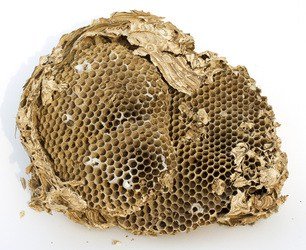
Bees and wasps get confused constantly, but they behave very differently. Honeybees are fuzzy, generally docile away from their hive, and die after a single sting. Wasps and hornets are smoother-bodied, more aggressive, and can sting repeatedly. If you’re seeing a paper-like nest under an eave, that’s almost always a wasp problem, not a bee one, and calls for a different response. Bumblebees are a third, easily overlooked category, larger and rounder than honeybees, usually nesting in small ground colonies of a few hundred at most, and generally the least aggressive of the three.
A Resting Swarm Isn’t a Nest
A cluster of bees hanging on a branch or fence post looks alarming but is usually just a swarm resting mid-journey while scout bees search for a permanent home. Swarms are typically calm since they have no hive or honey stores to defend, and they often move on within a day or two on their own. If it’s not near a doorway or high-traffic area, the simplest fix is patience. Swarming is actually a sign of a healthy colony reproducing, not a sign of a problem, since it happens when an existing hive has grown large enough that part of the colony splits off with a queen to start a new one elsewhere.
When Bees Have Moved Into a Structure
Bees that have established a hive inside a wall cavity, chimney, or shed are a different situation, since the colony and its comb won’t leave on their own and the space needs to be professionally opened up and cleared. This is where calling in a local beekeeper matters. Many keep swarm lists specifically to relocate honeybee colonies to a hive box rather than destroy them, and it’s often free or low-cost since the beekeeper gains a colony out of it. It’s worth knowing that simply sealing the entry point without removing the comb doesn’t solve the problem: leftover honeycomb can melt, attract other pests, and cause damage inside a wall long after the bees themselves are gone.
Steps to Take
- Keep pets and kids away from the area and avoid disturbing the nest or swarm, since vibration and movement are what trigger defensive behavior.
- Don’t spray a hose or throw anything at a swarm, which can scatter and agitate the colony.
- Contact a local beekeeping association or a pest control contractor experienced in live bee removal rather than a general exterminator, since the goal is relocation, not elimination.
- If the nest is a paper wasp or hornet nest rather than honeybees, that’s a more straightforward removal, but location and size still matter for how it should be handled safely.
- Take a photo from a safe distance if you’re unsure what you’re looking at, it makes identification over the phone much faster and more accurate than a verbal description alone.
What Not to Do
Sealing an exterior entry point to a wall cavity without removing the colony first is one of the most common mistakes, since trapped bees will often chew a new exit, sometimes straight into the interior of the home, rather than simply dying off quietly. DIY foam or spray treatments purchased for wasps are often used on bee colonies out of panic, and beyond the ethical issue of killing a beneficial pollinator, they rarely reach a hive built deep inside a wall cavity and can leave a dead, rotting colony and its comb inside the wall regardless. Knocking down a swarm with a broom or hose to “move it along” is more likely to provoke defensive stinging than actually relocate it.
Africanized Bees in Warmer Regions
In parts of the southern US, Mexico, and Central and South America, Africanized honeybees, a more defensive hybrid of the European honeybee, have become established and change the calculus around DIY handling somewhat. They look identical to a regular honeybee and can’t be told apart visually, but they defend a nest more aggressively, in larger numbers, and over a wider area than a typical European colony. In regions where Africanized bees are present, any established colony inside a structure is worth treating as a professional job by default rather than attempting even basic DIY steps like observing from a close distance. This isn’t a reason to panic about every bee sighting, most encounters are still with calm, non-aggressive colonies, but it is a reason to be more cautious about approaching a nest directly in these regions specifically, and to mention the location when calling a beekeeper or pest professional so they can plan accordingly.
Bee-Proofing a Property for the Long Term
Once a colony has been relocated, a few preventive steps reduce the odds of a new one moving in. Seal gaps around soffits, fascia boards, chimney caps, and utility penetrations, the same spots worth checking for rodents and other pests, since bees look for many of the same sheltered, weatherproof cavities. Hollow spaces like unused birdhouses, old grills, and irrigation boxes are common overlooked nesting spots worth checking a couple of times a year, particularly in spring when swarms are actively searching for new homes. If a property has had repeat bee activity in the same general area, that’s usually a sign of a specific attractive cavity that hasn’t been found and sealed yet, and it’s worth a more thorough inspection rather than continuing to relocate new colonies from the same spot every year or two.
What It Costs to Do This the Right Way
Live bee removal and relocation is often priced comparably to standard pest extermination, sometimes slightly more depending on the complexity of accessing the colony, whether that means opening a wall cavity, working from a ladder, or coordinating with a beekeeper’s schedule. Removing comb and cleaning out a wall cavity thoroughly, rather than just extracting the visible cluster of bees, adds time but is worth the cost, since leftover honeycomb left behind after a rushed removal can attract other pests and cause damage as it breaks down inside the wall. Getting a clear scope of work in writing before the job starts, specifically whether comb removal and cleanup are included, avoids a surprise if a wall needs to be reopened later because the job wasn’t finished the first time.
Wasps and Hornets Aren’t Bees, and Don’t Get the Same Treatment
Since the two get confused so often, it’s worth being direct about the difference in approach. Wasps and hornets aren’t pollinators in the same critical way honeybees are, they don’t produce anything worth preserving in a wall cavity, and they’re considerably more willing to sting repeatedly in defense of a nest, which makes DIY removal riskier rather than more reasonable. A paper wasp nest under an eave, spotted early and small, is sometimes manageable with an evening treatment and basic precautions, but a mature hornet nest, especially one built inside a wall void or below ground, is a job worth leaving to a professional given how aggressively these colonies defend themselves compared to bees. If there’s any doubt about which one is being dealt with, treating it with the more cautious approach reserved for wasps and hornets is the safer default until it’s confirmed otherwise.
Why Timing Matters
Swarm season peaks in spring and early summer across most of the US, Canada, and the UK, as colonies that overwintered successfully reach the size where splitting off makes sense. In warmer regions like the southern US and much of Australia, swarming can happen across a longer stretch of the year. A swarm spotted in spring is far more likely to move on within a day or two than one found in fall, since a colony scouting for a home late in the season is often under more pressure to settle quickly before cold weather, which can mean less patience for waiting it out safely.
A Few Common Questions
Will bees come back to the same spot after relocation? Not usually, once a colony and its comb are fully removed, the scent cues that would draw a new swarm to the same cavity go with it, though sealing the entry point afterward is still worth doing as a precaution. How much does live bee removal typically cost compared to extermination? It varies by the size and location of the colony, but it’s often comparable to, or only somewhat more than, a standard extermination, since the value of the recovered colony can offset labor for the beekeeper involved. Is it dangerous to have honeybees on the property if they’re left alone? Away from their hive, honeybees are genuinely not looking for a fight, and most stings happen when a hive is disturbed directly rather than from bees simply flying through a yard.
Why This Approach Matters
A relocated colony keeps doing what bees do best in a place where it isn’t a problem for anyone. We handle bee and wasp situations with the least invasive method that solves the issue, and for honeybees, that almost always means relocation over extermination. Call 1-844-783-4821 if you’ve found a nest and aren’t sure what you’re looking at.