
Seeing a cloud of winged insects pour out of a wall or from the ground near your foundation is unsettling, and it should get your attention. A termite swarm is one of the clearest signals a colony sends, and understanding what it means changes how urgently you need to respond.
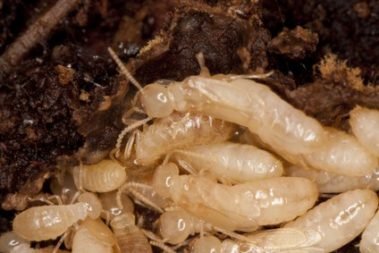
Why Termites Swarm in the First Place
A termite colony produces winged reproductives, called alates, once it’s mature enough to expand. Swarming is how the colony sends these alates out to mate, shed their wings, and attempt to establish new colonies elsewhere. It’s a natural part of the termite life cycle and a sign of colony health, from the termite’s perspective, and a sign of a real problem from yours. A colony typically needs three to five years of undisturbed growth before it’s large enough to produce swarmers at all, which is the detail most homeowners miss. By the time you see a swarm, the colony behind it isn’t new.
What the Timing Tells You
Subterranean termites, the most common and most destructive species across much of the US, Canada, and the UK, tend to swarm in spring, often on warm days following rain, when humidity and temperature conditions are right. Many swarms happen in the late morning after an overnight rain has softened the soil enough for alates to dig their way out. Drywood termites, more common in warmer coastal regions and much of Australia, swarm later in the year, often in late summer or fall, and behave somewhat differently, often emerging in the evening and being drawn to light rather than swarming during the day. The timing and conditions of a swarm can help identify which species you’re dealing with, and that distinction matters because drywood and subterranean colonies are treated in different ways. In parts of the Gulf Coast, Formosan subterranean termites add another wrinkle: they swarm at night and are strongly attracted to light, often showing up in large numbers around porch lights and windows on humid evenings in late spring, and their colonies grow faster and larger than native subterranean species, which is part of why they’re treated as a more urgent species to confirm.
What Happens After the Swarm
Most swarmers never make it. They’re a food source for birds, spiders, and other insects, and the vast majority die within hours of taking flight without ever finding a mate or a suitable nesting site. A small number pair off, shed their wings, and dig into soil or wood to found a new colony as king and queen. That new colony starts small and grows slowly for the first couple of years, which is exactly why the swarm itself is more useful as a warning sign than as the actual damage. The insects you see flying around aren’t what’s going to hurt your house. What already produced them, or what they go on to found, is.
How Big a Colony Gets Before It Swarms
Scale matters here. A mature subterranean termite colony can hold anywhere from several hundred thousand to over a million individual termites, spread across an interconnected network of tunnels that can extend 30 m or more from the main nest, moving between multiple structures and food sources on a property. Drywood termite colonies stay much smaller, typically a few thousand to around ten thousand individuals, because each colony lives entirely within the wood it’s infesting rather than foraging through soil, but a home can host several separate drywood colonies at once in different pieces of structural or furniture-grade wood. Either way, the swarm itself represents a tiny fraction, often well under one percent, of the colony’s total population. The insects that fly off are the ones the colony can afford to lose while sending out new colonies; the workers doing the actual feeding damage stay behind and keep working.
Swarmers vs. Flying Ants
Termite swarmers and flying ants get confused constantly, and telling them apart matters for how seriously to take what you’re seeing.
- Termite swarmers have a straight, thick waist, while flying ants have a distinctly pinched waist.
- Termite swarmers have two pairs of wings of equal length, while flying ants have two pairs of noticeably different lengths.
- Termite antennae are straight, while ant antennae are bent at an angle.
- Termite wings detach easily and are often found in small piles near windowsills or door thresholds, while ant wings tend to stay attached longer.
What a Swarm Indoors Actually Means
A swarm outdoors, away from the house, doesn’t necessarily mean your home is affected. Termites swarm from tree stumps, fence posts, woodpiles, and other buried wood all the time without ever having touched your structure. A swarm indoors is a different story entirely, since it means a colony has established itself inside your structure and has matured enough to reproduce, which typically takes a few years. By the time swarmers appear inside a home, the colony has usually been active for a while already, often well before anyone noticed a single sign of it. This is why an indoor swarm, even a small one, should never be written off as a one-time nuisance.
Signs Worth Checking For Beyond the Swarm
A swarm is the most obvious sign, but it’s rarely the only one if you look. Subterranean termites build pencil-width mud tubes along foundation walls, support piers, or crawlspace framing to travel between soil and wood while staying protected from open air, and finding one, even an old, abandoned-looking one, is worth an inspection on its own. Drywood termites leave small, six-sided pellets of frass that look like coarse sand or ground pepper, often piled beneath a small kick-out hole in trim, furniture, or structural wood. Wood that sounds hollow or papery when tapped, paint that’s bubbling or rippled without a moisture source, and doors or windows that have started sticking for no obvious reason can all point to termite activity working from the inside out, since termites eat wood from within and leave a thin surface layer intact until damage is advanced.
What NOT to Do
- Don’t vacuum or spray the swarmers directly, since it does nothing about the colony that produced them and can scatter evidence you’d want for identification.
- Don’t assume a single swarm means the whole problem, or that no follow-up swarm means it’s gone. Colonies can produce swarmers from more than one location in a structure.
- Don’t seal up or clean the area immediately if you’re planning to have it inspected, since mud tubes, frass, and discarded wings are useful clues for a pest professional.
- Don’t wait through another season to see if it happens again. An indoor swarm is active, established activity, not an isolated event, and the colony keeps growing while you wait.
What to Do When You See One
- Collect a few of the insects, or wings if that’s all that’s left, for identification.
- Note the exact location the swarm came from, since that’s often close to where the colony itself is active.
- Check nearby areas, baseboards, window frames, and any wood-to-soil contact points around the foundation, for mud tubes or soft, damaged wood.
- Get an inspection promptly rather than waiting to see if it happens again.
A Few Common Questions
How long does a swarm actually last? Usually under an hour, sometimes as little as twenty minutes, which is part of why people miss it or only see the aftermath: discarded wings on a sill or in a spiderweb near a window.
Does one swarm mean the whole house is infested? Not necessarily, but it does mean at least one colony has matured somewhere on or in the structure, and that’s worth confirming rather than assuming.
Can I just wait and see? You can, but the colony doesn’t pause while you decide. Subterranean termite colonies can number in the hundreds of thousands and keep feeding continuously, so the gap between a swarm and a treatment is time the damage keeps accumulating.
Do bait stations work as well as liquid treatments? Both are legitimate approaches used by professionals, and the right choice depends on the property: liquid soil treatments create a continuous treated zone around the foundation and tend to work faster, while bait stations rely on foraging workers finding and sharing slow-acting bait back at the colony, which takes longer to show results but requires less product overall and works well for ongoing monitoring. How long does professional termite treatment take to work? A liquid barrier treatment is usually applied in a single visit and starts working quickly, though visible activity can take a few weeks to fully stop as remaining workers die off; bait station systems typically take several weeks to a few months to eliminate a colony, since it depends on foraging termites finding the stations and carrying the bait back.
If you’ve spotted a swarm in or near your home, it’s worth having it looked at before assuming it was a one-time thing. Call 1-844-783-4821 and one of our fumigators can help figure out what you’re dealing with and what it’ll take to handle it properly.