
Termites are patient. A colony can work through structural wood for months or years before the damage becomes visible from the outside, which is exactly why homeowners insurance typically doesn’t cover it, and why catching the early signs matters more than with most other pests.
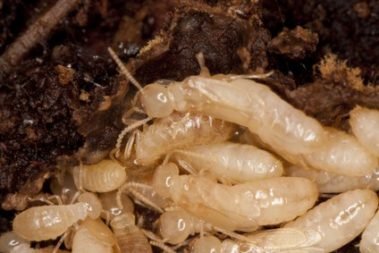
Mud Tubes
Subterranean termites build pencil-width mud tubes along foundation walls, piers, and other surfaces to travel between the soil and their food source while staying protected from open air and predators. Finding these tubes, whether on an exterior foundation wall, inside a crawlspace, or along a basement wall, is one of the clearest signs of active subterranean termite activity. A quick way to check whether a tube is still active is to break open a small section; if it’s rebuilt within a few days, the colony is still working that route.
Discarded Wings
When a mature colony sends out its reproductive swarmers to start new colonies, those termites fly briefly, then shed their wings once they’ve landed and paired off. Finding small, uniform, translucent wings scattered near windowsills or doors, especially indoors, is a strong sign a colony nearby has reached maturity and is expanding. Swarms tend to happen on warm, humid days, often right after rain, and the timing varies by region: spring is typical for subterranean species in much of North America, while drywood termites in warmer coastal areas can swarm later in summer or into fall.
Wood That Sounds Wrong
Termites eat wood from the inside out, following the grain and leaving a thin outer layer intact. Tapping on a wood surface that sounds hollow or papery instead of solid, or wood that gives way easily when pressed with a screwdriver, points to damage happening beneath the surface that isn’t visible yet. Baseboards, door frames, and structural beams in a basement or crawlspace are worth checking this way periodically, since they’re rarely disturbed enough for damage to be noticed any other way.
Frass
Drywood termites, more common along the coasts and in warmer regions, push their waste, called frass, out of small holes in the wood they’re consuming. It looks like tiny wood-colored pellets or sawdust piled beneath furniture, window frames, or baseboards, and finding it is one of the more reliable signs of a drywood infestation specifically. Unlike sawdust from a wood-boring beetle, termite frass pellets are uniform in size and shape, almost like tiny grains of rice, which is a useful way to tell the two apart at a glance.
Doors and Windows That Suddenly Stick
As termites tunnel through wood framing, they release moisture that can cause surrounding wood to warp, which shows up as doors and windows that suddenly become difficult to open or close. It’s an easy sign to dismiss as normal settling, but combined with any of the signs above, it’s worth taking seriously.
Why termite damage is often worse than it looks
Because termites work from the inside out and avoid exposing themselves to open air, visible damage is usually a small fraction of what’s actually happened inside a wall or beam. A pinhole-sized opening or a patch of hollow-sounding trim can be the only external clue to a much larger network of galleries running through the structural wood behind it. This is part of why a professional inspection matters more here than with most pests; what looks minor on the surface can represent months of accumulated structural loss.
What to Do If You Spot Any of These
- Don’t disturb mud tubes before an inspection, since an intact tube helps confirm active versus abandoned activity.
- Note where and when you’re seeing swarmers or wings, since timing and location help identify the species involved.
- Get a proper inspection rather than guessing, since termite damage that looks minor on the surface is very often more extensive underneath.
- Avoid disturbing or spraying visible activity with a store-bought product before an inspection, since it can scatter the colony and make an accurate assessment harder.
Bait Stations Versus Liquid Barrier Treatments
Two main approaches dominate professional subterranean termite treatment, and they work differently. Liquid barrier treatments create a continuous treated zone in the soil around a structure’s foundation, which either kills termites attempting to cross it or, with newer non-repellent formulations, gets carried back to the colony by termites that pass through without immediately noticing it. Bait stations, placed in the ground around a property’s perimeter, use a slow-acting active ingredient that termites carry back and share throughout the colony over weeks, similar in concept to how gel bait works against cockroaches. Liquid treatments tend to show faster results at the treated zone itself, while bait systems take longer to affect the colony but can reach termites that a liquid barrier’s coverage gaps might miss. Many professional treatment plans use both together for that reason, rather than treating them as competing options. More detail on how termiticides are regulated and applied is available through the EPA’s pest control resources.
Warranties and What They Actually Cover
Most professional termite treatments come with some form of warranty, but the coverage varies a lot between a retreatment guarantee, which covers additional treatment if activity returns, and a repair guarantee, which covers a portion of the actual damage cost if termites are found active after treatment. A repair guarantee is worth considerably more in practice but usually comes at a higher cost and stricter conditions, often requiring an annual inspection to keep the warranty valid. Reading the specific terms before assuming a warranty covers repair costs is worth the ten minutes it takes, since a lot of homeowners are surprised after the fact to learn their coverage was retreatment-only.
What Termite Treatment Typically Costs and How Long It Takes
Cost varies widely based on property size, foundation type, and the extent of any existing damage, but a full perimeter treatment for an average home is a meaningful expense, generally more than most other common pest treatments due to the scope of work involved, whether that’s trenching around a full foundation for a liquid barrier or installing a ring of bait stations. The upfront cost is almost always smaller than structural repair, though, since termite damage that’s gone unnoticed for years can run into tens of thousands of dollars in repair work. Initial treatment for a liquid barrier is typically a single, more intensive visit, while bait systems involve an initial installation followed by periodic monitoring visits, often quarterly, to check station activity and replace bait as needed. Either way, most treatment plans include a follow-up inspection within the first year specifically to confirm the treatment held, since termite activity that isn’t fully addressed on the first attempt tends to resurface within that window if it’s going to at all.
Why DIY Termite Products Usually Fall Short
Store-bought termite stakes and sprays exist, but they’re a poor match for how a termite colony actually operates. A colony can number in the tens of thousands to over a million individuals depending on species and maturity, spread through soil and structural wood over an area far larger than a homeowner can realistically treat with consumer-grade products. Consumer termiticides also tend to be repellent formulations that push termites away from the treated spot rather than eliminating the colony, which can just redirect activity to an untreated section of the foundation instead of solving anything. Termites are also difficult to fully diagnose without training. The same visible sign, a mud tube or a sticking door, can mean anything from a minor, isolated issue to a colony that’s been established for years, and a DIY response based on a guess risks either wasting money on unnecessary treatment or, worse, providing false reassurance while an active colony keeps working.
How often should a home be checked
Even without visible signs, an annual termite inspection is a reasonable habit in most regions, and worth doing more often in warmer, humid climates where termites are active year-round. It’s also standard practice ahead of buying or selling a home, since a colony that’s gone unnoticed for years can represent a significant repair cost that’s easy to miss during a general home inspection.
Regional patterns worth knowing
Subterranean termites are the more common concern across most of the US, southern Canada, and the UK, where they build the mud tubes described above and need soil contact to survive. Drywood termites are more of a coastal and warm-climate issue, common in the southern US, parts of Australia, and similar climates, and don’t need soil contact at all since they live entirely inside the wood they’re consuming. Knowing which is more common where you live helps you know what signs to watch for first, mud tubes versus frass, and changes what a treatment plan typically looks like.
A common misconception worth clearing up
A house doesn’t need visible rot or obviously damaged wood to have an active termite problem. Termites specifically target sound structural wood, not decayed wood, and a beam that looks perfectly fine from the outside can already be substantially hollowed out. This is exactly why the sounds-hollow test and a proper inspection matter more than a visual scan alone.
If you’re seeing any of these signs, it’s worth having a fumigator look before the damage grows. Call 1-844-783-4821 and we’ll walk through what you’re seeing and what the next step should be.