Yellow jackets get lumped in with bees, but they behave very differently. They’re wasps, they build papery nests rather than wax comb, and they’re far more willing to defend that nest aggressively if you get close. Before doing anything, confirm what you’re actually looking at: a ground nest with a small entrance hole, a nest tucked into a wall void, or one hanging under an eave. That location changes what’s safe to try yourself.
Why they build where they build
Yellow jackets look for a cavity, not open air, which is why ground burrows, old rodent tunnels, wall voids, and hollow porch columns are such common nest sites. A single colony starts each spring with one overwintering queen and can grow to several thousand workers by late summer, which is exactly why a nest that seemed manageable in June can feel like an entirely different problem by September. Late summer and early fall is also when colonies get most defensive, since natural food sources are drying up and workers start foraging more aggressively near trash cans, picnic tables, and anything sugary.
How a colony grows through the season
Understanding the growth curve explains why timing matters so much. A queen who survives winter emerges alone in spring and builds a small starter nest, about the size of a golf ball, while raising the first handful of workers entirely on her own. Once that first batch of workers matures, they take over foraging and nest-building, and growth accelerates fast, a nest can go from a few dozen workers in early summer to several thousand by August. Worker wasps don’t survive winter, only newly mated queens do, which is why every colony starts from scratch each spring rather than reusing last year’s nest, even if that nest is still structurally present.
What works, and where the line is
For a small, exposed ground nest, a soap-and-water spray applied directly into the entrance at night, when the colony is inactive and less able to see you, is a genuinely effective natural method. The soap breaks down their exoskeleton and clogs their breathing spiracles. Do it after dark with a flashlight covered in red cellophane (yellow jackets don’t see red well), and have an exit route planned before you start.
What doesn’t work well: spraying a nest that’s inside a wall void or attic space. You can’t reach the colony directly, and disturbing the entrance without addressing the nest itself often just agitates them into finding a new way into the house, sometimes through a gap that leads indoors.
A soap-and-water treatment isn’t always a one-and-done application. A larger ground nest, especially one that’s been established for a couple of months, may take a second treatment a night or two later if you still see workers coming and going from the entrance the following evening. Mix roughly one part dish soap to four parts water, and use enough volume, several cups at minimum, to actually flood the tunnel system rather than just wetting the entrance, since ground nests often extend further underground than the visible hole suggests.
Mistakes that make it worse
- Pouring gasoline or other flammable liquids into a nest entrance. It’s dangerous, it’s often illegal depending on local ordinance, and it rarely reaches the full colony anyway.
- Sealing an entrance hole without treating it first. Workers trapped inside a wall will frequently chew a new exit, sometimes straight into a living space.
- Approaching a nest during the day in bright clothing or with strong perfume, both of which draw more attention from defensive workers.
- Standing directly over a ground nest entrance to spray it. Approach from the side and retreat immediately after treating it.
- Using a hose or lawn mower near a ground nest without realizing it’s there, vibration alone is often enough to trigger a defensive response from a colony that would otherwise leave you alone.
Prevention and deterrents
- Peppermint, clove, and geranium essential oils are effective as repellents around outdoor eating areas, though they won’t clear an existing nest.
- Traps baited with protein early in the season (spring, when queens are foraging) can reduce colony establishment before nests grow large.
- Seal any gaps around siding, soffits, and utility entry points. Yellow jackets exploit the same small openings that let in mice.
- Keep outdoor trash cans covered and rinse recycling before it sits out, since sugary residue is a major late-summer draw.
Yellow jackets vs. other stinging insects
It’s worth confirming you’re actually dealing with yellow jackets before treating anything. Paper wasps build open, umbrella-shaped combs, usually under eaves or railings, and are generally less aggressive unless the nest itself is disturbed. Hornets build large, enclosed papery nests, often high in trees, and are less likely to nest underground. Honeybees and bumblebees build wax comb, not paper, and are far less defensive; killing a bee colony mistaken for a yellow jacket nest is a common and avoidable error. If you’re not sure which one you’re looking at, a photo from a safe distance is enough for a pest professional to identify it correctly.
Bees are important pollinators and, when found nesting in or around a structure, are generally handled through relocation rather than elimination, since a healthy bee colony is worth preserving. Yellow jackets, hornets, and paper wasps don’t get the same treatment: they’re not significant pollinators the way honeybees and native bees are, they’re considerably more likely to sting defensively, and there’s no conservation reason to preserve a nest in a location where people live and walk. That distinction is why the approach in this article, direct elimination of the colony, is appropriate for yellow jackets in a way it generally isn’t for bees.
If someone gets stung
A single sting usually means cleaning the area, applying a cold compress, and taking an antihistamine if swelling is significant. Multiple stings in a short period, or any sign of a serious allergic reaction such as difficulty breathing, swelling of the face or throat, or dizziness, is a medical emergency and needs immediate attention, not a wait-and-see approach. Anyone with a known sting allergy should stay well away from a nest entirely and let someone else handle removal. The CDC’s guidance on stinging insect safety is a useful reference for anyone who spends a lot of time working outdoors during peak yellow jacket season.
Seasonal timing
Nests are smallest and most manageable in spring, right after a queen emerges from overwintering and starts a colony alone. Waiting until late summer, when a nest has grown to full size and workers are actively defending it, makes even a simple ground nest a bigger job. If you spot a small nest early in the season and it’s in a location you’re comfortable treating yourself, that’s the window to act, not August or September.
DIY vs. calling a professional
A small, exposed ground nest discovered early in the season, spring through early summer, is a reasonable DIY project for a homeowner comfortable working at night with the soap-and-water method described above. Once a nest reaches full size in late summer, is located inside a wall or attic, or is anywhere near a walkway, patio, or entrance that gets regular foot traffic, the calculation changes. A pest control technician has protective equipment rated for a defensive colony, tools to reach and treat wall voids without excessive demolition, and the experience to correctly identify what’s actually nesting before treating it, which matters given how often yellow jackets, bees, and paper wasps get confused for one another. Most pest management companies can schedule a same-day or next-day visit for an active nest, since colony size and defensiveness only increase the longer it’s left alone, and can provide a free quote before any treatment begins.
When to call it in
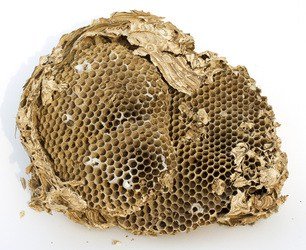
If the nest is inside a wall, in an attic, larger than a softball, or anyone in the household has a known sting allergy, this isn’t a DIY situation. Wall-void nests in particular are a case where removing the colony without opening up the wall, and dealing with the honeycomb-like nest material left behind, takes the right equipment. Give us a call at 1-844-783-4821 and we’ll figure out the right approach for the location.
A couple of quick questions
Will a nest die off on its own? Eventually, yes. Colonies die out naturally with the first hard frost, and only a mated queen survives winter to start a new nest elsewhere the following spring. That’s not much help if you’re dealing with an active nest in August, but it explains why nests never persist year to year in the same spot.
Is it worth treating a nest I rarely walk near? If it’s genuinely out of the way and no one in the household has an allergy, some homeowners choose to leave a low-traffic ground nest alone until it dies off naturally. It’s a reasonable call as long as the location and foot traffic actually support it.
Do yellow jackets reuse the same nest site the following year? Not the same physical nest, since paper nests don’t survive winter well and old workers all die off. A new queen may choose a similar location nearby, an old rodent burrow, a familiar wall void, if the site was favorable, so a spot that had a nest one year is worth keeping an eye on the next spring even after the old nest is long gone.