
Most homeowners picture mosquito control as spraying the yard. The more effective work happens earlier: a female mosquito can lay a raft of eggs in water that’s been sitting for as little as four days, and in warm weather those eggs go from egg to biting adult in about a week to ten days. Break that cycle and you cut the population before it starts.
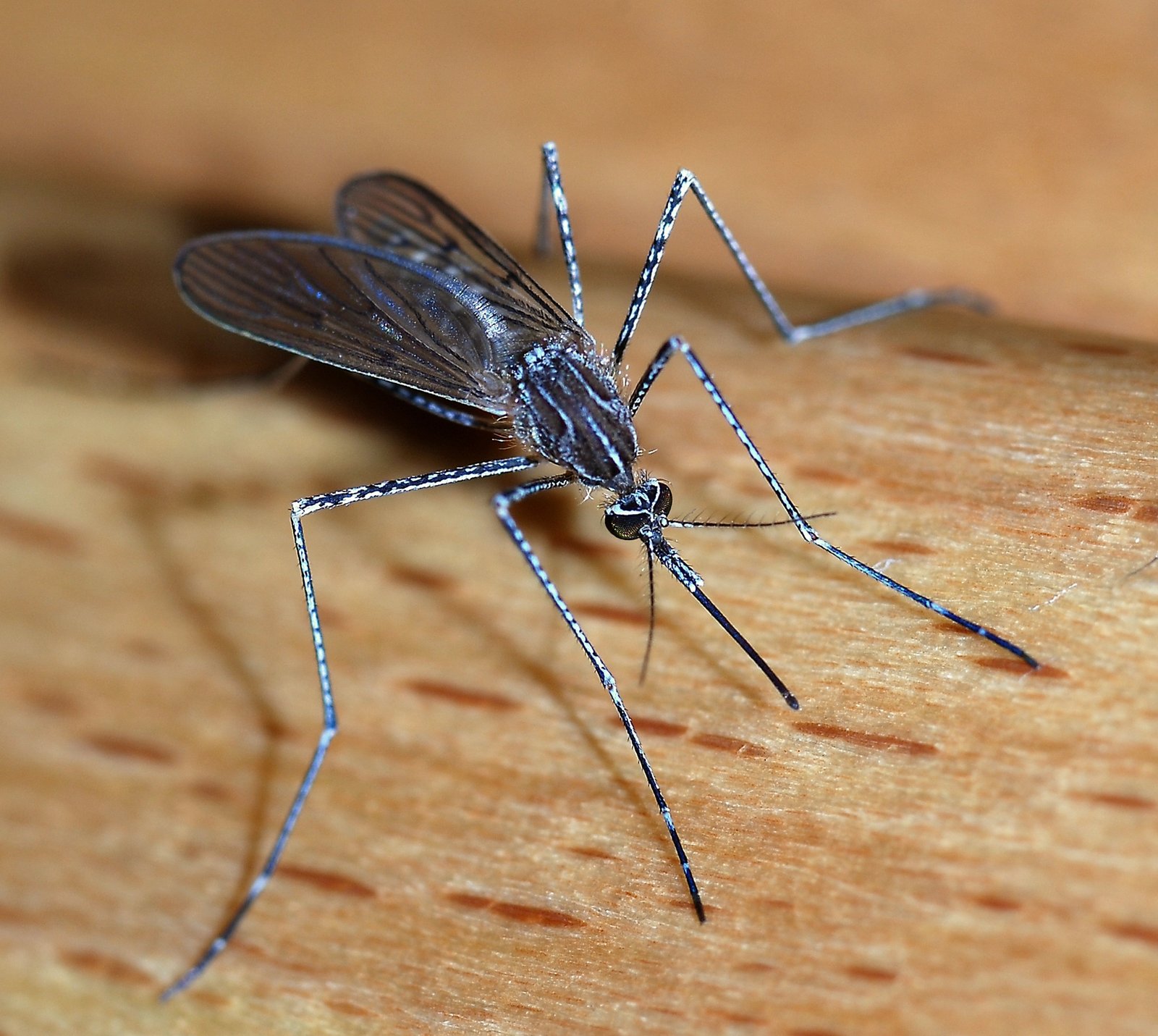
Where the water actually is
The obvious spots are ponds and rain barrels, but most breeding happens somewhere smaller and easier to miss. Clogged gutters that pool water along a low spot. Saucers under potted plants. Kids’ toys and tarps with a low fold. Tire swings. Birdbaths that don’t get changed. Even a bottle cap holds enough water for a batch of larvae. Walk your property once a week during mosquito season and look at it with that in mind. Corrugated drainage pipe running from a downspout is another spot people rarely check, since the ridges inside hold small pools of water even after the surface looks dry.
Old tires are worth calling out on their own, since a discarded tire under a deck or along a fence line is one of the most productive breeding sites a yard can have. The tread holds water even after a hard rain has otherwise drained off the property, and the rubber warms quickly in the sun, which speeds up how fast eggs hatch. Recycling bin and trash can lids, boat and grill covers with a low fold, and the hollow base of some patio umbrellas round out the list of spots that get checked far less often than they should.
The mosquito life cycle, step by step
Understanding the stages makes it clearer why weekly checks matter so much. Eggs are laid on or near the waterline and can survive dry spells for weeks or months in some species, hatching once water returns. Larvae, sometimes called wigglers, live in the water itself, feeding on organic debris and coming to the surface to breathe. After about a week, larvae become pupae, a non-feeding stage that lasts one to two days before the adult mosquito emerges and flies off. The entire cycle, from a freshly laid egg to a biting adult, can complete in as little as seven days in hot weather, which is exactly why a container checked every ten days rather than every seven can let a full generation slip through undetected.
Why so little water is enough
Mosquito larvae don’t need depth, they need stillness. A larva feeds near the surface and breathes through a tube it extends into the air, so even a shallow film of water an inch deep, as long as it isn’t disturbed by wind, current, or fish, is a viable nursery. That’s part of why moving water, like a fountain or a stream, rarely produces mosquitoes, while a still puddle in the same yard will.
What to actually do
- Dump or refresh any standing water at least once a week, more often in hot weather.
- Fix gutters so they drain fully instead of holding a puddle.
- For water you can’t dump, like ornamental ponds or rain barrels, use a Bti dunk (Bacillus thuringiensis israelensis). It’s a naturally occurring bacteria that targets mosquito larvae specifically and is safe around pets, birds, and fish.
- Screen the top of rain barrels and water butts with fine mesh so adults can’t lay eggs inside.
- Flip over anything that can hold water when it’s not in use: kiddie pools, wheelbarrows, buckets.
- Add a small pump or fountain to ornamental ponds if you don’t want to rely on dunks alone, since moving water alone discourages egg-laying.
- Grade or fill in low spots in the lawn or along a driveway edge that pool water after every rain rather than draining within a day.
- Remove or drill drainage holes in any tire, planter, or container you’re keeping on the property but not actively using.
How often is often enough
Once a week is the baseline, tied to how long it takes eggs to hatch and larvae to mature in warm conditions. In a heat wave, that cycle can compress closer to five or six days, so during the hottest stretch of summer it’s worth checking known trouble spots, like a saucer under a large planter, every four to five days instead of waiting for the weekly round.
Common mistakes homeowners make
The most common one is treating source reduction as a spring cleanup rather than a season-long habit. A yard cleared of standing water in May can still develop new breeding sites in July after a storm fills a forgotten planter saucer. Another frequent miss is assuming a covered container is safe, a loosely fitted lid or a cover with any gap still lets adults find their way in to lay eggs, especially with small container-breeding species that don’t need much of an opening. And some homeowners dump standing water but skip scrubbing the container afterward, eggs can stick to the inner walls above the old waterline and survive being emptied, only to hatch again once the container refills.
What doesn’t work as well as people think
Citronella candles and plant-based repellents placed around a patio have a limited range and do very little for the mosquito population breeding a few yards away in a clogged gutter. Bug zappers kill mostly harmless insects and have little effect on mosquito numbers, since mosquitoes aren’t strongly attracted to the light they use as a lure. Neither is a substitute for removing the water that’s actually producing new mosquitoes.
A five-minute weekly routine that covers most yards
Start at the gutters and downspouts, since these are the most commonly missed source. Move to anything sitting on the ground that could hold rainwater: plant saucers, buckets, a tarp with a low spot, toys left in the yard. Check any ornamental water features for a dunk or confirm the pump is still running. Finish by glancing at low spots in the lawn or a driveway that pool after rain. Done in that order, most yards take less time to check than it takes to read this paragraph.
Why this matters beyond comfort
Mosquitoes aren’t just an itchy nuisance. Depending on species and region, they can carry diseases like West Nile virus in North America, or dengue and Ross River virus in parts of Australia, which is part of why breeding-site removal is treated as a public health measure in a lot of municipalities, not just a backyard comfort issue. The CDC’s West Nile virus resources note that most human infections in the US are traced back to mosquitoes that developed in exactly the kind of small, neglected containers covered above, not large bodies of water. Keeping your own property free of standing water is a real contribution to reducing that risk for your household and your immediate neighbors.
If you’re in a humid climate where afternoon storms are routine, whether that’s the Gulf Coast, a wet English summer, or a Queensland wet season, this isn’t a one-time chore. It’s a weekly habit for as long as the weather stays warm and wet.
A note on the species you’re dealing with
Different mosquito species have different habits. Some, like the Asian tiger mosquito, are aggressive daytime biters that breed almost exclusively in small artificial containers, tires, buckets, plant saucers, close to where people spend time. Others are more active at dusk and dawn and travel farther from their breeding site. If you’re getting bitten mostly during the day near the patio, the source is very likely close by and worth a focused container check before you assume it’s coming from somewhere off the property.
DIY vs. calling a professional
A weekly source-reduction routine handles most residential mosquito problems on its own, and it costs nothing beyond the time it takes. Where it’s worth bringing in a pest control professional is when you’ve genuinely cleared every container on the property, kept the routine up for a few weeks, and bite pressure hasn’t dropped, when the property backs up to a wooded area, wetland, or drainage feature that’s outside your control, or when you simply don’t have time to keep up a weekly check through a long, humid season. A professional visit typically includes identifying the species involved, since that narrows down whether the source is likely on your property or farther out, along with a barrier treatment to knock down the existing adult population while source reduction catches up. Most pest management companies will provide a free quote for an initial visit so you know what a treatment plan involves before committing to it.
Quick questions
Can mosquitoes breed in water that’s only there for a day or two after rain? Generally no, eggs need roughly four days of standing water at minimum to hatch, so water that drains within a day or two usually isn’t enough time to complete even the first stage. The risk is water that lingers for most of a week.
Do I need to treat a swimming pool that’s properly chlorinated and filtered? A well-maintained, actively filtered pool is rarely a mosquito source, since the chemical treatment and circulation make it inhospitable to larvae. A neglected or covered pool that’s gone green, on the other hand, is one of the more productive breeding sites a neighborhood can have.
When it’s bigger than your yard
Sometimes the source isn’t on your property at all. A neighbor’s neglected pool, a drainage ditch, or a low spot in a shared easement can seed an entire block. If you’ve cleared every container you can find and mosquitoes are still bad, that’s usually the sign. A pest controller can identify the species you’re dealing with, which tells us a lot about where it’s breeding and what treatment actually makes sense, rather than guessing with a fogger. Call us at 1-844-783-4821 if you want a second set of eyes on the yard.