Services
Bat & Bird Removal
Scratching in the attic at dusk, droppings staining the soffit, a nest jammed in the dryer vent — bats and birds get into the gaps in a building faster than most people realize, and getting them back out takes more than a broom and a prayer.
Natural, guaranteed pest control — free no-obligation quotes, no contract, safe around kids and pets.
Signs You Need This
How to tell it's time to call
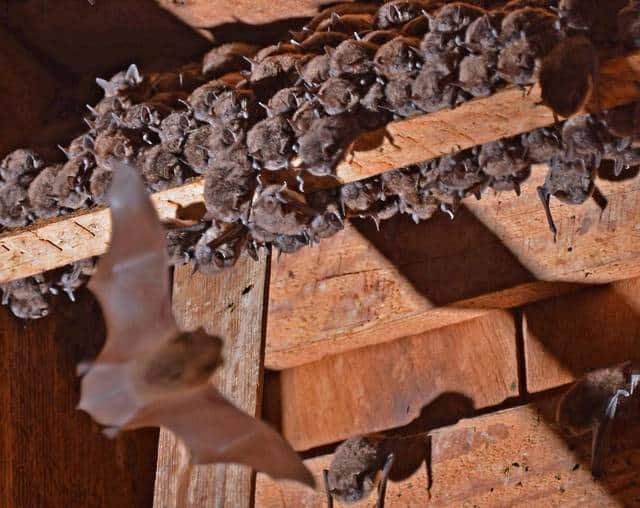
The clearest sign of bats is sound and smell before you ever see one: scratching, squeaking, or rustling inside walls or the attic that picks up right around dusk as the colony heads out to feed, paired with a sharp ammonia odor and dark, greasy rub marks smudged around a gap in the soffit, fascia board, or roofline where the oils from their fur have worn a trail over repeated trips. Guano — small, dark, crumbly pellets that pile up in attic corners or stain insulation — is another giveaway, and it's not something to sweep up without protection, since dried droppings can carry histoplasmosis spores. Birds tend to announce themselves more directly: nests wedged into dryer vents, bathroom exhaust fans, or chimney caps (a real fire and ventilation hazard, not just a nuisance), streaks of droppings corroding paint or metal under a roofline or sign, or persistent pecking and tapping from woodpeckers working at cedar siding or trim. If you're hearing single birds or bats trapped and fluttering inside a wall cavity, or finding fallen nesting material and feathers gathering near vents and gutters, that's an active entry point, not a one-time visitor.
The Full Picture
Bats and birds don't respond to the same tools as insects or rodents, and treating them like a spray-and-forget problem usually makes things worse. A colony of bats squeezed out through a gap you patched over will just find the next weak spot in your soffit or fascia board. A pigeon nest knocked down without addressing why the ledge was attractive in the first place will have a new nest in it within weeks. Real removal means finding every entry point, understanding the species you're dealing with, and closing the door behind them for good — not just clearing out what's there today.
That's the approach we take: humane exclusion first, permanent sealing second, and cleanup of what they left behind third. We don't use poisons or glue traps on bats or birds, both because it's often illegal and because it doesn't solve the underlying access problem. Every job is backed by our standard guarantee — if the animals get back in after we've sealed the structure, we return and fix it at no cost to you. And because we don't sell annual contracts, you're never locked into paying for visits you don't need once the problem is actually gone.
Our Approach
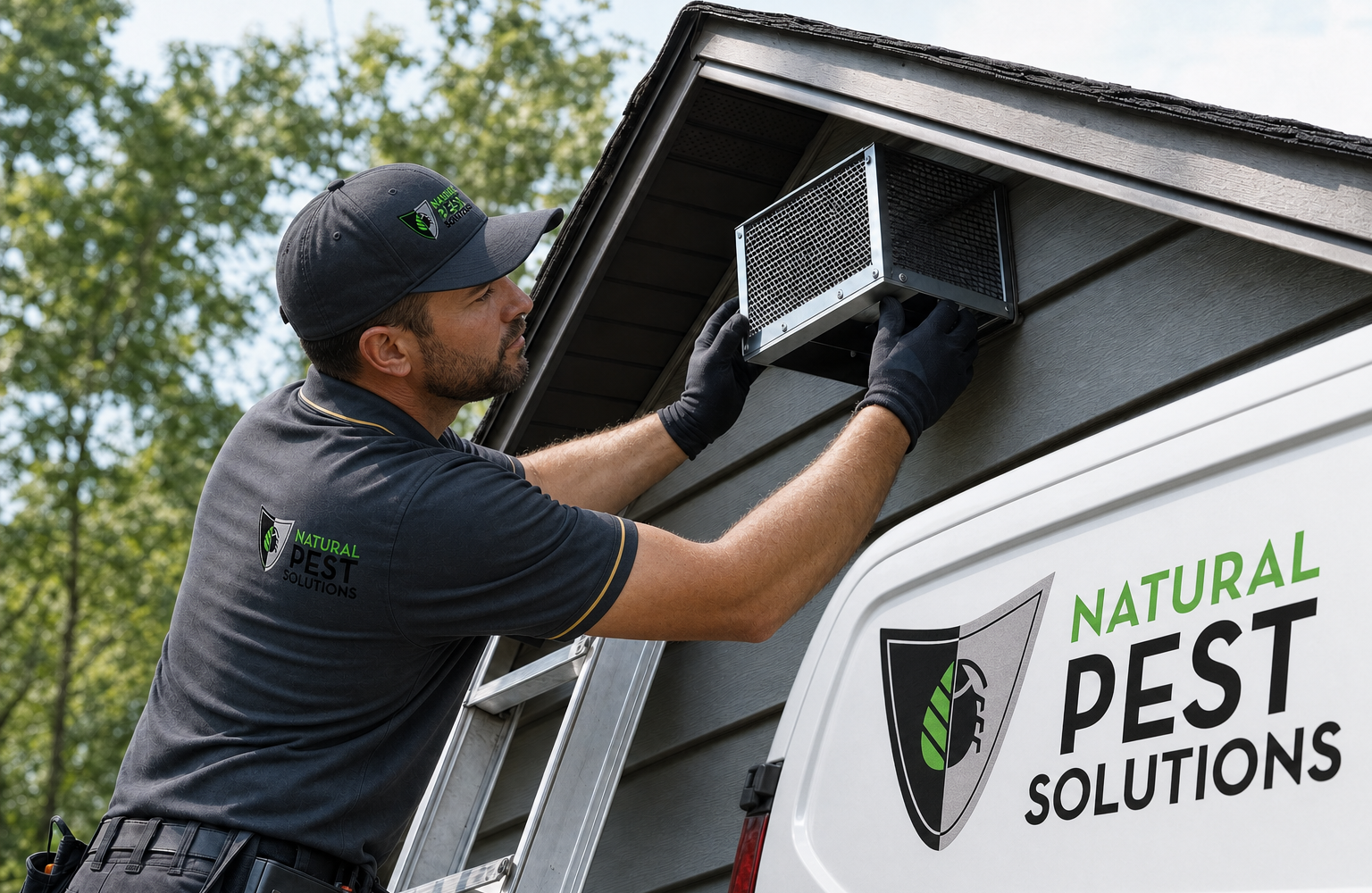
Bat and bird removal isn't a spray-and-done job — it's wildlife management, and it's done differently than insect control for good reason. In most of the US, Canada, Australia, and the UK, bats and many bird species are protected, so the work centers on humane exclusion rather than extermination: as your pest professionals, we identify every active entry point, install one-way exclusion devices that let bats and birds leave on their own but not get back in, then seal the openings permanently once the space is confirmed empty. Timing matters as much as technique — we won't exclude bats during maternity season when flightless pups could be trapped inside, and nest removal is handled in line with local wildlife rules. Once the animals are out and the entries are sealed, we clean and decontaminate the affected space, address the actual damage (soffit gaps, broken vent covers, gaps under roof tiles), and back the work with our satisfaction guarantee — if activity returns, we come back and fix it at no extra charge. No poisons, no traps left baited in your attic, and no contract locking you into annual visits you don't need.
Satisfaction Guaranteed
If it's not gone, we come back — free.
Safe & Humane
Natural methods, safe around kids and pets.
No Contracts
Stay because it works — not because you're locked in.
The Details
Treatment Options & Products We Use
Treatment Options
Bats and birds require different exclusion techniques even though both start with sealing the structure, and matching the technique to the species is what separates a permanent fix from animals finding a new gap next season. An exterminator handling bats and birds typically works through:
- A dusk emergence watch before any exclusion device goes in, counting bats as they leave to confirm every active entry point and roughly how large the colony is, since sealing a gap with bats still inside just traps them.
- One-way exclusion netting or valve-style devices sized specifically for bats, installed over confirmed entry points and left in place for several nights so the colony can exit and disperse before permanent sealing begins.
- Bird-specific deterrents like netting, spikes, or slope modifications on ledges and eaves for nuisance species such as pigeons and starlings, which aren't protected the way most native songbirds and migratory species are.
- Legal review of species before any nest is touched, since removing an active nest of a protected bird species without authorization can violate wildlife protection law even on private property.
- Attic and wall void decontamination once the space is confirmed empty, including HEPA vacuuming of droppings, enzymatic cleaning treatments to break down odor-causing residue, and replacement of contaminated insulation where guano buildup is heavy.
Products & Methods We Use
Products and equipment used for bat and bird removal include:
- One-way exclusion doors, netting, and valve devices sized for bats or birds specifically
- Bird deterrent netting, spikes, and ledge modifications for nuisance species
- Heavy-gauge mesh and sealant for permanently closing confirmed entry points
- HEPA-filtered vacuum equipment for guano and droppings removal
- Enzymatic cleaning and decontamination treatments for odor and biohazard cleanup
- Personal protective equipment for safe handling of droppings that can carry histoplasmosis spores
We never use poison or glue traps on bats or birds. Both are legally protected in most cases, and removal always relies on humane exclusion rather than extermination.
What Customers Say
Real reviews from our Google Business Profile.
“I am very happy with the service I received from Natural Pest Solutions, they took my call right away and came right out and inspected my home and found the source of my ant problem and since they were here I have not seen a single bug around. I would recommend these guys to anyone needing pest control services.”
Rick Gruenke — Google review
View on Google →“I am very happy with the results that Natural Pest Solutions was able to provide as far as the speed of their work and also the problem with ants in my home was able to be resolved quickly which gave me peace of mind. I would recommend this pest control company to anyone having issues with bugs.”
Stefano Merci — Google review
View on Google →“I am really pleased with the guys at Natural Pest Solutions, they got rid of my rodent problem quickly and those mice have not been back. I highly recommend these guys, they are the best pest control company around.”
Shawn Kern — Google review
View on Google →Questions
Frequently Asked About Bat & Bird Removal
How much does bat or bird removal cost?
Pricing depends on the number of entry points, how much of the structure needs sealing, and whether cleanup of droppings or nesting material is involved. A single-entry exclusion with basic sealing tends to run in the low-to-mid hundreds of dollars, while a larger bat colony with multiple gaps along the roofline and attic decontamination costs more because of the added labor and materials.
Is it safe to have bats or birds removed with kids or pets in the house?
Yes, since exclusion work doesn't involve poisons or chemical sprays — it's physical: one-way doors, sealing materials, and hand removal of nests. The bigger safety issue is actually before we arrive: dried bat guano can carry histoplasmosis spores, and old bird nests can harbor mites, so we recommend not disturbing droppings or nests yourself and keeping kids and pets away from the attic until it's been cleaned.
Can I remove bats or birds from my attic myself?
We don't recommend it. This is a job for a pest control contractor, since bats and many bird species are protected under wildlife law in the US, Canada, Australia, and the UK, so removing them the wrong way, or at the wrong time of year, can be illegal as well as ineffective. DIY attempts also tend to seal an active entry point while animals are still inside, trapping them and creating a much worse odor and structural problem than the original issue.
How long does bat or bird exclusion take, and how long before they stay out?
Exclusion is usually a single visit to install one-way doors at every confirmed entry point, followed by several nights of monitoring to confirm the space is empty before we seal permanently. Once every gap is sealed with steel mesh or repaired trim, it holds indefinitely, since the animals can't get back through a point that's now closed. If they find a different way in later, that's covered under our guarantee at no extra cost.
How do I know if I have bats or birds in my attic instead of just hearing noises?
Bats tend to announce themselves with scratching or squeaking that starts right around dusk as the colony heads out to feed, along with a sharp ammonia smell and dark, greasy rub marks around a soffit or roofline gap. Birds are usually more obvious — visible nesting material in a vent or chimney cap, and droppings streaking down siding underneath a roofline. Guano piling up in an attic corner is a strong sign of an established colony rather than a single visitor.
What's the difference between how you handle bats versus how you handle birds?
Both start with the same principle, humane exclusion instead of poison or traps, but the details differ. Bats require timing around maternity season so flightless pups aren't sealed in or separated from a mother that could still get back in; birds are more often handled through nest removal timed to nesting law and one-way exclusion at re-entry points like vents and eaves. Bird problems also more often involve ongoing deterrents since birds keep attempting to rebuild in a spot they've used before.
Learn More
Trusted resources on this topic
Guidance from health and regulatory bodies. In Canada, see Health Canada.
- CDC: Rabies ↗Staying safe around bats, raccoons and other wildlife.
- EPA: Controlling Pests ↗U.S. guidance on choosing and using pest control safely.
- Health Canada: Pesticides and Pest Management ↗Canadian guidance on pest control products.
Keep exploring
Related pest control services
Areas we serve
- Pest control in Archway
- Pest control in Armstrong
- Pest control in Barrie
- Pest control in Beaumont
- Pest control in Berwick
- Pest control in Brisbane
- Pest control in Calgary
- Pest control in Chandler
- Pest control in Chilliwack
- Pest control in DC Ranch
- Pest control in Edmonton
- Pest control in Fountain Hills
- Every location we serve
Ready to deal with it, for good?
Talk to a real expert — no pressure, no toxic chemicals, no contract required.
Recognized by the organizations that set the standard