Services
Scorpion Control
Scorpions turn up where dry ground meets a house with easy openings — under stucco, behind baseboards, inside a stack of firewood. We find where they're hiding, close off how they're getting in, and treat with methods that don't turn your yard into a place you have to keep the kids off of.
Natural, guaranteed pest control — free no-obligation quotes, no contract, safe around kids and pets.
Signs You Need This
How to tell it's time to call
The most reliable sign isn't seeing a live scorpion — it's finding one dead in a sink or bathtub, which usually means others are getting in the same way you don't yet know about. Look for them under stones, mulch, or firewood stacked near the foundation, in the gap where a block wall meets the ground, and inside garages or sheds where boxes sit undisturbed for months. At night, a UV flashlight run along baseboards and around door thresholds will make them glow blue-green if they're present — a useful check before assuming you're in the clear. Homes near desert washes, new construction with unfinished landscaping, or older stucco with hairline cracks tend to see them first.
The Full Picture
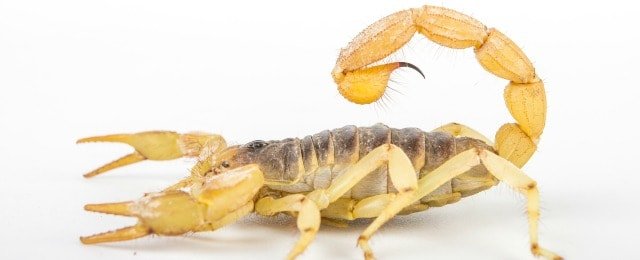
Scorpions aren't roaming randomly. They follow moisture, insects to eat, and dark, tight spaces — which is why they show up around block walls, under landscaping rock, in woodpiles stacked against the house, and inside expansion joints and weep holes that were never sealed. Once they're inside, they tend to stay low: bathrooms, closet floors, and shoes left overnight are classic spots. A bark scorpion sting is painful and, for most healthy adults, not medically serious — but for kids, older adults, or anyone with a reaction, it can mean an ER visit, which is reason enough to get them out of a home rather than just squash-and-hope.
As your pest control contractor, we treat scorpions the way we treat every pest here: natural-first, and honest about what that means. A single spray around the baseboards doesn't do much against an animal covered in a waxy shell that repels most contact insecticides — the real fix is removing what draws them in and sealing what lets them through. If they come back before your next scheduled visit, we come back and treat again at no charge. No contract required to get that.
Our Approach
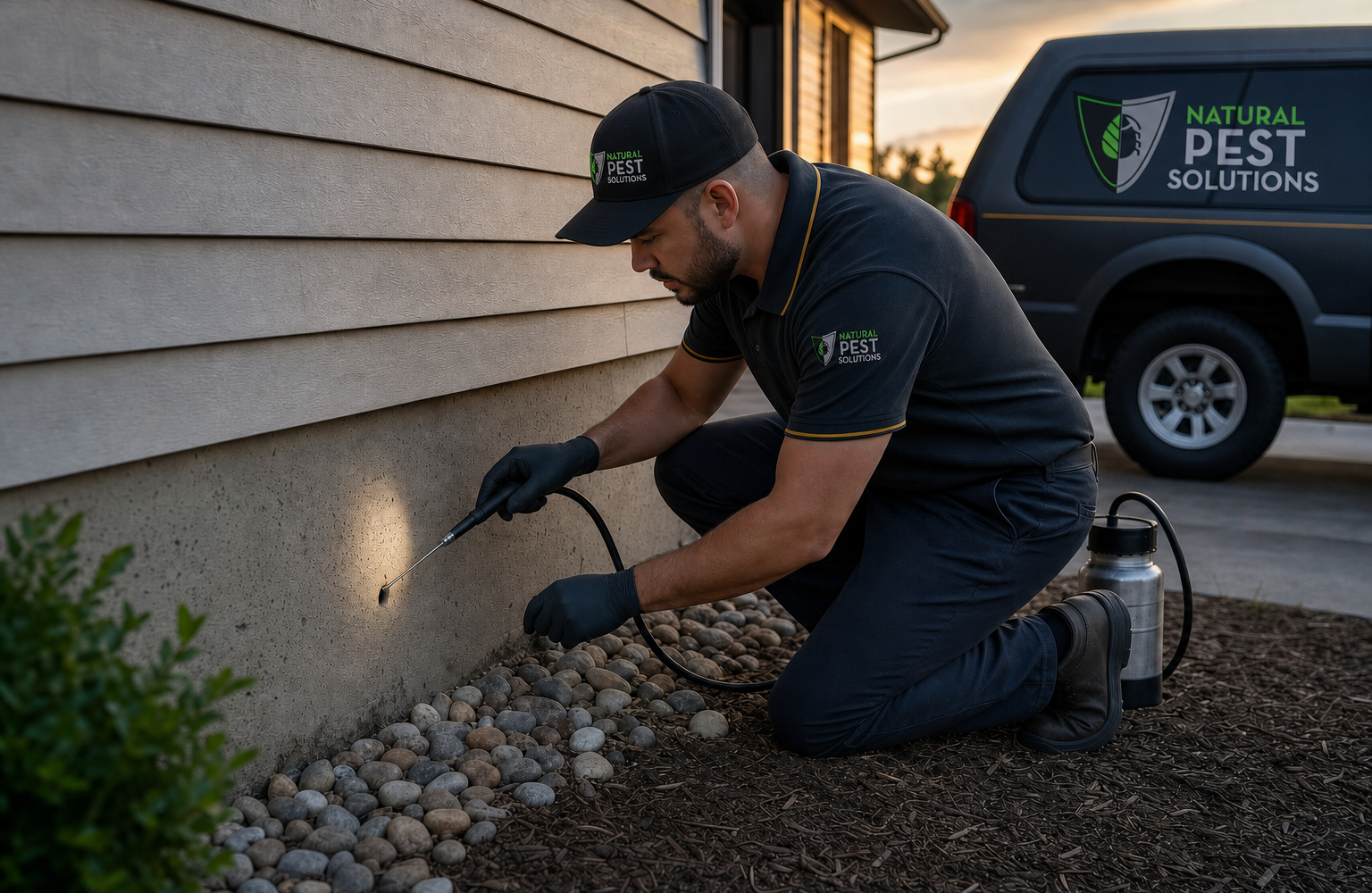
As exterminators, we start outside, because that's where the problem actually lives: clearing harborage like loose rock piles and leaf litter away from the foundation, treating voids in block walls and around utility penetrations, and applying targeted dusts and natural repellents — cedarwood and diatomaceous earth among them — into the cracks and gaps scorpions use to get from outside to in. Weep holes get screened, door sweeps get checked, and expansion joints get sealed where they've opened up. Indoors, we focus on the entry points we found outside rather than blanket-spraying living space you don't want treated. It's the same guarantee across every pest we handle: if scorpions turn back up before your next visit, we're back out to treat it again, no charge, no contract required to hold us to it. If scorpion sightings keep happening and you want to know exactly where they're getting in, a full inspection maps every entry point before we treat.
Satisfaction Guaranteed
If it's not gone, we come back — free.
Safe & Humane
Natural methods, safe around kids and pets.
No Contracts
Stay because it works — not because you're locked in.
The Details
Treatment Options & Products We Use
Treatment Options
Scorpion control relies on layering a few different treatment types, since no single method handles their shell and hiding habits alone. A pest management company handling scorpions typically combines:
- A non-repellent liquid residual applied around the foundation perimeter, which scorpions pick up as they cross rather than sense and avoid, since scorpions can walk right past a repellent-based product without contacting enough of it to matter.
- Granular treatments worked into mulch beds, gravel, and landscaping rock where scorpions burrow and hide during the day, breaking up harborage at the source instead of just treating where they're seen.
- Glue board monitors placed indoors along baseboards and in closets to confirm whether scorpions are still getting in after the perimeter work, since sting risk means confirming the job worked matters more than with most pests.
- Vegetation management, trimming tree limbs and shrubs back from rooflines and walls, since scorpions climb stucco and block exteriors easily and overhanging branches give them a bridge straight onto the roof and into attic spaces.
- Attic and roofline inspection for gaps where climbing scorpions can drop into wall voids from above, a route that's easy to miss if treatment only focuses on ground-level entry points.
Products & Methods We Use
Products and equipment used for scorpion control include:
- Non-repellent liquid residuals for perimeter and foundation treatment
- Granular treatments for mulch beds, gravel, and landscaping rock
- Crack-and-crevice dust formulations, including natural options like diatomaceous earth, for wall voids and expansion joints
- Glue board monitors for indoor tracking and confirmation
- Weep hole screens, door sweeps, and sealants for exclusion work
- UV flashlights for nighttime inspection, since scorpions fluoresce under UV light
We use non-toxic, kid- and pet-safe products wherever possible and lean on natural, eco-conscious options like cedarwood and diatomaceous earth, reserving stronger residual treatments for perimeter zones away from where people and pets spend time.
What Customers Say
Real reviews from our Google Business Profile.
“I am very happy with the service I received from Natural Pest Solutions, they took my call right away and came right out and inspected my home and found the source of my ant problem and since they were here I have not seen a single bug around. I would recommend these guys to anyone needing pest control services.”
Rick Gruenke — Google review
View on Google →“I am very happy with the results that Natural Pest Solutions was able to provide as far as the speed of their work and also the problem with ants in my home was able to be resolved quickly which gave me peace of mind. I would recommend this pest control company to anyone having issues with bugs.”
Stefano Merci — Google review
View on Google →“I am really pleased with the guys at Natural Pest Solutions, they got rid of my rodent problem quickly and those mice have not been back. I highly recommend these guys, they are the best pest control company around.”
Shawn Kern — Google review
View on Google →Questions
Frequently Asked About Scorpion Control
How much does scorpion treatment cost?
Cost depends on the size of the property, how many entry points need sealing around block walls and weep holes, and whether it's a one-time treatment or ongoing seasonal service. A single visit typically runs in the low-to-mid hundreds, with larger yards or heavier harborage like extensive rock or woodpiles pushing it higher.
Is scorpion treatment safe for kids and pets?
Yes — we lead with natural repellents like cedarwood and diatomaceous earth applied into cracks and voids, not a broad chemical spray across the yard, so there's nothing dangerous left for kids or pets to walk through. The bigger safety issue is the sting risk from the scorpions themselves, especially for kids or anyone with a reaction.
Can I get rid of scorpions myself?
You can reduce harborage yourself by clearing rock piles and firewood away from the foundation, but a scorpion's waxy shell repels most contact insecticides you'd buy off the shelf, so a baseboard spray alone won't do much. A UV flashlight check at night will show you if you have a real problem, but sealing weep holes and wall voids is where the actual fix happens.
How long does scorpion treatment take to work, and will they keep coming back?
You'll typically see a drop in activity within the first couple of weeks as sealed entry points cut off new scorpions coming in, but scorpions can live for years and keep returning to a property that still has the moisture and prey they want. That's why we treat it as ongoing in scorpion-heavy areas — and if they show up again before your next visit, we come back at no charge.
What are signs I have a scorpion problem?
Finding one dead in a sink or bathtub is actually the most reliable sign, since it usually means others are getting in through the same spot. Look under stones, mulch, or firewood near the foundation, in gaps where a block wall meets the ground, and run a UV flashlight along baseboards at night — they'll glow blue-green if present.
What's the difference between scorpion treatment and general pest control?
General pest control targets ants, spiders, and common insects with broader perimeter treatment, while scorpions need a more targeted approach because their waxy shell resists standard contact insecticide — the real work is sealing physical entry points like weep holes and expansion joints rather than just spraying. A property can be otherwise pest-free and still have a scorpion problem if those gaps aren't addressed.
Learn More
Trusted resources on this topic
Guidance from health and regulatory bodies. In Canada, see Health Canada.
- National Pesticide Information Center ↗Pest-by-pest fact sheets from Oregon State University and the EPA.
- EPA: Controlling Pests ↗U.S. guidance on choosing and using pest control safely.
- Health Canada: Pesticides and Pest Management ↗Canadian guidance on pest control products.
Keep exploring
Related pest control services
Areas we serve
- Pest control in Orangevale
- Pest control in Orillia
- Pest control in Paradise Valley
- Pest control in Phoenix
- Pest control in Pinnacle Peak
- Pest control in Port Neches
- Pest control in Richmond
- Pest control in Salmon Arm
- Pest control in San Tan Valley
- Pest control in Scottsdale
- Pest control in Silsbee
- Pest control in Surrey
- Every location we serve
Ready to deal with it, for good?
Talk to a real expert — no pressure, no toxic chemicals, no contract required.
Recognized by the organizations that set the standard