Services
Spider Control
Spiders move in wherever the food supply and hiding spots are, so a few webs in the garage rarely stay a few for long. We clear out what's there now and treat the conditions that keep bringing them back.
Natural, guaranteed pest control — free no-obligation quotes, no contract, safe around kids and pets.
Signs You Need This
How to tell it's time to call
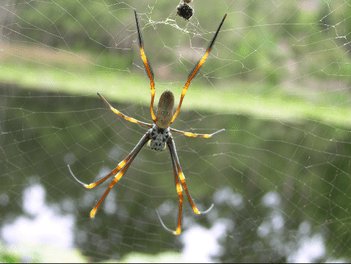
Spider webs tend to give away their type as much as their location. Loose, tangled cobwebs collecting dust in basement corners, stairwells, and window wells usually mean common house spiders have settled in. Funnel-shaped webs tucked into foundation gaps or woodpiles point to funnel-web or grass spiders. Sightings without obvious webs, especially at night in garages or storage boxes, often mean wolf spiders or (in the central and southern US) brown recluse are hunting rather than spinning. Small, tan egg sacs wedged into undisturbed corners are a sign a population is already established, not just passing through. In Australia, redback sightings under outdoor furniture or in sheds are worth acting on quickly given their bite risk; in the UK, most calls are for large house spiders working their way indoors as the weather turns.
The Full Picture
Spider infestations are almost always a symptom of something else going on, whether that's an insect population spiders are feeding on, gaps in the building envelope, or clutter that gives them undisturbed places to build. As your pest control contractor, our approach treats the whole picture instead of just knocking down the webs you happen to see, which is why the results hold up rather than needing a repeat visit every few weeks.
We lead with natural, plant-based treatments because they work without putting kids, pets, or beneficial insects at risk, and we reserve anything stronger for situations where it's genuinely warranted, like a confirmed brown recluse or redback presence. There's no contract to sign. If spiders come back before the guarantee period is up, we come back too, at no charge, until the job is actually done.
Our Approach
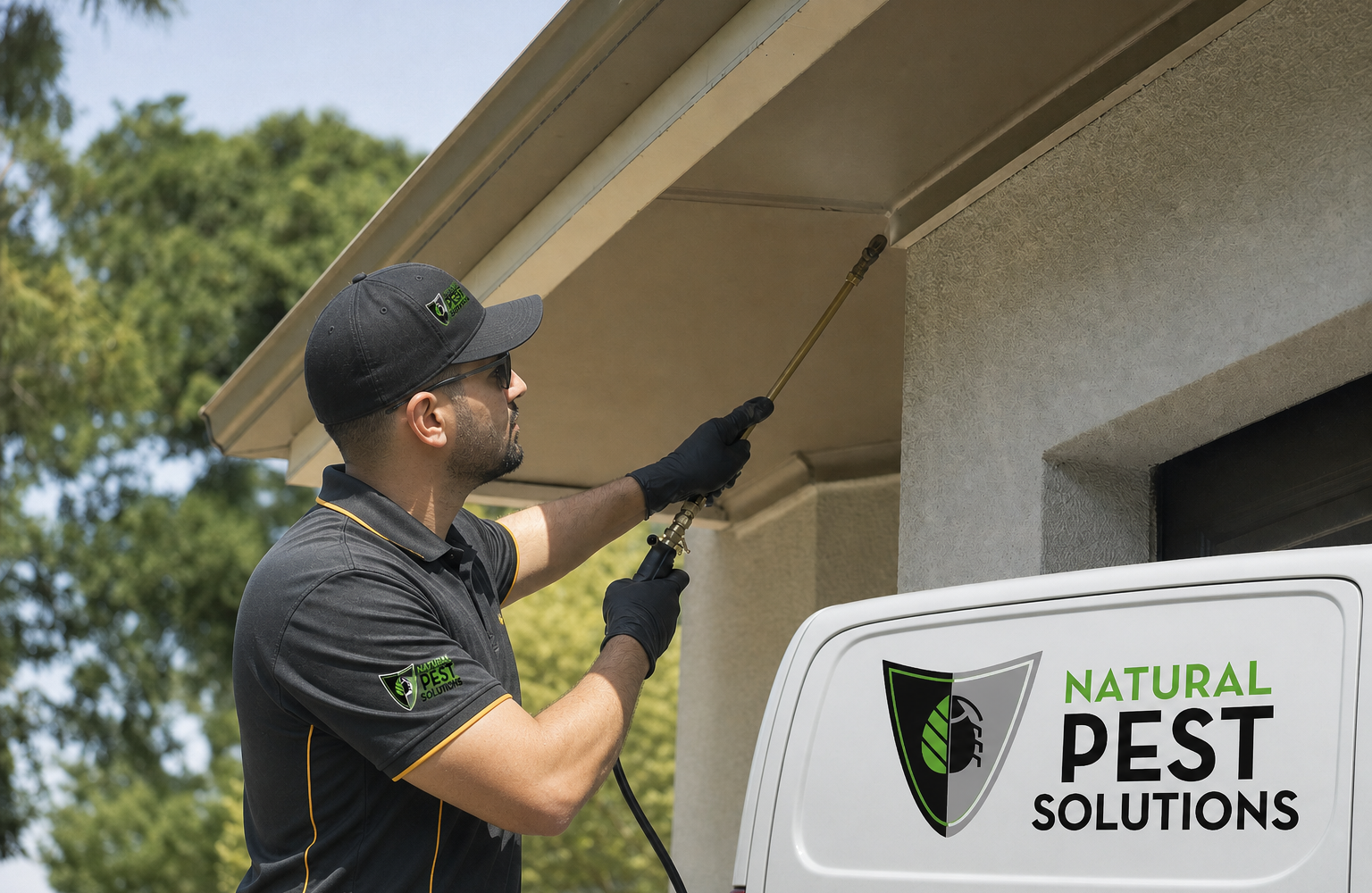
As pest professionals, we start by tracing spider activity back to its source, since spiders follow prey, not people. That means checking where other insects are gathering, where webs and egg sacs are already built, and where gaps around doors, vents, and utility lines are letting spiders walk right in. Treatment uses plant-based repellents like peppermint and cedar along entry points and harborage areas, physical web and egg sac removal, and sealing to cut off access, rather than blanketing the whole property in chemical spray. Because reducing a spider's food source matters as much as the spiders themselves, we also address the ants, flies, or other insects drawing them in. If spiders are still showing up after treatment, we come back and address it at no extra cost.
Satisfaction Guaranteed
If it's not gone, we come back — free.
Safe & Humane
Natural methods, safe around kids and pets.
No Contracts
Stay because it works — not because you're locked in.
The Details
Treatment Options & Products We Use
Treatment Options
Beyond removing webs and treating harborage areas, a thorough spider job layers several technical steps that address both the spiders present and the gaps letting new ones in. An exterminator working a spider case typically works through:
- Crack-and-crevice inspection along foundation lines, weep holes, and utility penetrations to map every gap wide enough for a spider to squeeze through, then sealing those points with caulk, foam, or mesh so the exclusion work actually holds.
- Targeted residual treatment applied as a barrier along baseboards, window tracks, and door frames rather than broad interior fogging, since spiders pick up the product on their legs as they cross treated surfaces.
- Dusting wall voids and attic access points where spiders and their prey insects hide undisturbed, using a fine dust formulation that stays effective for weeks in a space that never gets vacuumed or wiped down.
- Placing glue board monitors in basements, garages, and crawlspaces to track which species are active and confirm the population is dropping, rather than just guessing based on how many webs show up next visit.
For venomous species like brown recluse or redback, monitoring continues past the initial visit since a confirmed population can take more than one treatment cycle to fully clear.
Products & Methods We Use
Products and equipment used for spider control include:
- Plant-based and residual liquid barrier treatments for baseboards, window tracks, and entry points
- Crack-and-crevice dust formulations for wall voids, attic gaps, and undisturbed harborage areas
- Glue board monitors placed in basements, garages, and storage areas to track activity
- Caulk, foam sealant, and mesh screening for closing gaps around foundations, utility lines, and weep holes
- Manual tools for physical web and egg sac removal
- Targeted, stronger-formulation treatments reserved for confirmed venomous species like brown recluse or redback
We favor non-toxic, kid- and pet-safe formulations and natural, eco-conscious options wherever the infestation allows, reserving anything stronger for situations that genuinely call for it.
What Customers Say
Real reviews from our Google Business Profile.
“I am very happy with the results that Natural Pest Solutions was able to provide as far as the speed of their work and also the problem with ants in my home was able to be resolved quickly which gave me peace of mind. I would recommend this pest control company to anyone having issues with bugs.”
Stefano Merci — Google review
View on Google →“I am really pleased with the guys at Natural Pest Solutions, they got rid of my rodent problem quickly and those mice have not been back. I highly recommend these guys, they are the best pest control company around.”
Shawn Kern — Google review
View on Google →“I really am impressed with the great customer service and how quickly they came to help me with my rodent problem. After doing a pest inspection they found that the problem was much worse than I expected, but the guys at Natural Pest Solutions came to my rescue and got rid of all these nasty pests in my home.”
Phillip Pond — Google review
View on Google →Questions
Frequently Asked About Spider Control
How much does spider control cost?
Cost depends on the size of the property, how established the population is, and whether it's driven by another insect problem spiders are feeding on. A single treatment typically runs in the low-to-mid hundreds, with recurring service costing less per visit if you're on an ongoing plan.
Is spider treatment safe for kids and pets?
Yes — we lead with plant-based repellents like peppermint and cedar rather than broad chemical spraying, which is safe around kids and pets once it's dry. We only reserve anything stronger for situations where it's genuinely warranted, like a confirmed brown recluse or redback presence.
Can I get rid of spiders myself?
Knocking down webs and vacuuming egg sacs helps short-term, but if you're not addressing what's actually drawing them — another insect population, gaps around doors and vents, clutter that gives undisturbed hiding spots — they'll be back within weeks. Professional treatment traces activity back to the source instead of just clearing what's visible.
How long does spider treatment take to work?
Most people notice a real drop in web-building and sightings within one to two weeks as entry points get sealed and the insects spiders were feeding on get addressed too. Results hold up better than a one-time spray because it targets the reason spiders showed up — and if they come back before the guarantee period is up, we come back too.
What are signs I have a spider infestation and not just the occasional spider?
Loose, tangled cobwebs collecting dust in basement corners or stairwells, funnel-shaped webs in foundation gaps, and small tan egg sacs wedged into undisturbed corners all point to an established population rather than one spider passing through. Repeated sightings at night in garages without obvious webs often means hunting spiders like wolf spiders are active rather than web-builders.
How do I know if it's a brown recluse or just a common house spider?
Common house spiders and cobweb spiders are far more frequent and mostly harmless, building loose webs in corners, while a brown recluse (mainly central and southern US) hunts at night without an obvious web and has a distinctive violin-shaped marking. If you're not sure, treat repeated sightings without webs as worth a professional look rather than guessing, since treatment differs for a confirmed recluse or redback situation.
Learn More
Trusted resources on this topic
Guidance from health and regulatory bodies. In Canada, see Health Canada.
- National Pesticide Information Center ↗Pest-by-pest fact sheets from Oregon State University and the EPA.
- EPA: Controlling Pests ↗U.S. guidance on choosing and using pest control safely.
- Health Canada: Pesticides and Pest Management ↗Canadian guidance on pest control products.
Keep exploring
Related pest control services
Areas we serve
- Pest control in Phoenix
- Pest control in Pinnacle Peak
- Pest control in Port Neches
- Pest control in Richmond
- Pest control in Salmon Arm
- Pest control in San Tan Valley
- Pest control in Scottsdale
- Pest control in Silsbee
- Pest control in Surrey
- Pest control in Tempe
- Pest control in Tucson
- Pest control in Vancouver
- Every location we serve
Ready to deal with it, for good?
Talk to a real expert — no pressure, no toxic chemicals, no contract required.
Recognized by the organizations that set the standard