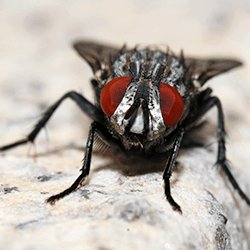
A few flies in the house is usually a minor annoyance. A house that keeps producing new flies day after day almost always has a source feeding them, and finding that source matters more than any amount of swatting or spraying.
Trace it back to the source
House flies are drawn to garbage, pet waste, and food residue, and they lay eggs directly in whatever they’re feeding on. A kitchen trash can that isn’t sealed well, a diaper pail, or an overflowing outdoor bin are common culprits. Fruit flies specifically target overripe produce and anything fermenting, including forgotten fruit on the counter, empty beverage containers, and drains with buildup. A single piece of fruit left out for a few days in warm weather can support a full breeding cycle, since fruit flies can go from egg to adult in about a week.
Check the drains
Drain flies, small and fuzzy-looking compared to fruit flies, breed in the organic gunk that builds up inside kitchen and bathroom drains. Running water alone doesn’t remove it. A drain brush or an enzyme-based drain cleaner used weekly clears the buildup that’s actually feeding them, where bleach often just kills what’s visible on the surface without touching the source. A simple way to check if a drain is the culprit is to tape a piece of clear plastic over the opening overnight; if flies are emerging from that drain, you’ll find them stuck to the underside by morning.
Why flies show up in the first place
Flies aren’t randomly wandering into a home, they’re following a scent trail to a food or moisture source, often from several metres away. That’s why sealing a screen or swatting the adults you see rarely solves anything on its own: more are already on the way, drawn by whatever’s producing the smell in the first place. Warm, humid weather speeds up their breeding cycle considerably, which is why fly problems tend to spike hard in summer, especially in humid climates across the southeastern US, coastal Australia, and much of the UK after a wet stretch. A single female house fly can lay several hundred eggs over her lifetime, spread across multiple batches, which is part of why a small problem left unaddressed for even a couple of weeks can turn into a much bigger one.
Screen and seal entry points
- Repair or replace torn window screens, a common but overlooked entry point
- Keep exterior doors closed rather than propped, especially near kitchens
- Check screens on any vents leading outside, including dryer and bathroom exhaust vents
- Look at door sweeps on exterior doors, gaps of even 6 mm are enough for smaller flies to get through
Sanitation habits that make the biggest difference
- Take kitchen trash out daily, not every few days, during warm months
- Store ripe fruit in the refrigerator rather than on the counter
- Clean up pet waste in the yard promptly, since it’s a major outdoor breeding source
- Wipe down counters and stovetops after cooking, removing grease and food residue flies are drawn to
- Rinse out recycling before it sits in a bin for a week, residue left in cans and bottles is enough to draw flies indoors
Traps and natural deterrents
Apple cider vinegar traps with a drop of dish soap are genuinely effective against fruit flies and cost almost nothing to set up. The vinegar draws them in, and the dish soap breaks the surface tension so they can’t fly back out once they land. For house flies, sticky traps placed near suspected entry points or breeding areas catch adults without chemicals in the air. These help manage an existing population but won’t stop new flies from arriving if the underlying source isn’t addressed.
What not to do
Spraying a room with an aerosol insecticide kills the flies you can see and does nothing about the eggs and larvae still developing in a drain or a trash can, so the adults keep reappearing every few days as new ones hatch. Bleach poured down a drain is another common miss: it can whiten the buildup and kill surface bacteria, but it doesn’t break down the organic gunk lining the pipe, so flies keep breeding in it. And swatting flies over food prep surfaces, while satisfying, can spread bacteria from wherever that fly was last feeding, which is worth keeping in mind if the source turns out to be garbage or waste.
When the source isn’t obvious
Sometimes the source is somewhere less visible, a dead rodent in a wall void, a cracked sewer line, or a compost bin closer to the house than realized. A cluster of flies concentrated in one room or against one window, rather than spread through the house, is often the clearest clue pointing toward a nearby wall or floor void. If flies keep returning despite good sanitation, that’s usually a sign the source hasn’t been found yet, and no amount of trapping or spraying will fix that on its own. Natural Pest Solutions traces the problem back to its actual origin rather than treating just the flies in the room, which is the difference between a fix that lasts and one that needs repeating every few weeks.
Types of Flies You’re Likely Seeing
“Fly problem” covers a handful of very different insects, and telling them apart narrows down the fix fast. Cluster flies are slightly larger than house flies, sluggish, and tend to show up in large numbers on sunny windows in fall and again in early spring, since they overwinter in wall voids and attics rather than breeding indoors the way house or fruit flies do. Phorid flies, sometimes called humpbacked flies for their distinctive profile, breed in decaying organic matter and are a common sign of a cracked sewer line, a dead rodent, or organic buildup in a floor drain, similar to drain flies but often pointing to a more serious plumbing issue. Fungus gnats, frequently mistaken for fruit flies, breed in overwatered houseplant soil rather than food, and the fix there is letting soil dry out between waterings rather than anything in the kitchen. Getting the identification right before treating saves a lot of wasted effort chasing the wrong source.
Outdoor Sources That Feed an Indoor Problem
A tidy kitchen doesn’t always mean the source is inside. Compost bins, especially ones with meat, dairy, or oils added despite guidance against it, are a major fly breeding site that sits close enough to the house to send flies indoors constantly. Pet waste left in the yard for more than a day or two does the same thing, and it’s one of the most overlooked sources in homes with dogs. Trash and recycling areas deserve a look too; a dumpster or bin enclosure that isn’t cleaned periodically builds up residue in the bottom that keeps producing flies independent of what’s currently inside the bin. In warmer climates, including much of the Gulf Coast and coastal Australia, outdoor sources stay active nearly year-round rather than slowing down with the seasons the way they do farther north.
When Flies Signal a Bigger Maintenance Issue
A sudden fly problem in a home that’s usually fine can point to something failing rather than a cleaning lapse. A P-trap that’s dried out under a rarely used sink or floor drain no longer blocks sewer gas or the insects that travel with it, and running water down that drain for a minute restores the seal immediately. A cracked or disconnected sewer vent stack can also let flies, and odor, into a house, usually noticeable as a cluster near one specific drain or floor vent rather than spread through the home. If cleaning, drain maintenance, and sealing entry points haven’t cleared things up within a couple of weeks, it’s worth having a plumber check for a hidden leak or a break in a line before assuming it’s a pest-only problem. The National Pesticide Information Center has useful background on fly biology and control if you want to dig deeper into a specific species.
Cleaning Products That Actually Break Down Residue
Not every cleaner does the job a fly problem actually needs. Surface cleaners and disinfectant sprays kill bacteria and leave a room smelling clean, but they largely sit on top of grease and organic film rather than breaking it down, which means the residue feeding flies in a drain or under an appliance is often still there afterward. An enzyme-based cleaner works differently, using bacteria or enzymes that digest organic matter over several hours rather than instantly, so it needs to sit rather than be wiped away right after application to be effective. This is why a drain that’s been scrubbed with a standard cleaner can still be breeding drain flies within days, while the same drain treated with an enzyme cleaner and left overnight shows a real difference. The same logic applies to garbage disposals, trash can interiors, and the tracks under a stove, all spots where grease and food residue build up in ways a quick wipe-down doesn’t reach.
A few common questions
How long should cleanup take before flies clear up? For a source you can identify and remove, like an old drain or a piece of forgotten produce, expect noticeably fewer flies within a few days, though eggs already laid will keep hatching for a week or two after the source is gone. Is it worth treating the yard too? If garbage or compost is stored near the house, yes, since outdoor breeding sites keep sending new flies indoors no matter how well the interior is sealed. And if only one room is affected, check that room specifically for a wall void, floor drain, or hidden food source before assuming the whole house needs treatment.