
When mosquitoes have taken over a yard, the instinct is to reach for whatever spray promises the fastest kill. That helps for an evening, but it doesn’t touch the source, which means you’re back to swatting within a day or two. Here’s the order that actually gets lasting results, starting with what works fastest.
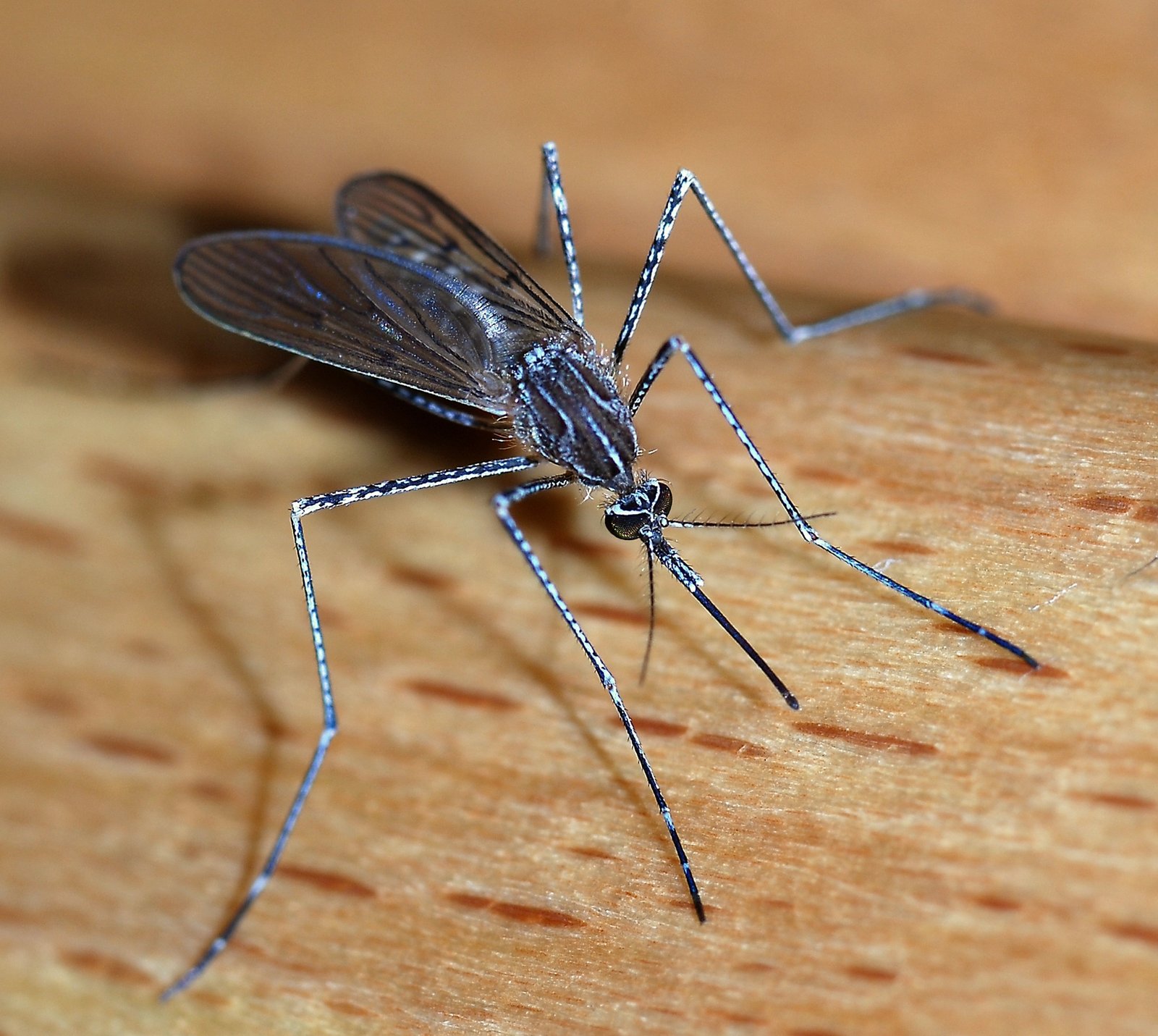
Step one: eliminate standing water, today
A female mosquito needs still water for roughly a week to take an egg from laid to flying adult, and she doesn’t need much of it. Walk the property and empty anything holding water: gutter sections that don’t drain, a tarp fold, a wheelbarrow, plant saucers, an unused kiddie pool, even a bottle cap in the grass. This single step, done thoroughly, often has a bigger impact than any spray treatment. Make it a weekly habit through the warm months, not a one-time walk, since a single afternoon rainstorm can refill every container you emptied.
A single female can lay 100 or more eggs in one batch, and she’ll do it again every few days as long as she keeps finding blood meals and water to lay in. That’s why a property with several small unmanaged containers can go from a minor nuisance to a serious problem within one warm, rainy week, the math compounds fast when every container is producing its own batch on its own timeline.
Step two: treat what you can’t drain
Rain barrels, ornamental ponds, low spots that pool after every storm, and other water features you don’t want to eliminate entirely can be treated with Bti dunks, a naturally occurring bacteria that kills mosquito larvae specifically without harming pets, birds, fish, or beneficial insects. This addresses the mosquitoes that are already developing, not just future egg-laying. A single dunk generally keeps working for around 30 days, so mark a calendar reminder rather than guessing when to replace it.
Bti, short for Bacillus thuringiensis israelensis, works by disrupting the digestive system of mosquito larvae specifically, which is why it doesn’t harm fish, frogs, birds, or pets that come into contact with treated water. The National Pesticide Information Center has detailed technical fact sheets on Bti for homeowners who want the full breakdown of how it works and what it does and doesn’t affect. Dunks come in different sizes for different container volumes, a small decorative pond needs a smaller dose than a full rain barrel, so check the product label rather than assuming one dunk covers every water feature on the property equally.
Step three: barrier treatment for immediate relief
For an event this weekend or a yard that’s simply unusable right now, a targeted barrier treatment applied to shaded vegetation, mosquitoes’ preferred daytime resting spots, knocks down the adult population fast. Botanical formulations built around ingredients like cedar oil or garlic extract handle this without the lingering residue of older synthetic products, and they hold up for a couple of weeks per application in most climates. Timing the application a day or two ahead of an outdoor event, rather than the morning of, gives it time to settle into the vegetation where it matters.
A proper barrier application isn’t just a quick spray across the lawn. It targets the underside of leaves on shrubs and trees around the yard’s perimeter, mulch beds, tall grass along fence lines, and any shaded, humid pocket where adults rest between feedings, since that’s where a backpack sprayer needs to reach for the treatment to actually contact resting mosquitoes rather than just the visible foliage. Skipping the underside of leaves is one of the most common reasons a DIY spray underperforms, since that’s exactly where mosquitoes tend to sit out the heat of the day.
Step four: reduce what’s attracting them to begin with
- Trim overgrown shrubs and tall grass where adults rest during the day
- Point box fans at patio seating areas, since mosquitoes are weak fliers and struggle against moving air
- Keep gutters clear so they drain fully after rain instead of holding pockets of water
- Check under decks and in crawlspaces, which stay shaded and damp longer than the rest of the yard
- Limit standing outdoor lighting near seating areas, since some lighting attracts other insects that in turn draw mosquitoes’ predators and prey into the same space
- Keep grass mowed on a regular schedule, since tall grass holds humidity at ground level even after the soil surface looks dry
Why the order matters
Skip straight to barrier spray without addressing standing water, and you’re treating symptoms while new mosquitoes keep hatching a metre or two away. Handle the water first, then let a barrier treatment deal with what’s already flying.
Common mistakes that slow results
Treating only the patio or seating area itself, rather than the surrounding vegetation, is one of the most frequent DIY mistakes, mosquitoes aren’t sitting on the patio furniture, they’re resting in the shrubs 3 m away and flying in to feed. Applying a barrier treatment right before or during rain is another, since it washes the product off before it has time to bind to leaf surfaces, wasted product and wasted effort in one step. And treating the yard once, seeing a good week, and stopping there overlooks that both standing water and barrier treatments need to be maintained on a schedule, not treated as one-and-done fixes. A yard with a persistent source nearby, a neglected pool next door, a low wetland area, a drainage ditch, will keep producing new adults regardless of how well you’ve treated your own property, so a realistic plan accounts for pressure from outside the yard, not just what’s happening inside the fence line.
DIY vs calling a professional
A yard with a moderate, seasonal mosquito problem often responds well to a disciplined DIY routine: weekly water checks, Bti dunks in anything that can’t be drained, and an over-the-counter barrier spray applied every couple of weeks. Where DIY tends to fall short is on larger properties, heavily wooded lots, yards backing up to a wetland or retention pond, or situations where the source is partly on a neighboring property and outside your control. Professional-grade barrier products typically last longer per application than consumer versions, and a pest control technician’s sprayer can reach taller trees and denser vegetation than a handheld unit. If you’ve kept up a real DIY routine for a few weeks and numbers haven’t budged, that’s usually a sign the pressure is coming from beyond what source reduction on your own property can solve, and it’s worth bringing in a pest management company to assess what’s actually driving it.
Seasonal timing across different climates
In most of the US and southern Canada, mosquito pressure builds through late spring and peaks from June through August, tapering once nighttime temperatures drop consistently below the mid-50s. Gulf Coast and southeastern properties often see a season that starts earlier and runs later, sometimes into November in mild years. In Australia, the pattern flips seasonally, with the heaviest pressure running from the warmer months into early autumn depending on the region. Wherever you are, starting standing-water checks a few weeks before your local season typically ramps up puts you ahead of the first hatch instead of reacting to it.
How long results actually last
A thorough standing-water pass keeps working as long as you keep it up, since it’s addressing the source directly. Bti dunks generally need replacing every 30 days during active season. A single barrier treatment typically holds for two to three weeks depending on rainfall, since heavy rain washes botanical treatments off vegetation faster than dry weeks do. For a yard with a persistent problem, most homeowners land on a recurring treatment every three to four weeks through the season, paired with the weekly water check as an ongoing habit rather than a one-time task.
What doesn’t actually help much
Bug zappers mostly kill non-biting insects and do little to reduce the mosquitoes actually landing on people, since mosquitoes aren’t strongly drawn to the light in the first place. Citronella candles have a modest, short-range effect at best and won’t do much for a whole patio. And a single fogging treatment with no follow-up on standing water is a short-term fix that a homeowner ends up paying for repeatedly without addressing why the yard keeps producing new mosquitoes.
Quick questions people ask
Do bug zappers or citronella actually help at all? Marginally, at best, and mostly at very close range. Neither replaces removing standing water or a proper barrier treatment.
How fast will I notice a difference after treatment? A barrier treatment usually knocks down the adult population within a few hours. The bigger, lasting drop shows up after a week or two, once eliminated standing water stops producing new adults to replace the ones treated.
Is it safe to treat a yard with a vegetable garden? Botanical barrier treatments are generally applied to ornamental vegetation and resting areas away from edible plants, and a pest professional’s treatment plan should account for exactly where food is grown on the property.
What does a treatment plan typically cost? Pricing depends on property size, how overgrown the vegetation is, and how often treatments are scheduled, so it varies property to property. Most pest management companies will walk the yard and give a free no-obligation quote before any work starts, which is worth doing even if you’re planning to handle most of the maintenance yourself, since a professional can flag resting sites or hidden water sources you might miss.
A note on repellent wearables and sprays
Personal repellents applied to skin or clothing are a separate, complementary layer, not a replacement for yard treatment. They protect the people at an event for a few hours; they do nothing for the yard itself and won’t help the neighbors, the dog, or anyone who forgets to reapply. Treating the property is what actually reduces the population you’re dealing with each time you step outside.
If you’ve got an event coming up or a yard that’s been unusable all summer, we can get a treatment scheduled quickly and set up a recurring plan for the rest of the season. Call 1-844-783-4821.