Every house is different, but the calls we get follow a pretty consistent pattern by season and region. Here’s what’s usually behind the pests you’re seeing, what draws them in, and what to do about each before it turns into something bigger.
Ants
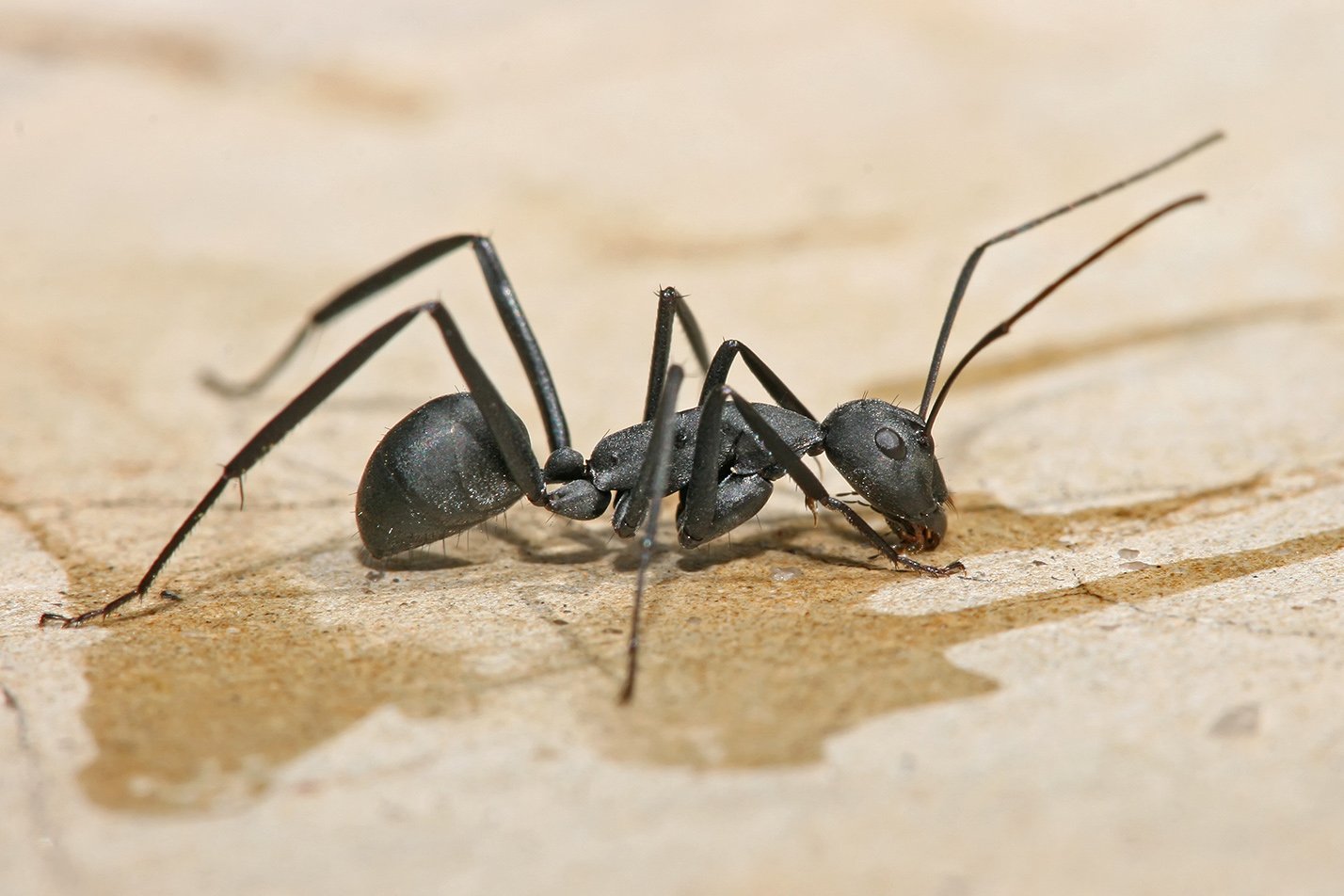
Odorous house ants, the kind that smell faintly like rotten coconut when crushed, are the most common indoor ant across most of the US and Canada. They’re drawn in by moisture and sweet residue, often trailing from a single exterior gap near a kitchen or bathroom, and a colony can have multiple queens, which is part of why a trail that seems to disappear for a few days often just reroutes rather than actually going away. Wipe down trails with soapy water to disrupt the scent path, then bait rather than spray. Spraying a visible trail kills the ants you can see but does nothing to the nest, and it can actually make the colony split and spread to avoid the treated area.
Cockroaches
German cockroaches are by far the most common indoor species, and unlike a lot of the other pests on this list, they rarely come from outside, once a population is established in a kitchen or bathroom, it tends to stay and grow rather than wander in and out. They’re drawn to warmth, moisture, and food residue, especially grease buildup behind appliances and crumbs in hard-to-reach spots like under a stove or refrigerator. Seeing roaches during the day, when they’re normally most active at night, is usually a sign the population has grown large enough that there isn’t enough shelter for everyone to stay hidden. Gel bait placed at entry points and along travel paths works far better than a spray, since roaches share bait with the rest of the colony through grooming and feeding behavior, which spreads the effect well beyond the insects that fed directly. Sprays, by contrast, mainly kill what they contact and can actually scatter a population into new hiding spots throughout the house.
Spiders
Most spiders showing up indoors are incidental, following the insects they eat in from outside rather than trying to colonize the house itself. Reducing outdoor lighting near entry points, which attracts flying insects, cuts down on both at once, since fewer insects at the door means less reason for spiders to hang around it. Sealing gaps around window frames and utility penetrations closes the door they’re using. A heavier spider presence in a basement or garage usually points to an insect population already established there rather than a spider problem on its own, so it’s worth checking what they might be feeding on.
Stink bugs and cluster flies
These show up in fall looking for a place to overwinter, squeezing through gaps around siding, attic vents, and window trim before the first real cold snap. Once inside a wall void or attic space, they go dormant until warmer weather or indoor heating wakes them, which is why homeowners sometimes see a second wave indoors in late winter even though nothing new is getting in from outside. Sealing the exterior before they arrive, ideally by early fall, works far better than dealing with them once they’re already in the wall voids, where sprays and traps can only reach the ones that wander back out.
Silverfish
Silverfish need humidity to survive, so their presence almost always points to a damp basement, bathroom, or closet with poor ventilation. They also feed on paper, book bindings, and wallpaper glue, so a run of silverfish in a home office or storage closet is worth taking seriously before they get into stored documents or books. A dehumidifier and better airflow often solves the underlying issue permanently, which matters more than any single treatment, since silverfish will keep returning to any space that stays consistently humid.
Pantry pests
Weevils and small beetles hitchhike in on flour, rice, cereal, and pet food, then spread to other stored goods nearby, sometimes chewing through cardboard and thin plastic packaging to reach adjacent items. Checking expiration dates and storing dry goods in sealed containers rather than their original bags prevents most infestations before they start. If you find pantry pests in one item, it’s worth checking everything else stored nearby, since larvae can already be present in packages that look untouched.
Wasps and yellow jackets
Late summer calls spike around stinging insects as colonies reach their largest size and foragers get more aggressive around food and sweet drinks outdoors. Ground-nesting yellow jackets are the ones most likely to catch someone off guard, since the nest entrance can be a small, easy-to-miss hole in a lawn or flower bed. Aboveground paper wasp nests under eaves or deck railings are more visible but still worth having a pest professional remove once a nest is established, rather than knocking it down and hoping the colony doesn’t rebuild somewhere close by.
Mice and rats
Rodent calls spike hardest in autumn as outdoor temperatures drop and mice and rats look for a warmer, more reliable food source indoors, though a house with consistent food access, like an unsealed pet food bag in a garage, can sustain rodent activity year-round regardless of season. The giveaways are usually droppings along a travel path, gnaw marks on stored boxes or wiring, and a faint musky, ammonia-like smell in an enclosed space like a cabinet or crawl space. Mice can squeeze through gaps as small as a quarter inch, about the width of a pencil, so sealing entry points has to be genuinely thorough rather than just addressing the obvious gaps. Snap traps and sealed bait stations both have a place, but neither works as a permanent fix without also closing off however the rodents got in to begin with, otherwise new individuals simply replace the ones that were caught. Rodent droppings can also carry disease, so cleanup after an infestation matters as much as the initial trapping, wearing gloves and a mask while disinfecting rather than dry-sweeping droppings, which can aerosolize particles.

The pattern behind almost all of it
- An entry point that hasn’t been sealed
- Moisture somewhere in the house that’s higher than it should be
- A food source, whether that’s crumbs, pet food, or sweet residue
Fixing those three things prevents more pest problems than any single treatment does, because it removes the reasons a pest chose your house over the one next door in the first place.
Common questions
Why do I keep seeing the same pest even after cleaning thoroughly? Cleaning removes food and some habitat, but it rarely eliminates an established colony or nest on its own. If ants, roaches, or rodents keep returning despite consistent cleaning, there’s almost always an entry point or a moisture source that hasn’t been addressed yet.
Is it normal to see more pests right after moving into a new house? Somewhat, yes. A change in occupancy, new food storage habits, boxes sitting around, doors left open during moving, can temporarily increase activity even in a house that wasn’t previously showing signs of a problem, so an initial inspection soon after moving in is a reasonable precaution rather than an overreaction.
Do seasonal pest problems mean I need a year-round contract? Not necessarily. Some households only need help at predictable seasonal peaks, ants in spring, wasps in late summer, rodents in fall, while others with ongoing moisture or entry issues benefit more from a standing prevention plan. What matters most is addressing the actual cause, not the contract length.
Regional patterns worth knowing
What tops the call list shifts by region as much as by season. Ants and stinging insects dominate warmer months across the southern US and most of Australia, where the season for both simply runs longer. Silverfish and other moisture pests are a bigger year-round issue in coastal and humid regions, from the Gulf Coast to the UK, where indoor humidity rarely drops low enough to discourage them on its own. Pantry pest calls don’t vary much by climate at all, since they travel in on packaging rather than weather, which is why they show up just as often in a dry, cold-winter home as anywhere else.
When it’s time to call rather than DIY
A single ant trail or one spider in the garage usually doesn’t need an exterminator. A trail that keeps returning after cleaning, a nest you can’t safely reach, silverfish showing up in multiple rooms, or any stinging insect nest near an entrance or a space kids and pets use are all situations where the risk or the recurring cost of DIY starts to outweigh calling someone who can identify the species and treat the actual source. When something’s already established, we identify exactly what you’re dealing with and treat it with the least disruptive method that actually works, backed by a real guarantee: if it’s not gone, we come back. Call 1-844-783-4821.