
Both flies show up uninvited in kitchens, but they’re solving very different problems for you, or causing very different ones, depending on how you look at it. Telling them apart takes about five seconds once you know what to look for, and it matters because the fix for one won’t touch the other.
How to Tell Them Apart
Size and Color
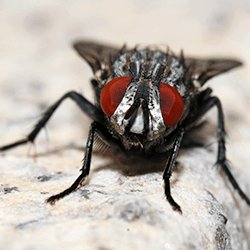
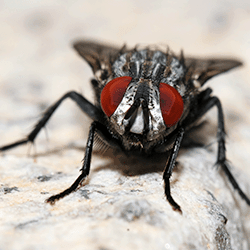
House flies are noticeably larger, around a quarter inch long, with a dull gray body and four dark stripes on the thorax. Fruit flies are much smaller, barely a tenth of an inch, with a tan or brownish body and, in many species, distinctive red eyes.
Flight Pattern
House flies tend to fly in fast, erratic loops and land on surfaces throughout the room. Fruit flies hover in a more sluggish, drifting pattern and stay close to their food source, usually a piece of fruit, a drain, or a trash can. If you watch where a fly keeps returning to rather than trying to catch it mid-air, that alone often tells you which one you’re dealing with.
Where Each One Actually Breeds
This is the part that determines how you get rid of them.
The Life Cycle Behind the Numbers
Both flies go through the same four stages, egg, larva, pupa, adult, but the timeline and conditions differ enough to matter. A fruit fly egg can hatch within a day in warm kitchen conditions, and the larva feeds on the fermenting surface of fruit or the biofilm inside a drain for about five to six days before pupating. The whole cycle from egg to breeding adult can finish in as little as eight days at room temperature, which is why fruit fly numbers seem to explode overnight even when only a few adults were visible a week earlier. House fly larvae, commonly called maggots, need a more substantial food source, decaying organic matter with enough mass to sustain them through a longer larval stage, typically five to ten days, followed by a pupal stage of about a week. In hot weather the entire house fly cycle can complete in under two weeks, and a single female can lay 500 to 900 eggs across several batches during her adult life, usually two to four weeks long.
- Fruit flies lay eggs in the moist surface of overripe or fermenting produce, and also breed readily in drains, garbage disposals, empty bottles, and recycling bins with residue. A single overripe banana on the counter can support a breeding cycle in under a week, since eggs to adult can happen in as little as eight days. A female can lay around 500 eggs over her lifetime, which is why a small problem can turn into dozens of flies within two weeks if the source isn’t found.
- House flies prefer decaying organic matter like garbage, pet waste, and compost. Outdoors, they’re drawn to dumpsters and animal waste, and they get inside opportunistically through open doors and torn screens rather than breeding indoors. Unlike fruit flies, they rarely establish an indoor breeding site unless there’s something substantial like a dead animal in a wall void or an unmanaged compost bin close to the house.
Getting Rid of Fruit Flies
- Remove or refrigerate ripening fruit rather than leaving it on the counter.
- Run garbage disposals with water regularly and clean the rubber seal, where organic buildup often collects unnoticed.
- Rinse recycling before it goes in the bin, since residue in cans and bottles is a common breeding site.
- Set an apple cider vinegar trap with a drop of dish soap to break the surface tension. It’s genuinely effective and pulls existing adults out of circulation while you address the breeding source.
- Give it about a week after cleaning up the source before expecting the population to fully clear, since eggs already laid will keep hatching for a few days.
Getting Rid of House Flies
- Repair torn window and door screens, since that’s the primary way they get indoors.
- Keep outdoor garbage bins sealed and away from doors.
- Clean up pet waste promptly in the yard.
- Use fly strips or traps near entry points rather than in the middle of living spaces.
- Check exterior door sweeps, gaps as small as a quarter inch are enough for flies to slip through.
Why House Flies Are a Bigger Health Concern Than People Realize
House flies don’t bite, but they’re mechanical vectors for bacteria in a way most people underestimate. They feed by landing on a surface and vomiting digestive enzymes onto it to liquefy the food before sponging it back up, which means anything they land on right before landing on your food, garbage, roadkill, animal waste, gets a direct transfer. Their legs and the fine hairs on their body pick up bacteria from whatever they last walked across, and they can carry pathogens like E. coli, Salmonella, and Shigella between surfaces. This is mostly a concern in food-handling situations rather than a single fly landing on a countertop once, but it’s the reason commercial kitchens take fly control so seriously, and why a house fly problem near food prep areas deserves more urgency than a stray fruit fly near the compost bin. Fruit flies, by contrast, are mostly a nuisance and food-quality issue rather than a meaningful disease risk indoors, since they’re drawn to decaying produce rather than the kind of filth house flies frequent.
What Not to Do
Spraying an aerosol insecticide around the kitchen kills whatever’s flying at the moment but doesn’t touch eggs already laid in a drain or in fruit skin, so new adults keep emerging every few days regardless of how often you spray. Pouring bleach down a drain to deal with suspected fruit fly breeding is another common miss, since bleach can kill surface bacteria without clearing the organic film lining the pipe that’s actually feeding the larvae. A drain brush or enzyme cleaner used consistently works far better than a one-time bleach pour.
Common Mistakes That Keep a Fly Problem Going
- Blaming the wrong pest. Small flies hovering around houseplant soil are often fungus gnats, not fruit flies, drawn to overwatered potting soil rather than produce. Treating a houseplant infestation like a kitchen fruit fly problem, by hunting for old fruit that isn’t there, wastes time while the gnats keep breeding in damp soil.
- Cleaning the drain but not the trap. Pouring cleaner straight down the drain barrel misses the P-trap curve where organic film tends to build up thickest. A bottle brush that actually reaches the bend does more than any liquid poured on top.
- Forgetting less obvious moisture sources. Mop buckets left with dirty water, a leaking dishwasher seal, or a drip pan under the fridge can all support fruit fly breeding just as well as a piece of fruit.
- Assuming an aerosol spray is a fix. As covered above, spraying kills flying adults but does nothing for eggs and larvae already established at the source, so the problem resurfaces within days.
- Giving up too early. Because eggs already laid keep hatching for several days after you’ve cleaned the source, seeing a few flies three or four days into cleanup doesn’t mean the fix failed, it usually means the tail end of the existing cycle is still working through.
Seasonal Patterns Worth Knowing
Both species are more active in warm weather, but fruit flies in particular spike hard in late summer and early fall when ripe produce is more abundant in most kitchens, whether from garden harvests, farmers markets, or fruit bought in bulk. House fly activity tends to track outdoor temperatures closely and often increases after rain in warmer regions, since moisture speeds up the breakdown of organic matter they’re drawn to. In hotter climates across the southern US and Australia, both species can remain active nearly year-round rather than dying back seasonally the way they do in cooler regions of Canada and the UK.
A Quick Way to Double-Check
If you’re still not sure which one you’re looking at, catch one in a cup and look closely, or take a phone photo and zoom in. Red eyes and a tan body mean fruit fly almost every time. A larger gray body with visible stripes on the back means house fly. It’s also worth noting where you’re finding them: fruit flies cluster tightly around a specific spot, like a fruit bowl or a particular drain, while house flies tend to be scattered more randomly across a room, landing on whatever surface is nearby rather than sticking to one location.
Quick Questions People Ask
Do fruit flies or house flies bite?
No, neither species bites. If something is leaving itchy welts, you’re likely dealing with a different pest entirely, such as mosquitoes or biting gnats, not flies.
How long do adult flies live?
A fruit fly typically lives 8 to 10 days as an adult in favorable conditions, sometimes up to a month. House flies live longer on average, typically 2 to 4 weeks, occasionally longer in cooler, stable indoor conditions.
Why do I still see a few flies days after cleaning everything?
Eggs and larvae already in the drain or fruit skin at the time of cleanup keep developing and emerging as adults for several days. This is normal and not a sign the cleanup failed. Give it a full week before assuming the source wasn’t fully addressed.
Can a single piece of fruit really cause an infestation?
Yes. One overripe piece of fruit left out for a few days is enough to attract egg-laying females and support a full breeding cycle, which is why fruit fly problems often seem to appear from nowhere.
When Either One Won’t Go Away
If fruit flies persist despite removing produce and cleaning drains, there’s often a hidden breeding site, like a drain further down the line or a forgotten bottle behind an appliance. Persistent house flies indoors can point to a larger source nearby, such as a dead animal in a wall void or a dumpster too close to the building. A fly problem that isn’t responding to a couple of weeks of consistent cleanup is a reasonable point to stop guessing and have a pest professional trace it properly. Call 1-844-783-4821 if you can’t track down the source, and we’ll help you find it.