Not every pest is a threat to your home’s structure. A few ants on the kitchen counter are an annoyance. Termites working through a support beam are a different problem entirely. Knowing the difference helps you respond with the right level of urgency instead of either ignoring a real threat or panicking over a minor one.
Why Structural Damage Is So Easy to Miss
The pests that do the most damage to a home are also, almost universally, the ones that work slowest and stay most hidden. Termites feed inside wood, not on its surface, so a beam can be significantly hollowed out while the paint or trim covering it looks completely normal. Carpenter ants nest inside walls and framing where nobody’s looking. That combination, real damage plus no visible symptoms until it’s advanced, is exactly why a periodic, deliberate check for the signs below matters more than waiting to notice something’s obviously wrong.
Termites: slow, quiet, and expensive
Termites rarely announce themselves. Look for mud tubes running along the foundation, about the width of a pencil, which subterranean termites build to travel between soil and wood while staying protected from open air. Wood that sounds hollow when tapped, or that gives way more easily than it should under light pressure, is another sign worth investigating. Discarded wings near windowsills or foundations after a swarm, and small piles of what looks like sawdust but doesn’t match wood-boring beetle frass, are both worth a closer look too. A colony can be active in a structure for years before damage becomes visible from the outside, which is part of why regular checks matter more than a one-time look after you move in.
Not all termites behave identically. Subterranean termites, the most common and most destructive type across much of the US, need contact with soil moisture to survive and travel through those mud tubes to reach wood safely. Drywood termites, more common in coastal and southern regions, don’t need soil contact at all and can infest dry structural wood directly, so mud tubes won’t be present even though damage is happening. Drywood termite colonies leave behind small, hard, pellet-shaped droppings, sometimes called frass, that pile up beneath infested wood and look distinctly different from the powdery frass wood-boring beetles leave.
Carpenter ants: damage that mimics termites
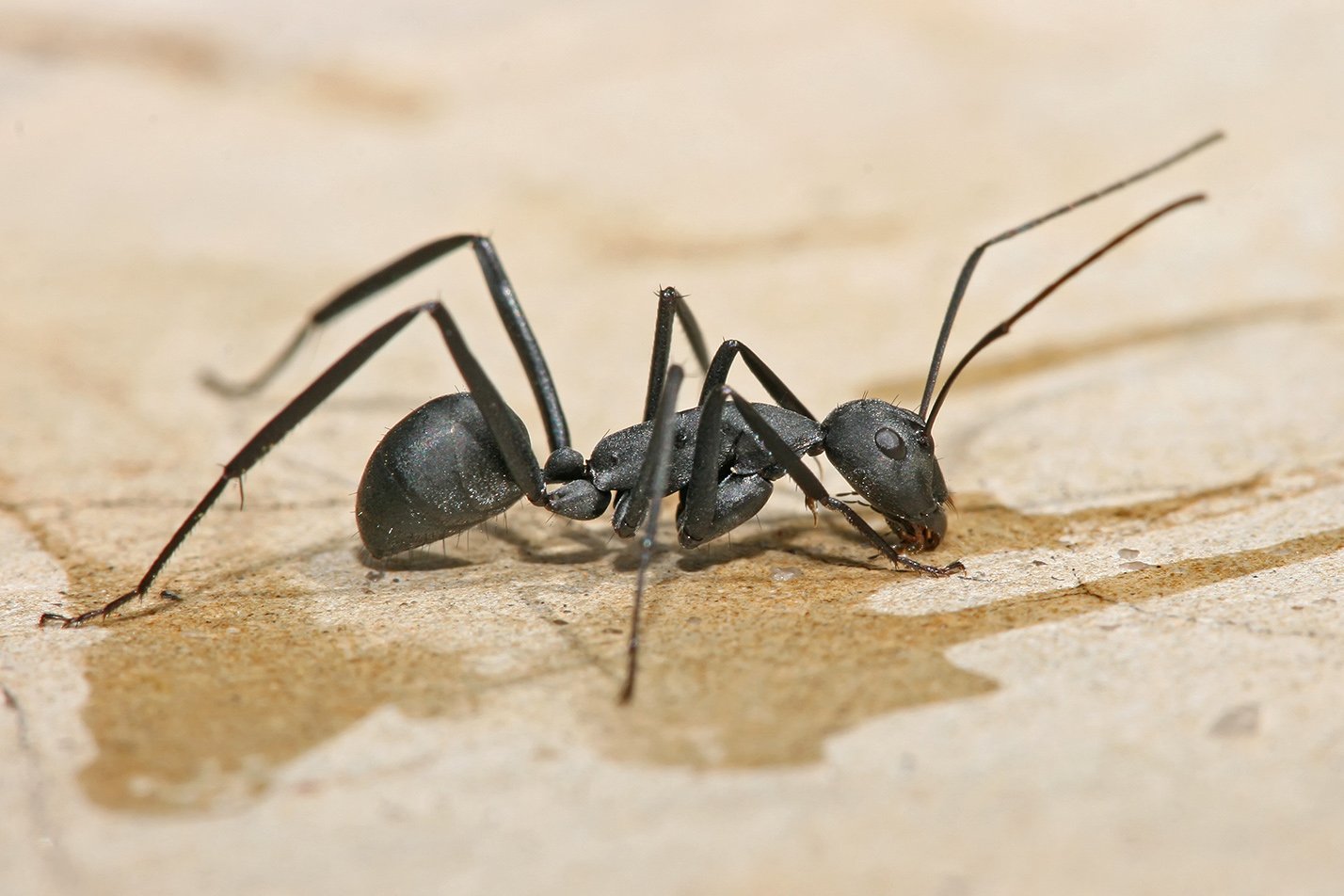
Carpenter ants don’t eat wood the way termites do, but they tunnel through it to build nests, favoring wood that’s already damp or softened, often from a slow leak or old water damage nearby. Small piles of coarse sawdust, called frass, near baseboards or window frames is a telltale sign, along with large black ants seen indoors, especially at night, when they’re most active. Unlike termite damage, carpenter ant galleries tend to be smooth and clean inside, almost sanded-looking, which is one way a pest professional can tell the two apart even when the wood damage looks similar at a glance.
A single winged carpenter ant found indoors isn’t necessarily a sign of an active nest inside the house, since these ants often nest outdoors in stumps or woodpiles and simply forage inside for food. Finding several ants together indoors, especially near a window or door repeatedly, or finding frass piles in more than one location, points more strongly toward an indoor nest that’s worth having checked.
Rodents: a fire hazard as much as a nuisance
Mice and rats gnaw on electrical wiring, which creates a real fire risk beyond the obvious mess of droppings and chewed insulation. Rodents’ front teeth never stop growing, so gnawing isn’t optional behavior for them, it’s constant, and wiring, PVC piping, and wood framing are all fair game. Scratching sounds in walls or ceilings, especially at night, along with a stale odor in an enclosed space, both warrant a closer look. A sudden, unexplained flickering light or a breaker that trips repeatedly for no clear reason is also worth treating as a possible sign of chewed wiring, not just an electrical fault.
Droppings can help narrow down which rodent you’re dealing with. Mouse droppings are small, about the size of a grain of rice, and can number in the dozens near an active nest site. Rat droppings are noticeably larger, closer to the size of a raisin, and tend to be found in smaller, more spread-out numbers. Dark, greasy smudges along baseboards or in corners, left behind by oils in a rodent’s fur as it repeatedly follows the same path along a wall, are another sign worth noting even without seeing droppings directly.
Powderpost beetles and other wood-boring insects
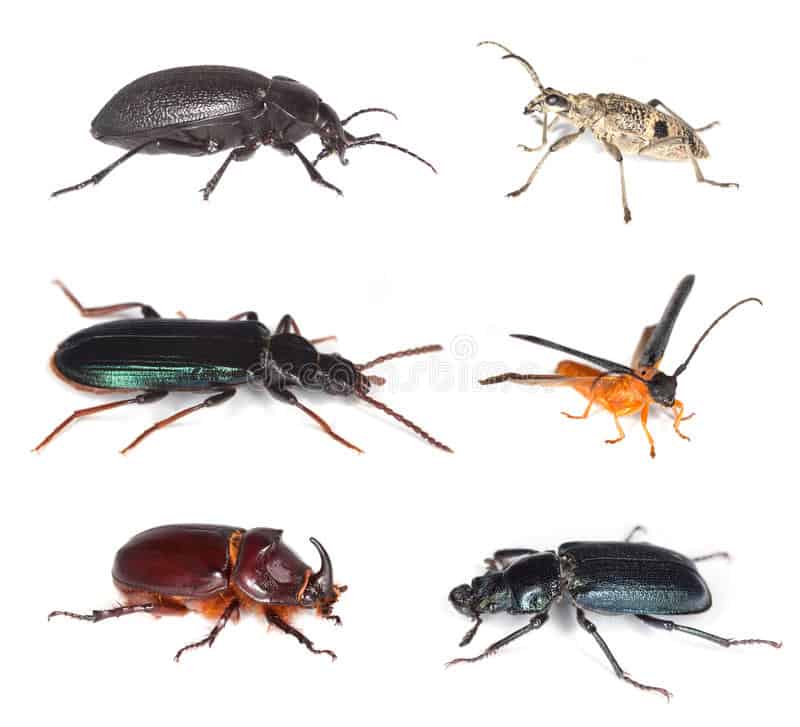
Small round exit holes in exposed wood, paired with fine powdery frass beneath them, point to wood-boring beetles that can affect furniture, flooring, and structural wood over time. Unlike termites, damage from these beetles tends to stay closer to the surface, but it still weakens the wood involved, and a heavy infestation in structural framing can require the same level of professional attention as a termite problem. Older homes with untreated or reclaimed lumber are more susceptible, since beetle eggs can already be present in wood at the time it was milled.
What Not to Do
Don’t paint or seal over wood showing early signs of damage hoping to stop it, sealing the surface does nothing to the pests already working inside and can actually make the damage harder to monitor going forward. Don’t assume a single dead beetle or a few ants means the problem is minor, one visible individual can represent a much larger population working unseen inside a wall or beam. And don’t wait for a home inspection at sale time to be your only structural pest check, damage found then is often further along than it would have been with earlier attention, and it can complicate a sale.
Signs that look worse than they are
Not every crack or gap in wood is pest damage. Wood naturally expands and contracts with humidity and temperature, and hairline cracks running with the grain, especially in older trim or exposed beams, are usually just seasonal movement rather than anything actively eating the wood. Small surface dents or scuffs from normal wear, and gaps at joints where two pieces of trim meet, fall into the same category. The features that separate real pest damage from cosmetic wear are the ones covered above: hollow sound under light tapping, frass or droppings nearby, mud tubes, or visible exit holes. When in doubt, a quick photo comparison over a few weeks, checking whether a crack or hole has changed, gives you useful information before deciding whether it’s worth a professional look.
How Often to Check
A walk around the foundation and through the attic or crawlspace once or twice a year catches most of these signs before they become expensive. Spring, after winter moisture and freeze-thaw cycles, and late summer, when termite and ant colonies are most actively foraging, are both good windows. Homes in humid regions, the southeastern US, coastal Australia, and much of the UK, are worth checking more often, since damp wood is more attractive to nearly every pest on this list.
What a professional inspection actually involves
A typical structural pest inspection takes thirty minutes to a couple of hours depending on the size of the property, and covers the foundation, crawlspace or basement, attic, and any exterior wood in contact with soil or in obvious disrepair. Technicians commonly use a moisture meter to flag damp wood before it shows visible signs, and a sounding tool or the blunt end of a screwdriver to check for hollow spots. Some inspections include a borescope, a small camera on a flexible cable, to look inside a wall void without opening it up. If damage is confirmed, treatment timelines vary by pest: a localized carpenter ant or beetle treatment might resolve in a single visit, while an active termite colony typically requires a more involved treatment plan and a follow-up inspection to confirm the colony has been eliminated.
What to do once you spot damage
The instinct to handle it yourself is understandable, but structural pest damage is one area where an assessment from a pest control contractor matters. Termite and wood-boring insect activity in particular can continue well beyond what’s visible from the outside, and treatments that only address the surface often miss the source.
Common questions about pest damage and repairs
Does homeowners insurance cover termite or pest damage? Usually not. Most standard policies treat pest damage as a maintenance issue rather than a covered peril, on the theory that regular upkeep and inspection should catch it before it becomes serious. Do I need to replace damaged wood, or can it be repaired? That depends on how much structural integrity remains. A beam with minor surface tunneling can sometimes be treated and left in place, while wood that’s significantly hollowed out usually needs to be sistered with new lumber or replaced outright. Can I sell a home with a history of past pest damage? Yes, as long as it’s disclosed and, in most cases, has already been treated and repaired. Undisclosed or untreated damage is a much bigger problem at sale time than damage that was caught and addressed.
We evaluate homes for active damage and the conditions that caused it, then treat with natural-first methods suited to the pest involved. If it’s not resolved, we come back at no charge. Call 1-844-783-4821 to have a pest controller assess the damage before it gets worse.