
By the time most people confirm a bed bug infestation, it’s often been building for weeks. These insects are built to stay hidden, which means the earliest warning signs are usually indirect: small clues that add up rather than one obvious discovery. Catching them early makes a real difference in how contained the problem stays, both in cost and in how much of the home ends up affected.
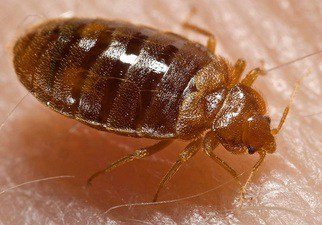
Rusty or reddish stains on sheets
These small stains come from crushed bed bugs or from fecal spots, and they’re often the first thing people notice, usually along the seams of a mattress or on the edge of a pillowcase. A single stain isn’t proof, but several in a cluster is worth investigating further. These marks tend to show up on the side of the mattress closest to where you actually sleep, since that’s where feeding happens most often.
Tiny dark spots along mattress seams
Fecal spots look like fine dark marker dots and tend to concentrate along piping, tags, and seams where bed bugs hide during the day. Running a flashlight along these areas, especially where the mattress meets the box spring, is one of the most reliable ways to check. If you drag a damp cloth or tissue across a suspected spot and it smears into a reddish-brown streak rather than staying a solid dot, that’s a strong confirmation it’s fecal matter rather than dirt.
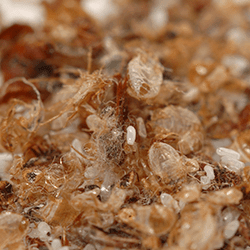
Shed skins in hiding spots
Bed bugs molt several times as they mature, leaving behind pale, empty exoskeletons that look like the insect itself but are hollow. Finding these in seams, behind headboards, or inside nightstand joints is a strong sign of an active, developing population, not a one-time hitchhiker. A nymph molts five times before reaching adulthood, so a cluster of shed skins in one spot often means multiple bugs have been using that exact location repeatedly.
Bites that appear in a line or cluster
Not everyone reacts to bed bug bites, which is part of why they can go unnoticed for a while, but for those who do, bites often show up in a row on exposed skin, commonly the arms, shoulders, or legs, from a single feeding session. It’s also common for one person in a household to react visibly while another, sleeping in the same bed, shows no marks at all, which sometimes delays people taking the problem seriously.
A faint, sweet, musty smell
Large infestations sometimes produce a subtle odor described as sweet or musty, similar to overripe berries. It’s not always present in smaller or newer infestations, but it’s a reliable sign of a well-established problem when it is. The smell comes from pheromones the insects release, and by the time it’s noticeable without leaning in close, the population behind it is usually well past the early stage.
Live insects in seams and folds
Adults are reddish-brown and about the size of an apple seed, while younger nymphs are smaller and paler, sometimes nearly translucent after a recent molt. Checking seams, folds, and the underside of mattress tags with a flashlight is the most direct way to confirm. Early morning, right after waking, tends to be the best time to look, since bed bugs that fed overnight are often still nearby digesting rather than fully retreated into a hiding spot.
Why waking up itchy isn’t always the first sign
People assume bites will be the first thing they notice, but a fair number of adults have little to no reaction to a bed bug bite at all, sometimes for years before a reaction develops. That means the physical signs above, stains, fecal spots, shed skins, are frequently the real first warning, arriving before any bite ever shows up on skin. Relying on bites alone as your only check misses a meaningful share of early infestations.
What not to do if you spot early signs
Resist the urge to immediately move bedding or furniture to another room to inspect it more closely, that’s one of the most common ways a single-room problem spreads to a second room. Don’t rely on a mattress encasement alone as a fix either, an encasement traps bugs already inside the mattress, which helps, but does nothing for bugs already living behind the headboard or under the baseboard.
Checking beyond the bed itself
An early check shouldn’t stop at the mattress. Couches and upholstered chairs, especially ones near where someone naps or spends a lot of time sitting, are common secondary hiding spots. Check along seat cushion seams and underneath, where the frame meets the fabric. Curtains near a bed, the inside of nightstand drawers, and even books or stacks of magazines kept on a nightstand are all worth a quick look if you’ve already found a sign or two elsewhere in the room. Electrical outlet covers and the underside of wall-mounted picture frames near the headboard are worth a quick check too, since bed bugs use these small gaps as daytime hiding spots once a room’s population grows large enough that the mattress and box spring can’t hold everyone.
How bed bugs move from room to room
Bed bugs don’t fly and they don’t jump, but they’re surprisingly efficient walkers, and in apartments, condos, and other multi-unit buildings they take advantage of the smallest gaps: electrical outlet covers, shared plumbing chases, and cracks around baseboards that connect one unit to the next. A single infested unit can seed several neighboring units within a matter of months if it goes untreated, which is part of why apartment residents who spot early signs should flag it to building management rather than assume the problem is isolated to their own unit. Inside a single home, the most common spread pattern is simpler: people carry bugs on themselves, in a robe, a laundry basket, or a phone charger cord, from an infested bedroom into a second bedroom or a living room couch.
After travel, check before you unpack
Hotel stays, especially ones involving overnight travel or a used furniture purchase shortly after, are the most common source of a new infestation. Inspecting luggage on a hard surface like a bathroom tile or a driveway before bringing it inside, and running clothing through a hot dryer cycle for at least thirty minutes before it touches a closet, catches most hitchhikers before they ever get a foothold in your home. This single habit prevents more infestations than almost anything else on this list. The same caution applies to secondhand furniture, particularly upholstered pieces and mattresses picked up from a curb, yard sale, or online marketplace listing; even furniture that looks clean can carry an active population, and there’s no reliable way to inspect deep into upholstery foam without professional equipment. Rideshare vehicles and movie theater seating are lower-risk but not zero-risk, since bed bugs can ride along in a bag or jacket from any space where people sit for extended periods.
DIY steps versus calling in a professional
Steam treatment, targeted vacuuming, and mattress encasements can meaningfully knock down a very early, single-spot infestation, especially one caught within the first week or two. Steam above roughly 54°C kills bed bugs and eggs on contact along seams, baseboards, and furniture joints, and a stiff-bristled vacuum attachment can physically remove visible bugs and eggs before they’re sealed away. But these methods only reach what you can see and access. Once bugs have spread beyond a single mattress, into wall voids, behind outlet covers, or into a second room, DIY tools generally can’t reach the full population, and a partial treatment can actually make things harder by scattering a cluster that was previously contained in one place. As a rough guide: one or two isolated stains with no live sightings is reasonable to monitor and spot-treat yourself; multiple confirmed signs across more than one piece of furniture, or any live insect sighting, is the point to bring in a pest control professional. Professional treatment typically runs two to three visits spaced roughly two weeks apart to catch newly hatched eggs, since no single treatment kills every egg on the first pass.
Common questions about early bed bug signs
How long can bed bugs survive without feeding? Adults can survive for several months, and in cooler conditions sometimes close to a year, without a blood meal. That’s part of why an empty vacation home or a guest room used only occasionally can still harbor an active, if slow-growing, population between visits.
Are newly hatched bed bugs too small to see? Freshly hatched nymphs are about the size of a pinhead and nearly colorless until their first feeding, which makes them genuinely hard to spot without a flashlight and close inspection. This is one more reason the indirect signs, stains, fecal spots, shed skins, are often more reliable early indicators than trying to catch a live nymph by sight alone.
Don’t wait for certainty
If you’re seeing two or three of these signs, that’s enough reason to act rather than wait for a clear sighting. Bed bug populations grow quickly, and the earlier they’re addressed, the more contained and manageable the treatment. Our pest professionals handle bed bug infestations with natural-first methods and a real guarantee: if they’re not gone, we come back at no charge. Call 1-844-783-4821.