Search “bed bug spray” and you’ll find dozens of products promising to solve the problem in one application. The honest answer is that no spray, natural or synthetic, reliably solves an established bed bug infestation on its own. That’s not a sales pitch, it’s just how bed bug biology works, and understanding why will save you money and frustration.
Signs you actually have bed bugs, not something else
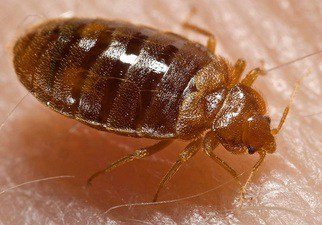
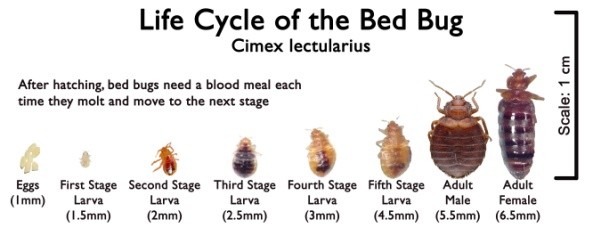
Before any spray decision matters, it’s worth confirming what you’re dealing with, since carpet beetles, booklice, and even certain fabric fibers get mistaken for bed bugs regularly. Live bed bugs are flat, reddish-brown, roughly the size of an apple seed, and become more oval and slightly larger after a blood meal. Look for small rust-colored spots on sheets or mattress seams, which are fecal marks rather than blood, pale yellow-white eggs and shed skins in seams and crevices, and a faint, sweet, musty odor in a heavily infested room. Bites themselves are a weak identifier on their own, since reactions vary person to person and some people don’t react at all, so a bite pattern alone, without any of the physical evidence above, isn’t enough to confirm an infestation. The CDC’s overview of bed bugs is a useful reference if you want to compare what you’re seeing against confirmed identification photos before assuming the worst, or before assuming it’s nothing.
Why sprays alone fall short
Bed bugs hide in cracks as thin as a credit card, inside box spring seams, behind outlet covers, under baseboards. A spray only kills what it directly contacts, so anything tucked into those gaps survives. Eggs are even more resistant, most sprays, including many labeled for bed bugs, don’t reliably kill eggs at all, which means a population that looked knocked down can rebound within two to three weeks as the next generation hatches. A single female that survives a spray treatment is enough to restart the whole cycle, since she can begin laying again within days of a blood meal.
Contact killers vs residual products
Contact sprays kill on the spot but leave no lasting effect. Residual products are meant to keep working after they dry, but widespread pyrethroid resistance in bed bug populations across the US and UK has made many older residual chemicals significantly less effective than they were a decade ago. This is one of the reasons pest control has shifted toward combination approaches rather than relying on any single product. Products that combine a pyrethroid with a second active ingredient that works through a different mechanism tend to hold up better against resistant populations, since resistance to one doesn’t automatically mean resistance to both.
Where natural sprays actually fit in
Essential oil-based sprays, often built around ingredients like cedar oil, clove, or peppermint, can be a genuinely useful part of a treatment plan. They tend to work through contact and by disrupting the bugs’ waxy outer coating rather than through nerve toxins, and some people find them a reasonable step for early detection areas or as a supplement between visits from a pest professional. What they’re not is a replacement for a full treatment plan, especially once bugs have spread beyond a single mattress. Their biggest practical advantage is that they can be applied more frequently and in more places, luggage, upholstered furniture, car interiors, without the same exposure concerns as a synthetic residual product.
It’s worth being honest about the evidence here too. Independent lab testing on essential oil products against bed bugs is more limited than the research behind registered synthetic insecticides, and results vary by formulation and concentration. Some plant-oil products are registered with the EPA as minimum-risk pesticides, which means they’ve met a lower-risk classification but haven’t necessarily been tested head-to-head against resistant bed bug populations the way mainstream residual products have. That doesn’t make them useless, it just means “natural” and “proven equally effective” aren’t the same claim, and a pest professional building a plan around them should be combining them with heat, steam, or dust rather than leaning on the spray alone.
What a full plan actually includes
- Heat treatment, which raises room temperature high enough to kill all life stages including eggs
- Targeted steam application into seams, cracks, and upholstery
- Diatomaceous earth or other natural desiccant dusts in wall voids and baseboards
- Follow-up inspection two to three weeks later to catch anything that hatched after the first visit
Why eggs are the real obstacle
Most treatment failures trace back to eggs, not adults. Bed bug eggs are coated in a sticky substance that helps them resist moisture and many contact chemicals, and they’re often laid in the deepest, most protected cracks a female can find, precisely because that’s where they’re safest. This is why a single treatment, no matter how thorough, usually isn’t the end of the process. Eggs that were too well hidden to reach the first time hatch ten to fourteen days later, which is exactly why a follow-up visit matters as much as the initial treatment.
A single fertilized female can lay one to several eggs a day and several hundred over her lifetime, which is why even a handful of overlooked eggs can rebuild a population that looked eliminated. This is also why monitoring matters after treatment, not just before it. Interceptor traps placed under bed and furniture legs are a low-cost way to catch early rebound activity, since bugs moving toward or away from a bed have to cross them, giving you an early warning well before bites or visible signs return.
What professional treatment actually costs and how long it takes
Pricing varies widely by region and method, but a single-room heat treatment commonly runs somewhere in the low-to-mid hundreds of dollars, while a whole-apartment or multi-room job using a combination of heat, steam, and residual treatment can run well into four figures. Most providers price it based on square footage and severity rather than a flat rate, which is why an accurate quote usually requires an in-person or photo-based assessment rather than a number over the phone. Expect at least two visits as standard practice, an initial treatment and a follow-up two to three weeks later to catch anything that hatched after eggs survived the first round, and don’t assume a provider quoting only one visit has a plan that accounts for the egg-hatching window discussed above.
The DIY trap
One thing worth knowing before you reach for a spray yourself: bed bugs respond to disturbance by scattering. Spraying around a bed without a full plan can push bugs into neighboring rooms or, in apartment buildings, into adjoining units, turning a contained problem into a spreading one. Moving furniture out of a treated room before an infestation is confirmed gone is one of the most common ways a problem spreads from one room to an entire home.
What not to do
Beyond scattering the population, a few other habits make things worse. Don’t mix products, combining an over-the-counter spray with a bug bomb or fogger doesn’t add up to better coverage, foggers in particular rarely reach the cracks where bed bugs actually live and can push them deeper into hiding. Don’t throw out a mattress without wrapping it first, an unwrapped infested mattress carried through a hallway can drop bugs or eggs along the way. And don’t assume a clean-looking room means the problem is gone, bed bugs are a sanitation-independent pest, a spotless house can have just as bad an infestation as a cluttered one.
Quick answers to what people usually ask
Can I use a natural spray while waiting for a pest controller to arrive? Yes, applying an essential oil-based spray to a mattress or luggage in the meantime isn’t going to make things worse, and it can knock down some of what’s exposed. Just don’t treat it as the fix itself.
How long does a spray-only approach usually take to fail? Most people notice the population rebounding within two to four weeks, right around when eggs that survived the initial spray finish hatching.
Is a stronger, more concentrated spray a better option? Not necessarily. Concentration matters less than coverage and contact with hidden eggs, and a stronger product doesn’t reach cracks a weaker one couldn’t.
Can bed bugs come from a used mattress or secondhand furniture? Yes, this is one of the most common ways they enter a home. Any secondhand mattress, box spring, or upholstered furniture should be inspected carefully in the seams and folds before it comes inside, and buying sealed, professionally cleaned secondhand items is safer than one picked up off a curb or from an unknown source.
Do I need to throw out my mattress if I have bed bugs? Not necessarily. A mattress can often be treated and encased in a bed bug-proof cover rather than replaced, which is usually cheaper and just as effective when it’s part of a full treatment plan. Replacement becomes more worth considering only when the mattress is old, damaged, or the infestation is severe enough that thorough treatment isn’t practical.
If you’ve found bites or evidence and you’re tempted to handle it with a bottle from the hardware store, call 1-844-783-4821 first, we can tell you honestly how contained the problem likely is before you make it worse, and what combination of methods actually fits what you’re dealing with.