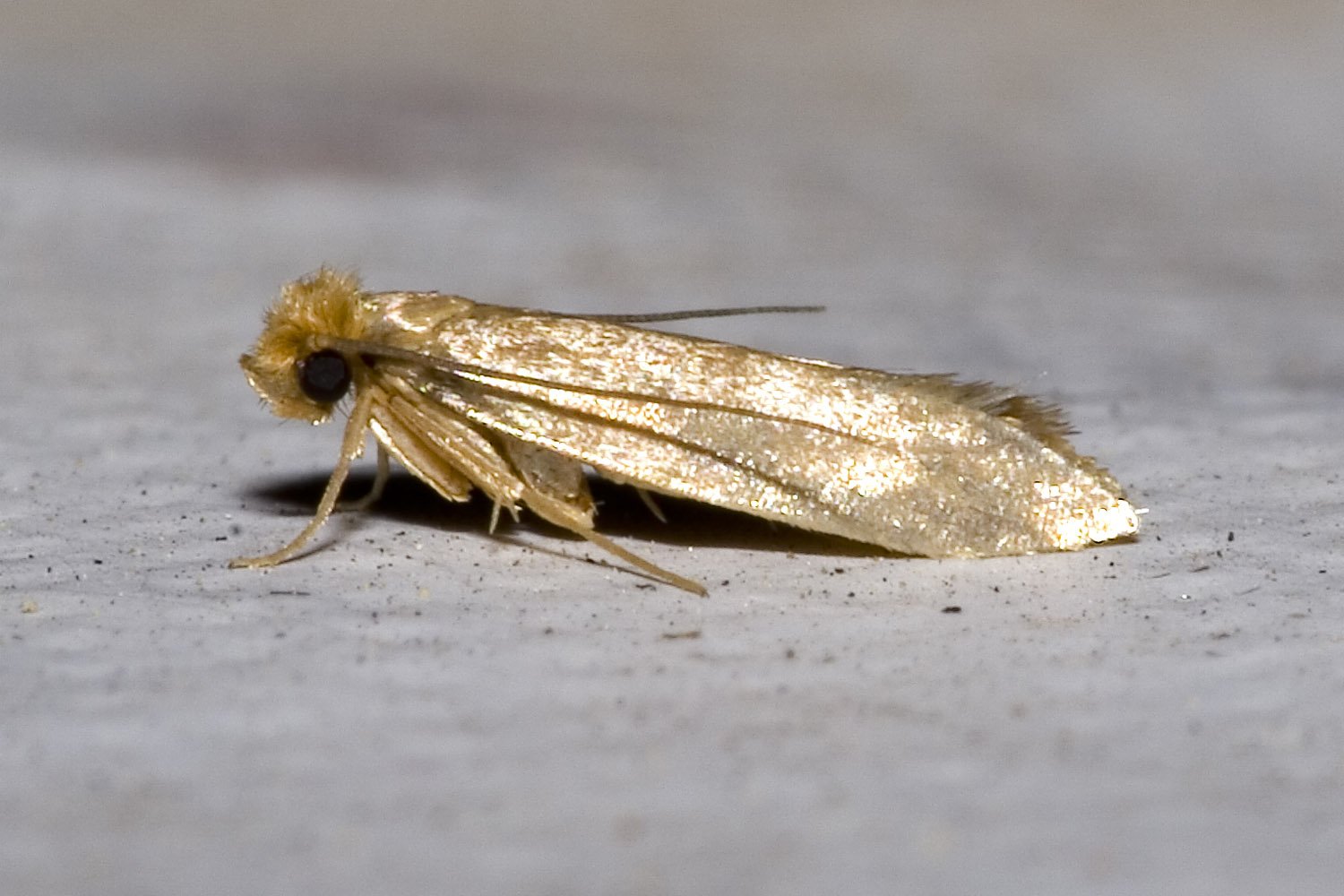
If you’ve ever found a ragged hole in a wool sweater and then spotted a small tan moth fluttering weakly near your closet ceiling, you’ve likely met the clothes moth. But here’s the detail almost nobody knows going in: the adult moth flying around your closet isn’t the one damaging your clothes. Understanding the full life cycle is the difference between treating the actual problem and just chasing the part you can see.
Four stages, one culprit
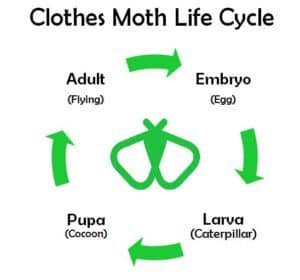
Egg
A female clothes moth lays 40 to 50 tiny eggs directly onto fabric, usually tucked into seams, folds, or upholstery where they’re hard to spot. Eggs hatch in about a week to ten days depending on temperature and humidity, and warmer rooms speed that timeline up considerably, which is part of why infestations tend to accelerate over a hot summer.
Larva
This is the stage that actually causes the damage. Clothes moth larvae feed on keratin, the protein found in wool, silk, fur, feathers, and even felt piano hammers and old book bindings. They avoid light, which is why the worst damage shows up in stored, undisturbed items rather than clothes in daily rotation. Depending on conditions, this feeding stage can last anywhere from a month to well over a year, which explains why an infestation can go unnoticed for a long time, quietly working through a box of stored sweaters or an heirloom rug in a spare room.
Pupa
Once fed, the larva spins a silky cocoon, often in a dark corner, crack, or fold of fabric, and pupates for one to several weeks before emerging as an adult. Cocoons are small and pale, easy to mistake for lint or a stray thread, which is why they’re rarely noticed even during a fairly thorough closet cleanout.
Adult
Adult clothes moths don’t feed at all. Their only job is to mate and lay the next generation of eggs. They’re weak fliers, prefer dim, undisturbed spaces, and are actually attracted away from light, which is the opposite of the pantry moths people often confuse them with, and it’s part of why you’re more likely to spot one fluttering low near a closet floor than circling a light fixture.
How an infestation actually starts
Clothes moths don’t fly in looking for a meal the way pantry moths do. Most infestations start with something already carrying eggs or larvae, a secondhand wool coat, a rug pulled from storage, an inherited box of linens, brought into a home that then gives it time undisturbed to build a population. Natural fibers left in storage for months without being aired out, shaken, or inspected are the highest-risk items in any house, which is why a closet or attic full of seasonal clothing is so often where an infestation is first discovered, sometimes well after it started.
Secondhand and thrifted wool items carry a disproportionate share of the risk, since there’s no way to know how long a garment sat in someone else’s uninspected storage before it reached a donation bin or resale rack. The same goes for self-storage units, particularly ones that aren’t climate controlled, where boxes of out-of-season clothing can sit undisturbed for a year or more, giving a small starting population plenty of time to become a large one before anyone opens the box again.
Where clothes moths hide beyond the obvious closet
Wool sweaters and coats get the attention, but clothes moths feed on any material containing keratin, which puts a wider range of household items at risk than most people think to check. Wool carpet, especially under furniture or along baseboards where it’s rarely disturbed, is a common overlooked source. Upholstered furniture with animal-fiber stuffing or trim, felt piano hammers, taxidermy, and even antique horsehair-stuffed cushions can all sustain a population. Down pillows and comforters are lower-risk than wool but not immune, since down still contains keratin. If you’ve treated a closet and keep seeing new damage, it’s worth checking these less obvious spots rather than assuming the closet treatment failed.
Why this changes how you treat it
Because the adults don’t feed, spraying at the moths you see flying is close to useless, you’re treating the one life stage that isn’t doing any damage. Effective treatment targets eggs and larvae hidden in fabric and dark corners: thorough vacuuming of closets and baseboards, laundering or dry-cleaning susceptible items before long-term storage, and sealing stored wool, silk, and fur in airtight containers rather than open bins or garment bags.
Signs you have an active infestation, not just a stray moth
- Irregular holes clustered in one area of a garment rather than scattered evenly
- A gritty or sandy residue in fabric folds, which is larval frass
- Silky, thread-like webbing in corners of drawers or on the underside of a rug
- Small pale cocoons wedged into seams or along baseboards
- Damage appearing on multiple items stored in the same closet or box, not just one
What actually helps, and what’s a myth
- Cedar and lavender repel adult moths somewhat but don’t kill eggs or larvae already present
- Freezing infested items at 0°F for several days can kill all life stages if done correctly, though the item needs to be fully frozen through, not just chilled
- Heat treatment above 120°F is also effective and is one of the natural methods professionals use for larger infestations
- Mothballs work only in a sealed container with enough concentration to build up toxic vapor, which makes them impractical and unpleasant for everyday closet use
- Dry cleaning kills all life stages on a garment, which makes it one of the most reliable pre-storage steps for wool items with any uncertain history
- A home clothes dryer on a hot cycle for 30 minutes can also kill eggs and larvae on items sturdy enough to tolerate the heat, though delicate or structured garments may not hold up to it
Pheromone traps are worth a specific mention because they’re often misunderstood. They use a synthetic version of the female’s mating scent to lure and catch adult males on a sticky surface, which does two things: it reduces the number of males available to mate, and, more usefully, it gives you a way to monitor whether a population is growing or shrinking over time based on how many moths show up on the trap week to week. What a trap does not do is catch larvae or stop an existing infestation on its own, it’s a monitoring and mild suppression tool, not a standalone treatment, and treating it as the whole solution is a common reason people think their infestation “isn’t responding” when really the trap was never going to touch the larvae doing the actual damage.
A few things worth knowing before you start
Not every hole in a sweater means an active infestation still going. Old damage from a colony that’s since died off or moved on looks identical to fresh damage, so the presence of holes alone isn’t proof you need to treat right now. Look for the other signs above, live larvae, frass, webbing, before assuming an item needs discarding rather than just cleaning and storing properly going forward.
Frequently asked questions
How long does it take to get rid of a clothes moth infestation completely? Because larvae can take weeks to months to fully develop, and a treatment needs to catch overlapping generations at different stages, expect a few weeks of vacuuming, laundering, and monitoring rather than a one-time fix. Traps that target adult males can help track whether the population is shrinking.
Do clothes moths spread from one closet to the rest of the house? They can, especially if infested items are moved without being cleaned first, or if larvae wander looking for a new food source once one item is depleted. Treating the closet in isolation while leaving other natural-fiber items untouched elsewhere in the house is a common reason infestations come back.
Is synthetic clothing safe from clothes moths? Mostly, since larvae need keratin to develop. Blended fabrics with even a small percentage of wool or another animal fiber can still attract feeding, and synthetic items stored alongside wool can pick up larvae that wander over from a food source nearby.
Are clothes moths seasonal, or a year-round problem? Indoors, they’re effectively year-round, since heated homes keep conditions warm enough for development regardless of the season outside. That said, activity often becomes more noticeable in late spring and summer when people pull out storage boxes to swap seasonal wardrobes and finally spot damage that’s been building for months.
Will keeping a light on in the closet keep clothes moths away? It helps somewhat, since adults are more inclined to move toward the dimmest, most undisturbed spot available, but it’s not a reliable fix on its own. Eggs and larvae aren’t affected by light at all, so a lit closet with an existing population still needs the same vacuuming, laundering, and storage steps as a dark one.
If you’re finding damage across multiple garments or in a closet you can’t easily empty and treat yourself, that’s usually a sign the infestation has been established for a while. Call 1-844-783-4821 and one of our pest professionals will help you figure out how far it’s spread.