
Most homeowners lump these three together because they all show up as small, dark insects near wood. But an odorous house ant trailing across a kitchen counter, a carpenter ant hollowing out a porch beam, and a subterranean termite working through a sill plate call for three different responses. Mixing them up wastes time and money, and treating the wrong one can leave the real problem untouched for months.
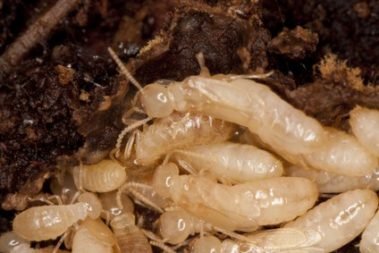
Termites vs. carpenter ants: the wood tells the story
Termites eat wood for food, so their damage looks like layered galleries packed with mud-like material, often following the grain. Carpenter ants don’t eat wood at all. They chew through it to build nests, so their galleries are clean, smooth, and hollow, with small piles of sawdust-like frass, sometimes mixed with dead ant parts, pushed out near the entry point. If you’re sweeping up what looks like fine wood shavings under a windowsill or deck post, that’s usually carpenter ants, not termites.
Subterranean termites, the kind most common across the US and southern Canada, also build pencil-width mud tubes running up foundation walls to reach wood without crossing open air. Drywood termites, more common in coastal and warmer regions including parts of Australia and the southern US, skip the tubes entirely and leave behind pellet-shaped droppings that look like coarse sand. Knowing which type you’re dealing with matters for treatment, since subterranean colonies live in the soil and drywood colonies live entirely inside the wood itself, with no soil contact required at all.
Telling ordinary ants apart from the two wood pests
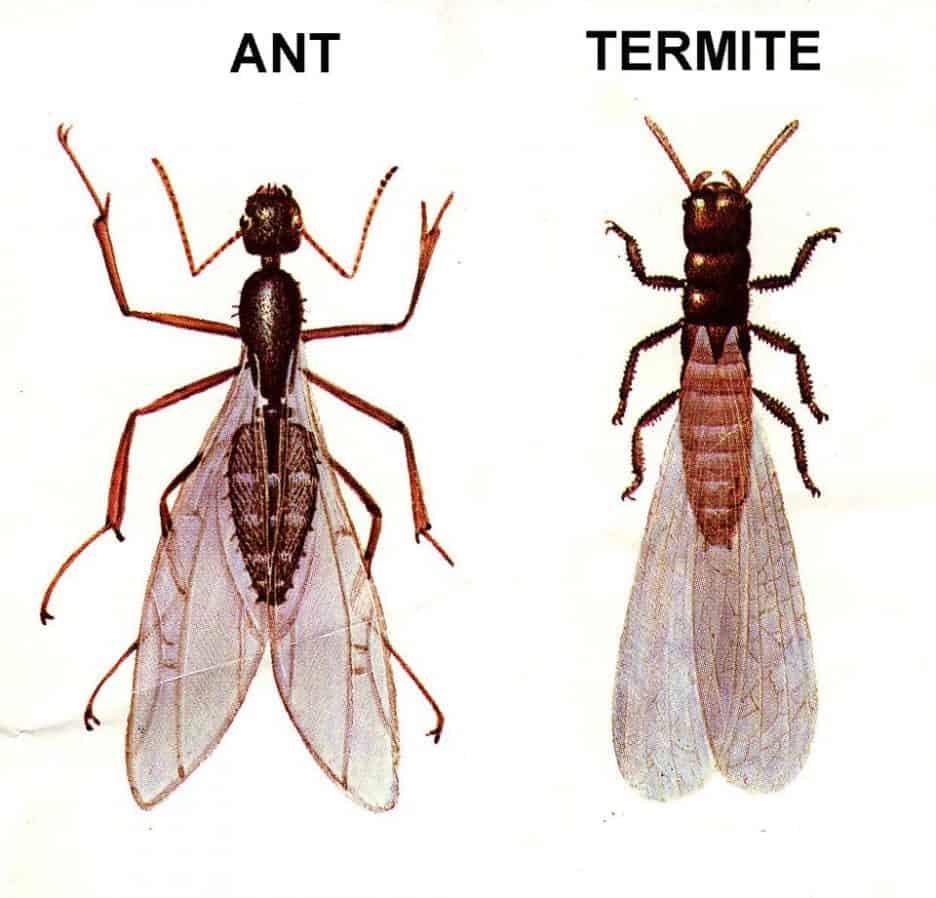
Most household ants aren’t wood pests at all, they’re just foraging through a kitchen or bathroom for food and water. Size and behavior are the quickest tells: carpenter ants are noticeably larger, often a quarter inch to half an inch long, with a single evenly rounded hump between the thorax and abdomen. Smaller household ants, odorous house ants especially, are a fraction of that size and tend to travel in dense, visible trails toward a food source rather than disappearing into a wall void. If you can see the whole colony’s activity on a countertop, it’s almost certainly not a structural wood pest.
A quick way to identify odorous house ants
Odorous house ants get their name for a reason: crush one between your fingers or a tissue and it releases a smell often described as rotten coconut, a distinctive enough odor that it’s one of the fastest ways to confirm you’re dealing with this species rather than another small household ant. They’re dark brown to black, roughly an eighth of an inch long, and nest in shallow, moisture-prone spots, mulch beds, under stepping stones, inside wall voids near a leaky pipe, rather than in structural wood. Unlike carpenter ants, they don’t damage wood at all, so an odorous house ant trail on a kitchen counter is an annoyance and a food-safety concern, not a structural one, which is part of why correctly separating them from carpenter ants matters for deciding how urgently to act.

What actually works
- Termites: Baiting systems placed around the foundation interrupt the whole colony rather than just the workers you can see, and correcting moisture, fixing grading, downspouts, and crawlspace humidity, removes the conditions termites need to thrive.
- Carpenter ants: Finding the parent nest matters more than killing foragers. We trace visible trails back to their source, which is often a damp void behind siding or a rotted fascia board, and treat that void directly rather than fogging the whole house.
- Other household ants: Sprays that kill on contact often make an ant problem worse by causing the colony to split and bud into new nests. Slow-acting bait that workers carry back to the queen is what actually collapses a colony.
Timing and swarms
Both termites and carpenter ants send out winged reproductive swarmers to start new colonies, usually in spring, and this is often the first time homeowners notice either pest at all. Termite swarmers tend to appear indoors near windows and light fixtures after a warm rain, while carpenter ant swarmers are more commonly seen outdoors around dusk. A pile of discarded, translucent wings on a windowsill after a swarm is a reliable sign worth investigating even once the insects themselves are gone, since it means a mature colony is established somewhere nearby.
What to check around your own home
- Wood-to-soil contact at deck posts, fence lines, and porch steps
- Mulch piled against the foundation or siding
- Standing water near AC units, gutters, or downspout outlets
- Firewood stacked against an exterior wall
- Cracks in a foundation or slab where a mud tube could form unnoticed
- Fascia boards, window sills, and deck posts that feel soft or spongy when pressed
Any of these gives wood-destroying pests an easy bridge into your home, no matter which species you’re dealing with.
Powderpost beetles: a wood pest that gets overlooked
Termites and carpenter ants get most of the attention, but powderpost beetles are a third wood-destroying pest worth ruling out, especially in older furniture, flooring, and exposed structural beams. Unlike termites and carpenter ants, powderpost beetle damage shows up as small, round exit holes about the size of a pinhead, with a fine, flour-like powder (the beetle’s name comes from exactly this) sifting out below. There’s no mud tubes, no hollow galleries you can hear when you tap the wood, just tiny holes and a dusting of powder that’s easy to mistake for regular sawdust from other work. Powderpost beetles typically target hardwoods, oak flooring, furniture, exposed beams, more than the softwoods termites and carpenter ants prefer, and infestations often trace back to wood that was already infested when it was brought into the home, secondhand furniture or reclaimed lumber being common sources.
Why acting early matters more with these three
Unlike a lot of household pests, termite and carpenter ant damage happens out of sight, inside structural wood, for months or years before it’s visible from the outside. A colony that’s been established for two or three years can cause meaningful structural damage before a homeowner ever sees a swarmer or a pile of frass. That lag is exactly why an inspection based on the signs above is worth doing sooner rather than waiting for damage obvious enough to see without looking for it.
Cost and timeline: what to expect
Treatment cost and timeline vary a lot depending on which pest you’re actually dealing with and how established the colony is. Termite baiting systems typically take weeks to months to fully collapse a colony, since bait has to be carried back and shared through the colony gradually, but ongoing monitoring stations keep protecting the structure for years afterward. Carpenter ant treatment is often faster once the parent nest is located, sometimes resolved within a single visit plus a follow-up, but locating that nest can take real time if it’s tucked inside a wall void or rotted beam that isn’t visible from outside. Ordinary household ant treatment with slow-acting bait typically shows results within one to two weeks as the colony carries the bait back and the population declines. In all three cases, cost scales with how long the colony’s been established and how much of the structure is affected, which is exactly why catching signs early, before extensive galleries or multiple satellite nests develop, keeps both the cost and the timeline down.
What not to do
Don’t treat a suspected termite or carpenter ant sighting with a general contact spray from the hardware store. On carpenter ants, contact spray on visible workers can push the colony to relocate or split rather than eliminating it, and it does nothing to the parent nest you haven’t found yet. On termites, surface spray doesn’t reach a subterranean colony living below the frost line, so it looks like it worked for a few weeks and then doesn’t. And don’t patch over frass, mud tubes, or soft wood without figuring out whether the colony behind it is still active, covering the evidence doesn’t remove the pest, it just makes the next inspection harder.
If you’re seeing frass, mud tubes, or discarded wings on windowsills, it’s worth having a fumigator take a real look before deciding whether it’s cosmetic or structural. We use natural-first treatments wherever they’ll do the job, and if the problem isn’t fully resolved, we come back and address it at no extra cost. Call us at 1-844-783-4821 to talk through what you’re seeing.
Common questions
Can carpenter ants and termites infest the same piece of wood at the same time? It’s uncommon but not impossible, especially in wood that’s already moisture-damaged and attractive to both. More often, one pest’s activity in damp or damaged wood is mistaken for a co-infestation when it’s actually just one species, correctly identifying the galleries and frass usually settles the question.
Do carpenter ants mean my house has a moisture problem? Very often, yes. Carpenter ants strongly prefer wood that’s already softened by moisture or past water damage, even though they can and do extend into sound wood once established. Finding a carpenter ant nest is frequently the first sign of a leak, poor grading, or ventilation issue that hasn’t been noticed yet.
Is it possible to have a termite problem without ever seeing a swarmer? Yes. Not every colony swarms somewhere visible, and subterranean colonies working below ground or inside a wall can go unnoticed for a long time without a swarm event indoors. That’s part of why the physical signs, mud tubes, soft wood, damaged framing, matter as much as watching for swarmers.