Bird problems almost always come down to the same thing: a ledge, vent, or roofline that offers shelter and a nearby food source, whether that’s a dumpster, a bird feeder next door, or crumbs on a restaurant patio. The birds themselves aren’t doing anything unusual. They’re just using what’s available, and once a spot works for nesting or roosting, they’ll keep coming back to it season after season unless something about the site actually changes.
Know the legal limits before you do anything
In the US, most native birds are protected under the Migratory Bird Treaty Act, which makes it illegal to harm active nests, eggs, or the birds themselves without a permit. The UK’s Wildlife and Countryside Act and Australia’s state-level wildlife protections work similarly. Pigeons, house sparrows, and European starlings are generally exceptions in several of these jurisdictions because they’re non-native, but the safest approach is always exclusion and deterrence rather than removal, and it’s also the approach that actually holds up over time. Disturbing an active nest, even accidentally, can carry real fines, so identifying what’s actually nesting before doing any work matters as much as the work itself.
Why birds pick the spots they pick
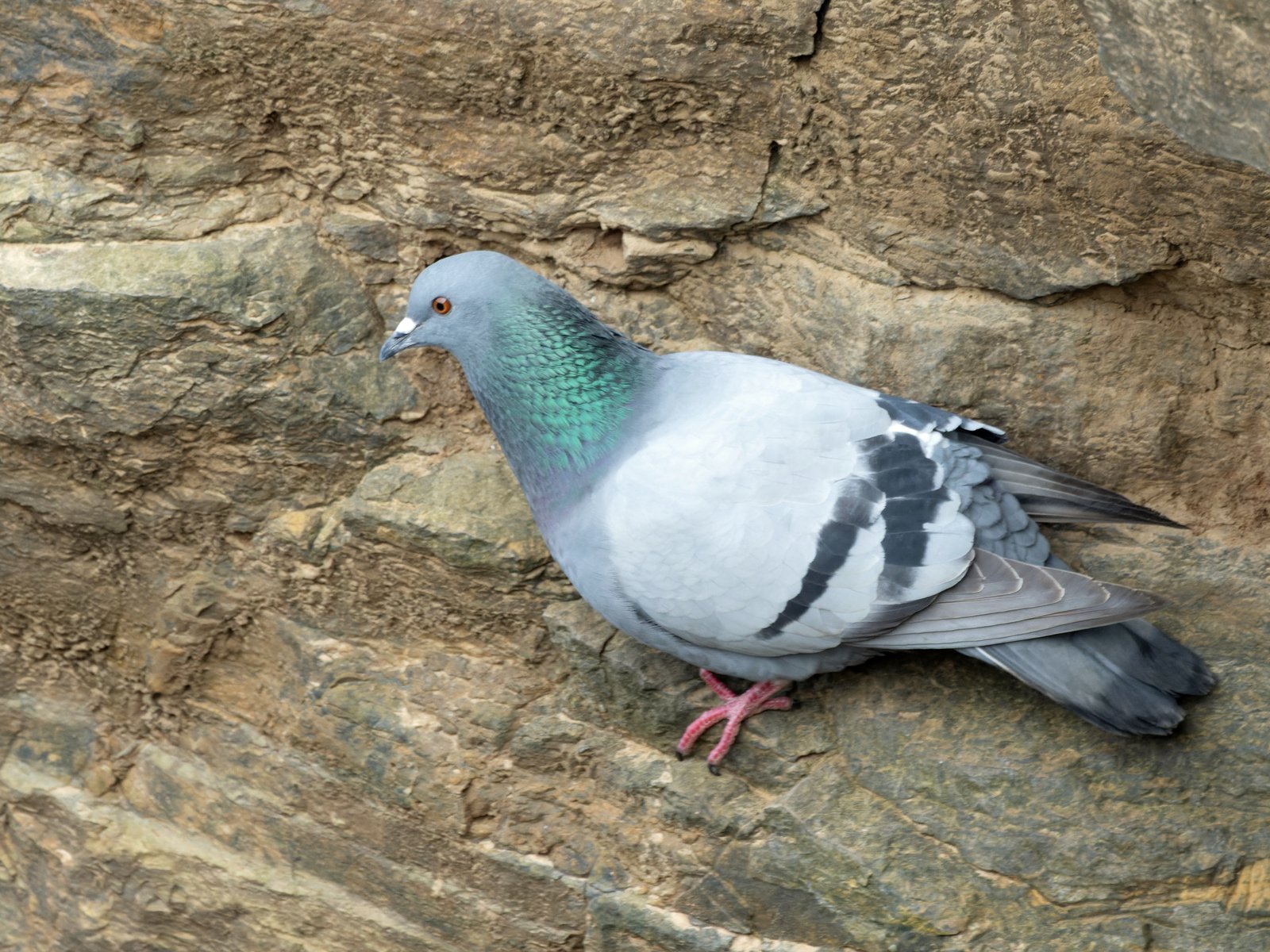
Birds are looking for three things in a nesting or roosting site: shelter from weather, protection from predators, and proximity to food and water. A ledge under an overhang checks the first two boxes automatically, which is why building corners, signage, and parking structure beams get used so consistently. Pigeons in particular are creatures of habit, once a pair successfully raises a brood on a ledge, they and their offspring tend to return to that same structure for years. That’s part of why deterrence has to be thorough the first time, a half-measure just pushes birds to the next ledge over rather than off the property.
How different species change the approach
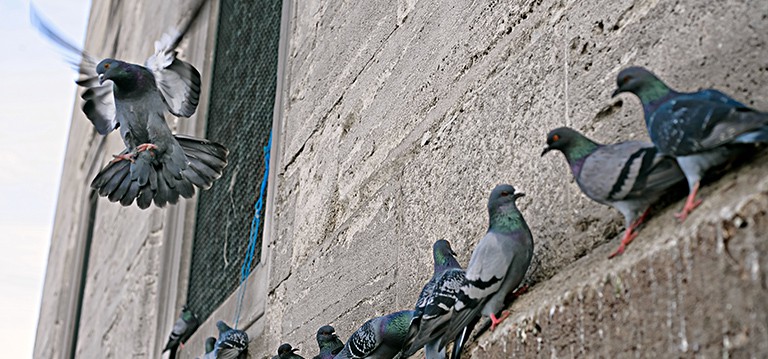
Not every bird problem gets the same treatment. Pigeons are strongly loyal to a single roosting site and respond well to spikes, netting, or ledge modification since they’re mostly looking for a flat, sheltered landing spot. Gulls are larger, more aggressive, and considerably more persistent, especially around food sources near coastal restaurants or waste areas, and they’ll often work around spikes or smaller deterrents that stop a pigeon without much trouble, which is why netting or, in extreme cases, a licensed removal ends up being the realistic option. European starlings and house sparrows tend to nest in cavities, vents, soffits, gaps under roof tiles, rather than on open ledges, so the fix is usually about sealing specific openings rather than deterring an open surface. Woodpeckers, as mentioned above, aren’t nesting in the same way at all, they’re drumming for insects or marking territory, and treating them like a roosting bird problem misses what’s actually driving the behavior.
What works
- Netting: Installed under eaves, in loading docks, or across warehouse rafters, netting physically blocks access to roosting spots without harming anything. This is the most reliable long-term fix for commercial buildings.
- Spikes and coil deterrents: Placed along ledges, signs, and roof edges, these make landing uncomfortable without injuring birds. They work well on smaller, defined surfaces.
- Sloped ledge modifications: Birds need a flat surface to land and roost. Angling a ledge to roughly 45 degrees removes that option entirely.
- Removing the food source: Open dumpsters, uncovered outdoor dining trash, and pet food left outside are often the real draw. Fixing this alone sometimes solves the problem without any hardware at all.
- Visual and audio deterrents: Reflective tape, predator decoys, and distress-call devices have a place, but birds habituate to them quickly if they’re not moved or rotated. Treat these as a supplement, not a primary fix.
- Tension wire systems: Thin, taut wires installed a few centimetres above a ledge or beam make it physically impossible for birds to get the footing they need to land, a good middle option between spikes and full netting on narrower surfaces.
What doesn’t work long-term
Fake owls and hawks left in one spot stop fooling birds within a week or two once they realize it never moves. Loud noise deterrents annoy neighbors as much as birds and rarely hold up past a few days. And removing an active nest without addressing why the birds chose that spot just means new birds move in behind them, or the same pair rebuilds a metre or two away.
Where we see this most
Parking structures, loading docks, and buildings with flat or ledge-heavy rooflines tend to have the worst pigeon buildup. Coastal properties in places like the UK, the Pacific Northwest, and southern Australia deal with gulls, which are larger, bolder, and considerably harder to deter with anything less than netting or a licensed removal in the rare cases where that’s warranted. Warehouses with open bay doors in warmer climates, across the southern US and much of Australia, see sparrows and starlings getting inside and nesting on structural beams, which is a different exclusion problem than an exterior ledge.
Homeowners deal with a smaller version of the same problem
A single nest tucked into a porch light fixture, a dryer vent, or under a satellite dish isn’t a commercial-scale issue, but the same rules apply. If it’s an active nest with eggs or chicks, leave it alone until the young have fledged, which usually takes two to four weeks depending on the species, and then close off the spot before the same birds try it again next season. Woodpeckers drumming on siding or trim are a different situation entirely, they’re usually after insects in the wood or establishing territory, not nesting in the hole itself, and the fix is often addressing the underlying insect activity rather than just patching the hole.
For homeowners, the most effective long-term fix for a recurring spot, a porch light, a dryer vent, a gap under roof tiles, is usually a small piece of hardware rather than a repellent: a mesh vent cover, a bird-proof light fixture guard, or a section of netting sized for that one spot. These cost far less than commercial-scale netting or spikes and, once installed correctly, solve the specific access point for good rather than needing to be reapplied or replaced the way sprays and visual deterrents do.
A note on cleanup
Old nesting material and accumulated droppings should be removed once a site is confirmed inactive, but not without care. Dried droppings can carry fungal spores that pose a real respiratory risk when disturbed and inhaled, which is one of the more overlooked reasons to have buildup cleaned by a pest professional rather than swept up with a household broom, especially in enclosed spaces like attics or vents with poor airflow.
What a professional job typically costs and takes
Cost depends heavily on the scale of the site and the method used. Spikes or coil deterrents on a single ledge or sign are a relatively small job, often completed in a few hours. Full netting across a loading dock, warehouse rafters, or a building facade is a bigger undertaking, both in materials and labor, and can take a full day or more depending on the size of the structure. Most pest management companies offer a free no-obligation quote after walking the site, since the right method and the price both depend on exactly what’s drawing birds in and how large an area needs coverage. Once installed, netting and spikes generally need only occasional inspection rather than ongoing treatment, which is part of why the upfront cost tends to be a one-time investment rather than a recurring expense the way chemical pest treatments often are.
Signs it’s past the DIY stage
- Droppings accumulating on walkways or building entrances, which get slippery and corrode metal and stone over time
- Nesting material blocking gutters or roof drains
- Birds getting inside through vents, damaged soffits, or open warehouse doors
- Repeated nesting in the same spot despite basic deterrents already tried
We assess the site, figure out what’s actually drawing birds in, and put together an exclusion plan that fits the building rather than a one-size approach. Call 1-844-783-4821 to talk through what you’re dealing with.
Common questions
Can I remove an inactive nest myself? Generally yes, once you’ve confirmed there are no eggs, chicks, or adult birds using it, and once the species isn’t one requiring special protection in your area. If there’s any doubt about whether it’s active, waiting a few days and observing from a distance is safer than assuming.
Do ultrasonic bird deterrent devices actually work? Results are mixed and generally weaker than physical exclusion methods like netting or spikes. Most birds don’t respond to ultrasonic frequencies the way some other pests do, so these devices are best treated as a minor supplement rather than a primary solution.
Will trimming trees or bushes near my house help with bird problems? It can, particularly for species that use dense shrubbery as a staging area before moving to a roofline or vent. Reducing cover near the structure doesn’t solve an active roosting problem on its own, but it does remove one more reason birds are drawn to that specific part of the property.