
Mothballs work by slowly releasing a pesticide vapor, either naphthalene or paradichlorobenzene, and that same vapor is what soaks into upholstery, wood, and drawer linings over months of storage. The smell can outlast the mothballs themselves by a long way, but it does come out with the right approach.
Why the Smell Sticks Around So Long
Both naphthalene and paradichlorobenzene are designed to sublimate, meaning they turn from solid to vapor slowly and steadily over weeks or months, which is exactly what makes them effective against moths in a sealed container. That same slow-release property is the problem once you want the smell gone. The vapor doesn’t just sit on the surface of fabric or wood, it works its way into fibers, foam padding, and finish coatings, and porous materials hold onto it far longer than hard, sealed surfaces do. A cedar chest or an upholstered chair that sat closed with mothballs for a year or more can take real, sustained effort to fully clear, not a single afternoon.
Naphthalene vs. Paradichlorobenzene: Why It Matters Which One You Have
Most mothballs sold in the US use either naphthalene or paradichlorobenzene (often labeled PDB) as the active ingredient, and the two aren’t identical. Naphthalene has a sharper, almost tar-like smell and is flammable in concentrated form, while PDB smells sweeter and lighter but sublimates slightly faster, meaning PDB residue may clear a bit sooner than naphthalene once you start the removal process. Checking the original packaging, if you still have it, or comparing the smell to a fresh mothball can help you figure out which one you’re dealing with. Either way, both are registered pesticides meant strictly for use in sealed, unoccupied containers like garment bags or airtight totes, never scattered loose in a closet, attic, or open drawer, since that concentrates vapor well beyond what the label intends and makes the eventual cleanup that much harder.
Start with ventilation, not cover-up scents
Move the furniture outdoors if you can, or into a well-ventilated room with windows open and a fan running. Air circulation is what actually removes the trapped vapor, spraying air freshener on top just masks it temporarily and doesn’t solve anything, and mixing scents on top of naphthalene vapor makes the room smell worse, not better. Give it several days of steady airflow before judging whether it’s working. Direct sun and warm, dry air speed up the process, so a covered porch or garage with the door open on a mild day works better than a closed, humid room.
Baking soda for fabric and drawers
Baking soda absorbs odor rather than masking it. Sprinkle it generously over upholstery or inside drawers, leave it for 24 to 48 hours, then vacuum it out thoroughly. For wood drawers and cabinets, an open box or bowl of baking soda left inside for several days works well too. On upholstery with heavier odor, a second application after the first vacuum often pulls out more than people expect, since the first pass mostly addresses what’s on the surface.
Activated charcoal for a deeper problem
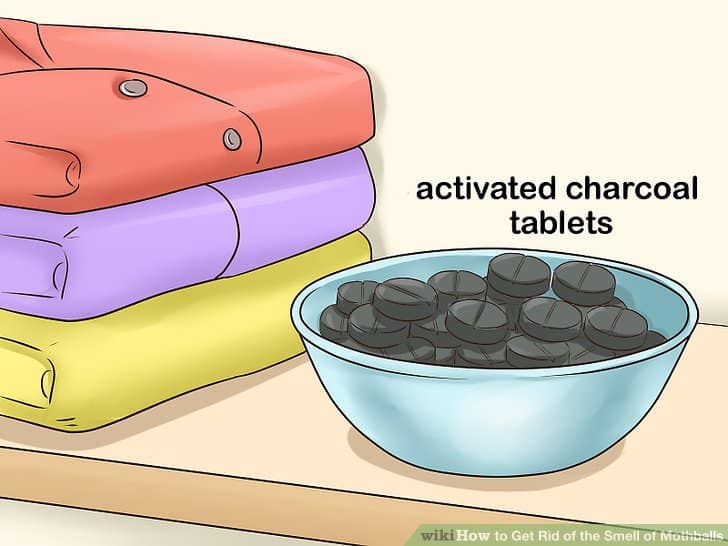
For furniture that’s held mothball odor for a long time, activated charcoal is more effective than baking soda because it pulls a wider range of odor compounds out of the air rather than just what’s on a fabric surface. Place bowls or sachets inside closed drawers or cabinets and leave them for about a week, checking periodically. Charcoal works passively, so closing the piece up while it’s in there, rather than leaving drawers open, actually helps it work faster by trapping the vapor with the charcoal instead of letting it disperse into the room.
Sunlight and a vinegar wipe-down
Direct sunlight helps break down residual odor on hard surfaces, and an hour or two outdoors on a dry day can noticeably cut lingering smell on wood frames and legs. For wood furniture, a light wipe with a cloth dampened in diluted white vinegar, followed by a full dry, can pull out odor that’s settled into the finish. Always test an inconspicuous spot first, since vinegar can dull certain finishes or lacquers if left too wet or used undiluted.
Running a HEPA air purifier with an activated carbon filter in the room while furniture airs out can pull residual vapor out of the air faster than open windows alone, especially in a room where opening windows wide isn’t practical because of weather or security concerns. Change or clean the carbon filter afterward, since it will have absorbed a meaningful amount of the vapor and can re-release some of it over time if left in place.
Materials That Hold Onto the Smell Longest
Foam cushioning and dense upholstery fill are the worst offenders because vapor diffuses deep into the cell structure and airflow alone can’t reach the center of a thick cushion. Leather is a close second, since its surface is porous enough to absorb vapor but too delicate for the vinegar or heavy baking soda treatments used on fabric and wood, a leather-specific conditioner and extended airing in a ventilated space is the safer route. Plastic storage bins rarely hold odor for long themselves, but anything stored inside a bin with mothballs, papers, books, or off-season linens, will pick up the smell and need its own separate treatment once removed. Books in particular are difficult, since the vapor gets between pages, standing them upright with pages fanned in a ventilated room for several days is usually more effective than sealing them back into a box hoping the smell fades.
What Not to Do
Don’t seal treated furniture back into a closed room, closet, or plastic cover right away, thinking that will trap the smell in and let it fade on its own. It won’t; without airflow, the vapor just keeps re-settling into the same fabric. Don’t use scented candles, incense, or heavy fabric sprays to cover the smell either, mixing scents with naphthalene vapor tends to create an odor that’s harder to place and just as unpleasant. And avoid painting or refinishing wood furniture as a shortcut before the odor has actually cleared, sealing in trapped vapor under a fresh coat locks the smell in rather than getting rid of it.
A better option going forward
Cedar blocks, lavender sachets, and dried herbs like rosemary protect stored fabric from moths without leaving behind a chemical smell that takes weeks to clear. They need refreshing more often than mothballs, cedar every few months as the oils fade, lavender and herb sachets roughly twice a year, but most people find that trade worth it once they’ve dealt with getting the mothball smell out once. If moths are the reason mothballs went in to begin with, dealing with the underlying infestation properly means you won’t be reaching for anything with a lingering odor the next time you store seasonal clothing or furniture.
How long the whole process takes
Light odor on hard furniture usually clears within a few days of consistent airflow and one round of a vinegar wipe. Moderate odor in upholstery typically needs a week or more, including at least two baking soda treatments. Heavy, long-term odor that’s soaked into foam padding or dense wood can take two to three weeks of combined ventilation, absorption, and sun exposure, and in some cases the smell never fully leaves foam cushioning, in which case replacing the foam insert is more realistic than continuing to treat it.
A few common questions
Is mothball smell actually dangerous to breathe, or just unpleasant? At the low, ongoing concentrations you’d get from residual odor in furniture, it’s generally more of an irritant than an acute hazard, but naphthalene vapor can cause headaches or nausea in sensitive people with sustained exposure, which is another reason to prioritize ventilation over just living with the smell.
Can I speed things up with a dehumidifier? Yes, in a humid room a dehumidifier running alongside open windows or a fan helps, since damp air holds odor compounds longer than dry air does.
Will washing fabric covers in the machine finish the job faster than baking soda? Often, yes. If cushion covers or curtains are machine washable, a hot wash with regular detergent typically clears mothball odor from fabric faster than absorption methods alone, since it’s actually removing the residue rather than pulling it out over several days.
How do I know when the odor is actually gone rather than just less noticeable? Close the piece up in a small room or closet for a few hours, then open the door and smell immediately, if the closed-up air still carries a distinct chemical note, there’s more vapor left to clear. Judging odor while it’s actively airing out can be misleading since your nose adjusts quickly to a fading smell.
Can dry cleaning get mothball smell out of clothing? Yes, and often faster than home methods. Professional dry cleaning removes mothball residue from garments effectively, particularly for wool, silk, or structured pieces that shouldn’t be washed at home, and it’s usually the fastest fix for clothing specifically rather than furniture.