Not all moths in a house are the same problem. Clothes moths target wool, silk, and other natural fibers in closets and drawers, while pantry moths, sometimes called Indian meal moths, are after dried food in the kitchen. Getting rid of them starts with knowing which one you’re dealing with, since the fixes for each don’t overlap much at all.
Quick way to tell them apart
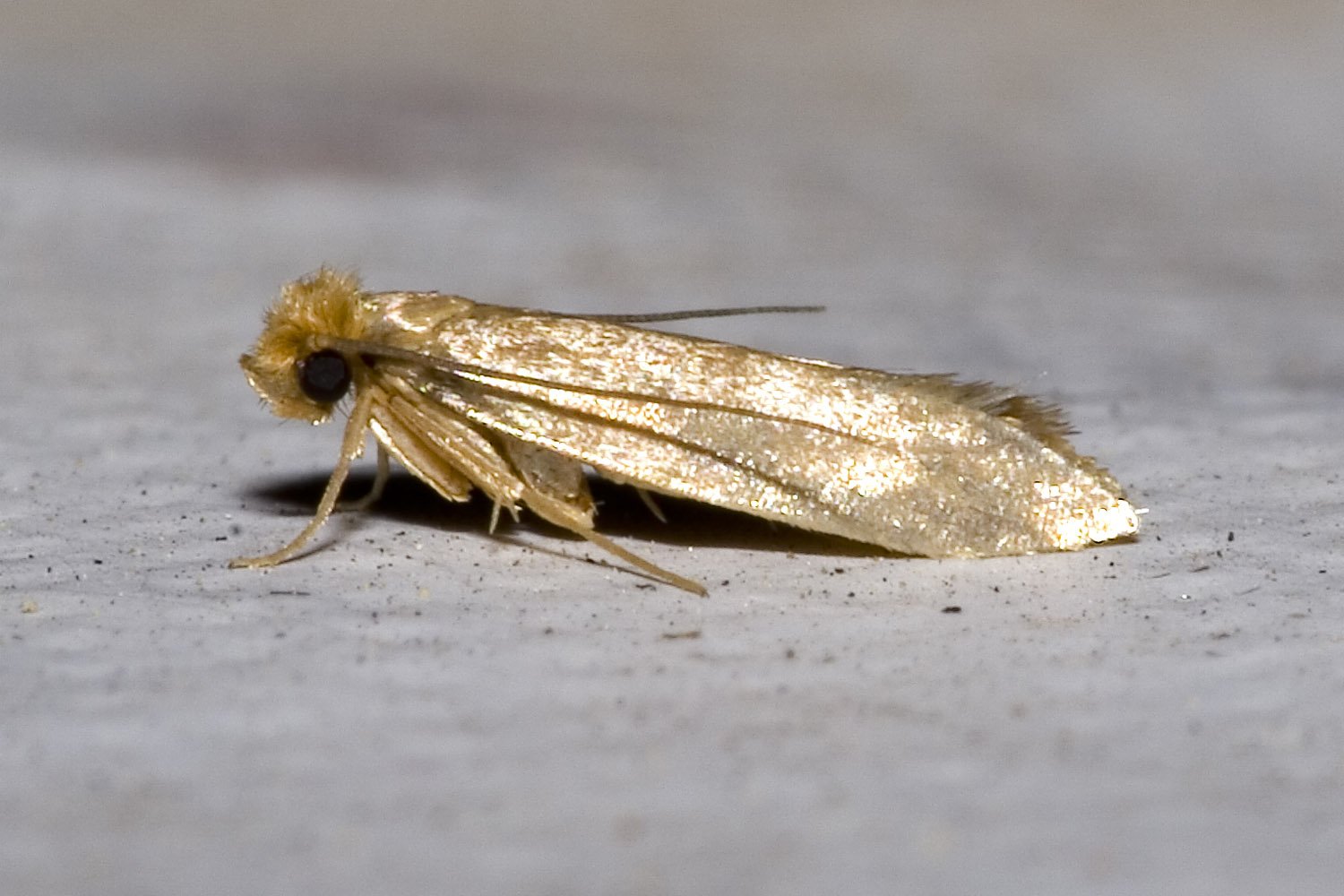
Clothes moths are small, tan to golden, and weak fliers that stay low and close to dark storage areas, you’re more likely to see one scurry along a closet floor than fly across a room. Pantry moths are a bit larger with a distinctive two-tone wing pattern, reddish-brown on the outer half and pale gray near the body, and they fly more readily, often turning up near kitchen lights at night. If you’re finding damage in fabric, it’s clothes moths. If you’re finding webbing in flour or cereal, it’s pantry moths.
The life cycle behind both infestations
Both pests follow the same four-stage cycle, egg, larva, pupa, adult, but the pace differs by species and by how warm the space is. Clothes moth eggs hatch within four to ten days in a typical closet, and the larval stage that does the actual fabric damage can stretch anywhere from a few weeks to several months depending on temperature and food availability, a slow-feeding larva in a cool, rarely opened closet can take far longer to mature than one in a warm, humid room. Pantry moth eggs hatch faster, often within a week in a warm kitchen, and the larval stage typically runs two to four weeks before the larva wanders off to pupate, frequently in a corner, ceiling crack, or the seam where a cabinet meets the wall, well away from the food source itself. In both cases, the adult moths you actually see are a sign that a larval population already exists somewhere nearby, not the start of the infestation.
Clothes moths: check the wardrobe first
Clothes moths favor dark, undisturbed spaces, which is exactly what most closets and chests of drawers provide. Look for small holes in wool sweaters, silk items, or natural-fiber coats, along with fine webbing or tiny larval cases tucked into fabric folds. Items that haven’t been worn or moved in a season are the most common targets. It’s worth noting that the moths flying around your closet aren’t the ones doing the damage, adult clothes moths don’t eat fabric at all. It’s the larvae, which you may never actually see, that cause the holes.
Clearing an infested wardrobe
- Remove everything and inspect each item closely, including seams and folds
- Launder on the hottest safe setting, or dry clean items that can’t be washed, since heat kills eggs and larvae
- Vacuum the closet thoroughly, including corners, shelving, and baseboards, then dispose of the vacuum bag outside
- Use cedar blocks or lavender sachets going forward rather than storing susceptible items loose and undisturbed for long stretches
- Sand cedar blocks lightly every few months to refresh the scent, once the surface dries out it stops being much of a deterrent at all
- Check the pockets and folds of coats and jackets specifically, larvae often nest in creases that don’t get disturbed even when an item is worn occasionally
- Consider a freezer treatment for delicate items that can’t be washed or dry cleaned: seal in a bag and freeze at -18°C or below for at least 72 hours
Pests that get mistaken for moths
Carpet beetles are the most common mix-up with clothes moths, both damage natural fibers, but beetle larvae are small, bristly, and don’t spin the fine webbing that clothes moth larvae leave behind, so powdery or grainy debris usually points to beetles rather than moths. In the kitchen, fruit flies and grain weevils get confused with pantry moths, but fruit flies are drawn to ripening produce and drains rather than dry goods, and weevils are small hard-shelled beetles that bore directly into grains and beans rather than spinning webbing across the surface of the food. Getting the identification right matters because the products and methods that work on one pest often do nothing for another, a trap designed for pantry moth pheromones, for instance, won’t catch a single carpet beetle or weevil.
Pantry moths: check the cupboard, not the closet
Pantry moths arrive in dried goods, similar to pantry beetles, and spread from one open container to the next. Small moths flying near the pantry, fine webbing in flour or grain, and tiny larvae in stored food are the giveaways. It’s common for an infestation to start in a single bag of birdseed, pet food, or an old container of grains pushed to the back of a cabinet, and spread outward from there once the moths find easier food nearby.
Clearing an infested pantry
Throw out any opened or susceptible dry goods, even ones that look untouched, since eggs are easy to miss. Wipe down shelves thoroughly, including corners and seams where jars sit, larvae can wander a few metres from the original food source looking for a place to pupate. Store everything going forward in sealed glass or hard plastic containers, since moths can chew through cardboard and thin plastic packaging without much trouble. A pantry moth trap, a sticky card baited with pheromone, is a useful way to confirm the infestation is actually clearing rather than just guessing.
Vacuum inside cabinet hinges, corner seams, and the underside of shelves specifically, since larvae often pupate in these tucked-away spots rather than in the food itself, spinning a silken cocoon that can be easy to miss during a quick wipe-down. Placing pheromone traps roughly 1 m apart along the highest shelf in the pantry, since pantry moths tend to fly upward, gives a better read on the infestation’s size than a single trap tucked in a back corner.
What not to do
Don’t spray a general insecticide directly in food storage areas, it’s not effective against eggs and larvae hidden inside packaging, and it introduces a product you don’t want anywhere near food. Also don’t assume a clean-looking sweater is safe to put back into storage without washing it first, larvae feed on body oils and food residue as much as the fiber itself, so a lightly worn item that looks fine can still be a target.
Why moths show up when they do
Both types tend to spike at predictable times. Clothes moths thrive in the still, undisturbed conditions of a closet that doesn’t get opened much, which is why infestations often get discovered at the start of a season when seasonal clothing comes back out of storage and damage from months earlier finally gets noticed. Pantry moths often arrive already in a product, eggs can be present in bulk grains, birdseed, or pet food from the point of packaging, and go unnoticed until they hatch weeks later at room temperature. That’s why a fresh infestation doesn’t always mean poor housekeeping, sometimes it’s simply what came in the bag.
How long a full clearout actually takes
For a closet, expect the process, sorting, laundering, vacuuming, to take a few hours for an average wardrobe, with laundry time being the biggest variable depending on how much needs washing or dry cleaning. For a pantry, plan on a full afternoon if the infestation has spread across multiple shelves. In both cases, moths already in flight when you start won’t disappear overnight even after a thorough cleanout, adults that were already out and about before you started can live and lay eggs for another week or two, so seeing a moth or two in the days right after doesn’t necessarily mean the cleanout failed.
When it’s more than a few items
If moths keep reappearing after a thorough cleanout, in either the wardrobe or the pantry, there’s usually a source still being missed, whether that’s an item that didn’t get treated or a nearby storage area that got overlooked. At that point, having a pest professional handle the inspection to find the actual source saves a lot of repeated cleanouts. Call 1-844-783-4821 if you’ve already done the cleanout and it’s still not sticking.
Common questions
Can clothes moths and pantry moths infest a home at the same time? Yes, they’re unrelated infestations targeting completely different food sources, so finding fabric damage in a closet and larvae in a cereal box in the same house is a coincidence of timing, not one problem spreading from the other.
Do mothballs work on pantry moths? No. Mothballs are formulated for fabric pests in enclosed storage and aren’t labeled or effective for food-associated pests, and using them anywhere near food storage isn’t a safe or appropriate use of the product regardless.
How do I know if a cleanout actually worked? Keep a pheromone trap in the treated area for two to three weeks after the cleanout. A steadily declining catch, or no catch at all after the first week, is a good sign the source was found and removed. A catch that stays steady or climbs means something was missed.