
Cats present a specific challenge in pest control that dogs and other pets do not share as directly: they groom themselves constantly, licking their fur multiple times a day, which means anything that settles on their coat has a direct path into their system. Combined with their habit of investigating low corners, baseboards, and cabinet gaps, that makes product choice and placement genuinely important, not just a preference.
Why Cats Are More Sensitive Than Other Pets
Cats lack certain liver enzymes that dogs and humans use to metabolize some common pesticide compounds, which means substances that are handled safely by other species can affect cats more severely at lower doses. This is well documented with certain synthetic pyrethroid-based products in particular, which is one reason natural-first treatment options matter more in cat households than in homes without pets. It’s the same reason vets are strict about which flea products are labeled cat-safe versus dog-only; the underlying biology is identical to the pest control question.
Where the Real Risk Is
It is rarely the treatment itself that causes a problem when it is applied correctly. The risk shows up around timing and placement: a cat walking across a treated baseboard before it has fully dried, or a bait station placed somewhere a curious cat can actually reach and paw at. Ant baits and rodent baits are worth particular attention, since both are designed to be appealing to the pest they target, and a cat’s curiosity does not always stop at species lines.
Rodent Bait Specifically
If mice are a problem in a home with cats, tamper-resistant, enclosed bait stations are worth insisting on rather than open bait placement. Beyond the bait itself, there is a secondary risk worth knowing about: a cat that catches and eats a poisoned mouse can experience secondary exposure to the rodenticide, which is a real consideration in any household managing both a rodent problem and outdoor or semi-outdoor cats.
Signs of Exposure to Watch For
If a cat has had contact with something it shouldn’t have, drooling, vomiting, unsteady movement, unusual lethargy, or loss of appetite in the hours after a treatment are the signs to watch for. These symptoms warrant a call to your vet the same day, not a wait-and-see approach, since some exposures are far easier to treat early. Keep the product name or the pest professional’s summary of what was used on hand so you can pass it along if needed.
What to Ask Before Any Treatment
Before a pest control contractor treats your home, it is reasonable to ask exactly what is being used, where it is being placed, and how long you should keep cats out of the treated area while it dries or settles. A good technician will walk you through this without being asked twice, and will adjust placement, choosing a shelf over a floor corner, for example, based on the fact that a cat lives there. It’s also worth mentioning if your cat is an indoor-outdoor cat, since that affects both exposure risk and where preventive placements should go around the exterior of the home.
Natural-First Options
Botanical treatments and mechanical exclusion methods generally carry a lower risk profile around cats than broad chemical applications, which is part of why we lead with them wherever the pest and the severity of the problem allow for it. It is not a guarantee that zero caution is needed, cats can still react to certain essential oils, peppermint and tea tree in particular, so even natural products should be discussed with your vet if your cat has known sensitivities. But it does mean fewer of the more serious risk categories are on the table to begin with.
How Flea Treatments Fit Into This
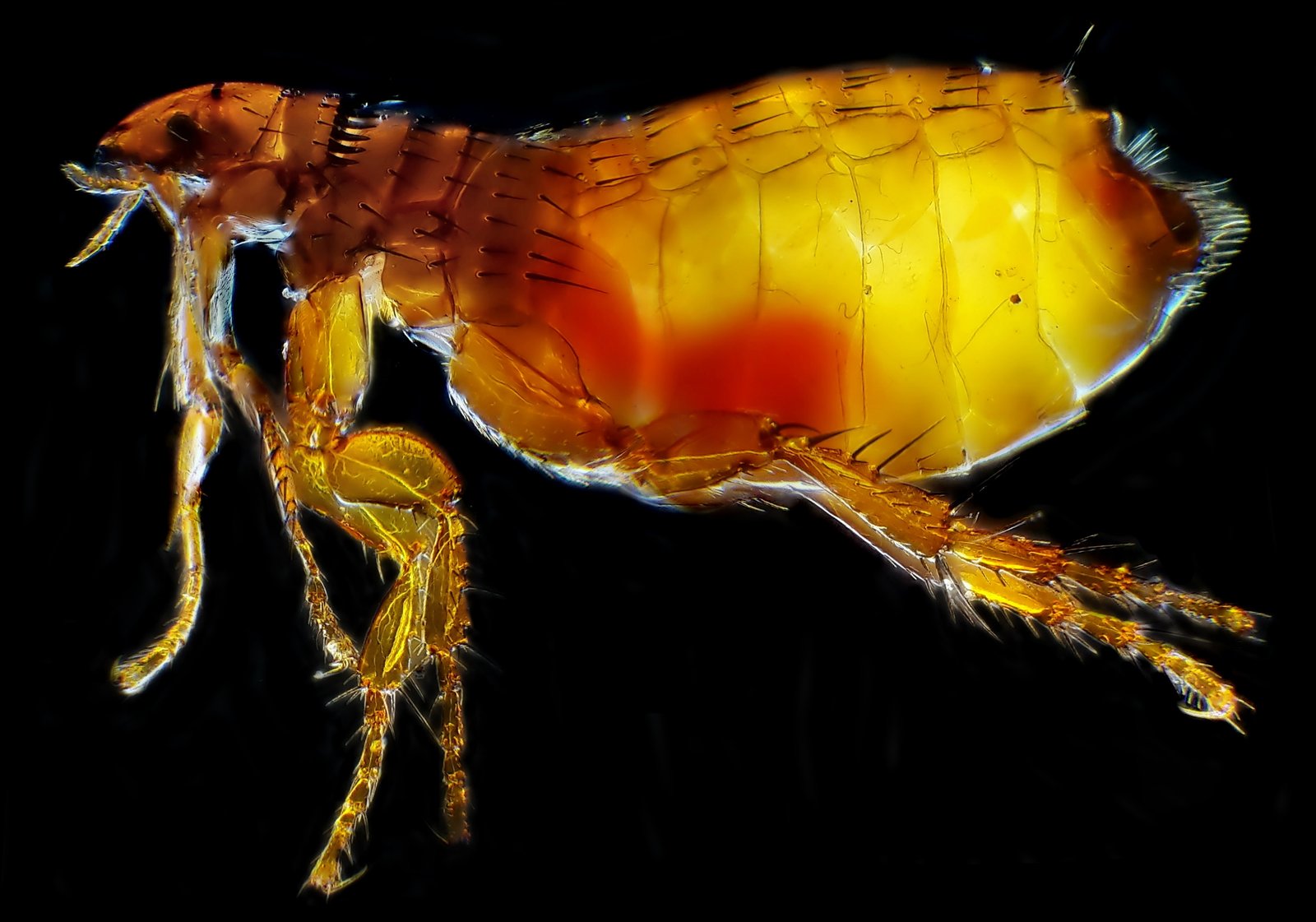
Flea control is usually the pest issue that touches a cat most directly, since it’s applied to the cat rather than just the home around it. Vet-prescribed topical and oral flea preventives go through a different approval process than household pest products and are formulated with feline metabolism in mind, which is why a product labeled and dosed for a dog should never be used on a cat even in a smaller amount; the concentration of active ingredient, not just the total dose, is what causes the toxic reaction in some cases. If fleas have already spread into carpets and furniture, treating the home environment (vacuuming daily, washing bedding in hot water, and using a cat-safe household spray) alongside the cat itself is what actually breaks the flea life cycle, since eggs and larvae living in carpet fibers outlast whatever you put directly on the cat.
Seasonal Timing Matters
Rodent activity, and the bait exposure risk that comes with it, typically increases in fall and early winter as mice move indoors ahead of cold weather, which is exactly when tamper-resistant bait stations and secondary exposure precautions matter most in cat households. Flea season runs opposite to that, peaking in warm, humid months when outdoor flea populations are highest and more likely to hitch a ride indoors on a cat or a person’s shoes. Knowing which risk is active for your season helps you ask the right questions when you do bring in a technician, rather than treating every visit the same way year-round.
DIY Steps vs. Calling a Professional
Sealing obvious gaps, switching to sealed containers for pet food and pantry staples, and doing a basic perimeter check are reasonable for any cat owner to handle without help. Where it’s worth bringing in a pest professional is anything involving bait placement indoors, an active rodent population, or a pest that requires a chemical treatment beyond a spot spray, since a technician who works around pets regularly will know which products and placements are actually appropriate for a home with a cat in it, rather than defaulting to whatever is fastest to apply. Expect a technician experienced with pet households to ask about your cat before touching a single product, not after.
Preparing your home before a visit
A little prep goes a long way. Confine cats to a single room during the treatment itself, and let the technician know which room so they can plan around it. Remove food and water bowls from areas being treated and set them back out once everything has dried. If your cat has a history of sensitivity to strong scents or a known health condition, mention it before the visit starts rather than partway through, since it may change which products are used that day.
What this means for multi-pet or multi-species households
Households with cats and dogs, or cats and small caged pets like rabbits or birds, need to plan around the most sensitive animal in the house, not the average. A treatment plan that’s perfectly fine for a dog isn’t automatically fine for a cat sharing the same floor space, and a plan safe for cats and dogs may still need adjusting for a bird’s much more sensitive respiratory system. Flagging every pet in the home, not just the one you’re most worried about, gives a pest controller what they need to plan correctly the first time.
What NOT to do
Don’t use a leftover flea or tick product labeled for dogs on a cat, and don’t assume an essential oil diffuser marketed as pet-friendly is automatically fine around a cat specifically, since a lot of that labeling is written with dogs in mind, not the narrower list of things cats can safely tolerate. Don’t place any bait, natural or otherwise, on an open shelf or windowsill a cat can reach just because it’s out of paw’s reach from the floor; cats climb and jump in ways dogs generally don’t, so “up high” isn’t automatically “out of reach” the way it is with most other pets.
A couple of quick questions people ask
Is diatomaceous earth safe around cats? Food-grade diatomaceous earth is considered low-risk, but it can be irritating if a cat inhales a cloud of it directly, so it’s best applied in cracks and voids rather than as a visible dust in open areas a cat walks through. How long after treatment can cats go back into a room? It depends on the product, but a good rule of thumb is to wait until any liquid application has fully dried, generally a couple of hours, and to ask the technician directly for anything applied as a dust or in a void.
A few more things cat owners ask
Can I use a plug-in pest repellent if I have a cat? Ultrasonic pest repellents are generally considered safe around cats since they don’t rely on a chemical agent, though effectiveness against most pests is mixed at best, so don’t count on one as your main line of defense. What about outdoor perimeter sprays if my cat goes outside? Ask specifically whether the perimeter treatment is safe for pets crossing it once dry, and consider keeping your cat off the treated strip of yard for the first full day rather than just the first few hours, since outdoor conditions dry treatments more unevenly than indoor surfaces.