
There’s no shortage of DIY termite advice online, and some of it isn’t wrong exactly, it’s just incomplete. Termite colonies are large, mostly hidden underground or deep in structural wood, and treating what you can see rarely addresses what you can’t.
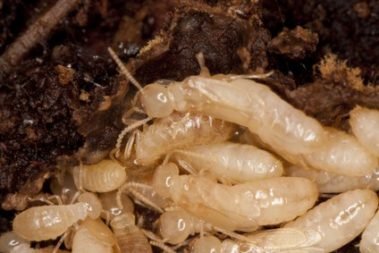
Know Which Species You’re Actually Dealing With
Not all termites behave the same way, and the species matters more than most DIY advice accounts for. Subterranean termites, the most common type across most of the US, live in the soil and need contact with moisture to survive, which is why they build the pencil-width mud tubes that connect soil to wood. Drywood termites are a different animal entirely: they live completely inside dry wood, need no soil contact, and are more common in warmer coastal and southern regions. That distinction changes the whole treatment approach, since a soil-applied barrier or bait station does nothing for a colony that’s sealed inside an attic rafter with no ground connection.
Dampwood termites target wood that’s already moisture-damaged, often around leaking roofs, poor drainage, or old deck posts in contact with soil, and they’re less likely to spread into sound structural wood elsewhere in the home. Formosan termites, an aggressive subterranean subspecies established in the Gulf Coast states and Hawaii, build much larger colonies, sometimes numbering in the millions, and can chew through more than typical subterranean species in the same timeframe. If you’re in a region where Formosan termites are established, DIY treatment is even less likely to keep pace with the colony.
DIY Methods That Have Some Real Basis
Orange Oil
Orange oil contains d-limonene, which is genuinely toxic to termites on contact. The catch is that it only kills termites it directly touches, and drywood termite galleries are rarely all accessible from a single injection point. It can work on a small, isolated, confirmed drywood colony, but it won’t reach a colony that extends further into a wall than you can see.
Borate Treatments
Borate solutions applied to exposed or newly framed wood do offer real protection, since termites that feed on treated wood ingest the borate and it disrupts their digestion. This works well as a preventive treatment during construction or renovation, but it’s far less effective as a cure for wood that’s already sealed behind drywall or siding.
Beneficial Nematodes
Certain nematode species do prey on termites in soil, and they’re a legitimate tool in an integrated approach. But they need specific soil temperature and moisture conditions to survive and hunt effectively, and they don’t address termites already inside the structure.
Why DIY Usually Falls Short
A subterranean termite colony can include tens of thousands of workers spread across a network of soil tunnels that may extend well beyond the boundary of your property. Effective treatment generally requires either a continuous chemical barrier around the entire foundation, with no gaps, or a bait station system that’s monitored and refreshed on a schedule. Missing even a small section of the perimeter gives the colony an untouched path back in.
Drywood termites present a different challenge, since they live inside the wood itself rather than the soil, and confirming the full extent of a colony often means checking areas most homeowners can’t easily access, like inside wall voids or above ceilings.
The Real Risk of Getting It Wrong
The danger with a partial DIY treatment isn’t just that it fails. It’s that it can mask visible activity for a while, giving a false sense that the problem is handled while the colony keeps feeding on structural wood out of sight. By the time damage becomes obvious again, months or years may have passed.
How to tell if you actually have termites
Mud tubes running up a foundation wall, about the width of a pencil, are one of the clearest signs of subterranean termite activity, since workers build them to travel between soil and wood while staying protected from open air. Discarded wings near windowsills or doors, usually in spring, point to a swarm that already established or is trying to establish a new colony nearby. Wood that sounds papery or hollow when tapped, or that gives way easily to a screwdriver point, suggests damage that’s already progressed past the surface. If you’re only seeing one of these signs and nothing else, it’s still worth a full check before assuming the worst or dismissing it entirely.
What NOT to do
Don’t rely on a single retail termiticide spray around the visible perimeter and call it done; most consumer products aren’t labeled or concentrated for a continuous structural barrier the way professional-grade applications are. Don’t disturb mud tubes just to “check” for activity, since that can scatter the colony into new paths rather than eliminating it. And don’t wait for a second swarm to confirm what the first one already told you; termites don’t swarm on a schedule convenient to homeowners, and by the next spring a small colony can be a well-established one.
Cost and Timeline: What to Actually Expect
Professional termite treatment cost varies a lot based on the size of the home, the foundation type, the species involved, and whether you’re treating an active infestation or applying preventive protection during construction. As a general rule, a liquid barrier treatment tends to cost less upfront than a full bait station system, but bait systems typically include ongoing monitoring built into the price, while a barrier treatment may need a separate service agreement for periodic re-inspection. Slab foundations, crawl spaces, and homes with additions or multiple foundation types generally cost more to treat properly, since each transition point is a potential gap in a barrier.
Timeline expectations differ by method too. A liquid barrier reduces termite activity relatively quickly since it’s a contact and residual treatment, but confirming the colony is fully gone still takes follow-up inspection over the following months. Bait systems work slower by design, since foraging termites need to find the bait, feed, and carry it back to the colony, which is why several weeks to a few months is a realistic window before you see activity drop off. Neither approach is instant, and any pest management company that promises same-day elimination of an established colony is overselling what the method can actually do.
Regional timing to keep in mind
Subterranean termite swarms tend to follow warm, humid conditions after rain, which means spring in most of the US and Canada, though Gulf Coast and southeastern states can see swarming activity into early summer. Drywood termites swarm on a less predictable schedule tied more to temperature than rainfall. In Australia, where termite pressure is especially high, many pest professionals recommend annual inspections regardless of visible activity, simply because the risk profile is that much steeper.
What a professional treatment actually adds
Beyond access to stronger, professionally labeled products, a licensed treatment brings inspection tools most homeowners don’t have on hand: moisture meters to find the damp wood termites are drawn to, sounding devices to check for hidden galleries behind finished walls, and, for bait systems, monitoring stations placed and checked on a schedule rather than guessed at. The bigger difference is diagnosis. A professional inspection tells you whether you’re dealing with a small, isolated colony or an established one that’s likely spread beyond what’s visible, which changes the entire treatment plan.
Common Mistakes That Make a Termite Problem Worse
- Painting or caulking over visible mud tubes without addressing what’s producing them, which hides the evidence without touching the colony behind it.
- Treating only the spot where termites were seen, rather than the full perimeter or the full extent of an accessible colony, which leaves an untreated path for the same colony to return through.
- Using a borate treatment on wood that’s already sealed behind drywall or siding, where it can’t penetrate deeply enough to reach termites already established inside.
- Removing damaged wood and replacing it without treating the surrounding soil or structure first, which can leave termites just as active in the framing next to the repair.
- Assuming a lack of visible swarmers means the problem resolved on its own, when the more likely explanation is that the colony simply isn’t swarming this season.
When It’s Worth Bringing in a Professional
If you’ve confirmed termite activity, whether that’s mud tubes along the foundation, discarded wings near windows, or wood that sounds hollow when tapped, it’s worth having a full inspection before deciding on a treatment plan. Our fumigators use natural-first methods wherever they’ll actually do the job, and we’ll tell you honestly if a situation calls for something more. Call 1-844-783-4821 to talk through what you’re seeing.
A couple of quick questions
Can I combine orange oil or borate with a professional treatment? Sometimes, as a supplemental step on a confirmed small colony, but it should be discussed with whoever is handling the main treatment rather than layered on independently, since it can complicate monitoring.
How long does a professional termite treatment actually take to work? Bait systems generally take several weeks to months to eliminate a colony, since it relies on foraging workers carrying bait back to the nest. Barrier treatments have a more immediate effect on activity but still require monitoring to confirm the colony is fully addressed.
Does homeowners insurance cover termite damage? Almost never. Most homeowners policies specifically exclude termite and other wood-destroying insect damage, treating it as a maintenance issue rather than a sudden, covered loss. That makes early detection and preventive treatment financially worthwhile, since repair costs typically fall entirely on the homeowner.
Can I sell a house with a history of termites? Yes, but many buyers’ lenders require a wood-destroying insect inspection before closing, and past damage or active activity found during that inspection can affect financing or require repairs before the sale goes through. Keeping records of any past treatment and its results makes this process considerably smoother.