If you’ve pulled a wool sweater out of storage and found small, irregular holes, the moth responsible almost certainly wasn’t the one you saw flying around. Adult clothes moths don’t actually eat fabric. It’s the larvae that do the damage, feeding on keratin found in wool, cashmere, silk, feathers, and fur, which is why a moth problem can go unnoticed for months before anyone spots the holes.
Two Species, Slightly Different Habits
The webbing clothes moth spins silky tunnels as it feeds and tends to avoid light, staying tucked into folds of fabric or dark closet corners. The casemaking clothes moth builds a small, portable case around itself as it eats, which can look like a bit of lint stuck to a garment. Both prefer soiled fabric, meaning a sweater with body oils, sweat, or food stains is a far more attractive meal than a clean one. Both species also avoid bright, disturbed areas, which is part of why an infestation can quietly build for a season or two in a guest closet or a cedar chest that doesn’t get opened often.
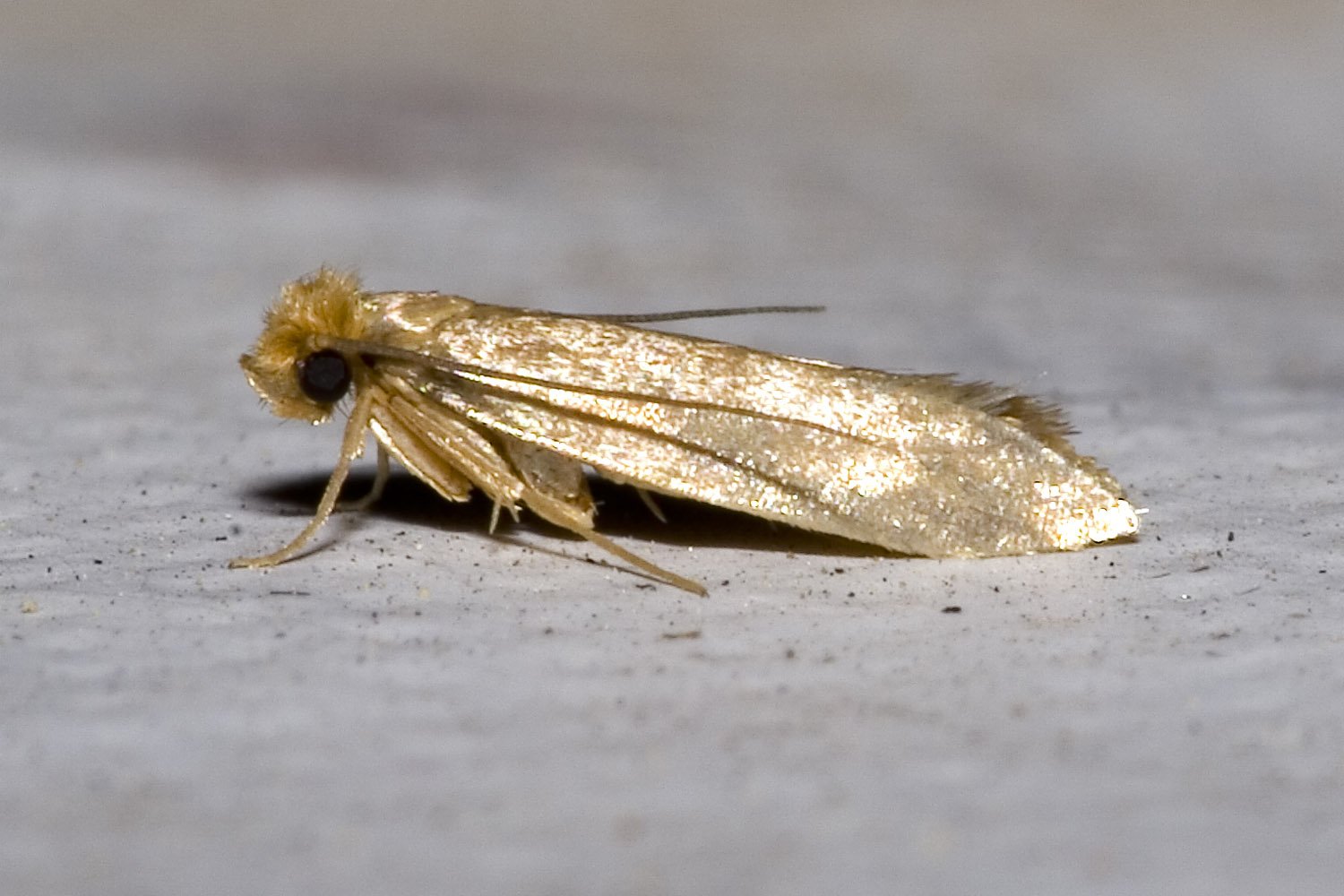
Adult clothes moths are smaller and duller than most people expect, roughly a quarter to a half inch long with a buff or golden sheen, and they hold their narrow wings tent-like over their body rather than flat. Unlike pantry moths, they avoid light rather than flying toward it, so an adult moth fluttering out of a drawer when you open it, rather than circling a lamp at night, is a fairly reliable sign it’s a fabric pest and not a food moth from the kitchen.
Clothes Moths vs. Carpet Beetles: A Common Mix-Up
A large share of what people bring in as a “moth problem” turns out to be carpet beetles instead, and the distinction matters because the cleanup steps overlap but aren’t identical. Carpet beetle larvae are short, oval, and covered in bristly hair, often described as looking like tiny, fuzzy carrots, while clothes moth larvae are smooth, cream-colored, and worm-like. Carpet beetles also leave behind shed skins that look like tiny, hollow husks of the larvae themselves, whereas clothes moth larvae leave silky webbing or the small case they built around themselves as they fed. Adult carpet beetles are round, hard-shelled, and often mottled black, white, and orange, closer in appearance to a tiny ladybug than a moth, and they’re commonly found on windowsills since the adults feed on pollen outdoors before laying eggs indoors. If you’re seeing small, hard-shelled beetles rather than moths flying up out of a closet, the treatment steps below still apply, but a pest professional can confirm which insect you’re actually dealing with before you spend time chasing the wrong culprit.
Why This Happens
Clothes moths don’t arrive out of nowhere. They’re usually brought in on a secondhand rug, a used piece of furniture, or clothing that wasn’t cleaned before long-term storage, and from there the larvae can spread to anything else made of natural fiber nearby. A single female can lay 40 to 50 eggs over her lifetime, and depending on temperature and humidity, the life cycle from egg to adult can take anywhere from two months to over a year, which explains why damage sometimes seems to appear overnight after sitting undetected for a long stretch. Dark, undisturbed, and moderately humid closets are ideal conditions, so a closet that rarely gets aired out or reorganized is naturally more at risk than one used every day.
Places People Forget to Check
Closets get the blame, but clothes moth larvae feed anywhere natural fiber sits undisturbed. Wool area rugs and the felt pads underneath them are a common overlooked source, especially in a formal living room or guest room that doesn’t see regular foot traffic or vacuuming. Cedar chests are another blind spot; the cedar oil that once made them effective fades over decades, and gaps around an old lid are enough for a moth to get in and lay eggs on stored blankets or linens inside. Upholstered furniture with wool or feather-filled cushions, felt piano hammers, taxidermy, and stored wedding dresses or military uniforms packed away in cardboard rather than sealed containers are all realistic sources that get missed during a standard closet cleanout. If you keep finding new damage after treating the obvious closets, it’s worth walking through the rest of the house with this list in mind before assuming the problem is solved.
What Actually Gets Rid of Them
Wash or Dry Clean Everything First
This step matters more than most people realize. Clothes moth eggs and larvae are killed by the heat of a hot wash or dry cleaning cycle, and removing the soil and odor that attracted them in the first place prevents a second wave. This includes items that look untouched, since eggs are easy to miss and nearby garments in the same closet are often already affected even without visible holes.
Freeze What You Can’t Wash
For delicate items that can’t go through a washer, sealing them in a plastic bag and placing them in a freezer at 0°F for at least 72 hours kills eggs and larvae at every stage. Let the item return to room temperature before opening the bag to avoid condensation, and for heavily soiled or bulky items, err toward a full week in the freezer rather than the minimum.
Dry Heat as a Middle Option
For sturdier items that can’t be frozen conveniently, such as a large wool blanket, dry heat above roughly 120°F sustained for thirty minutes will also kill eggs and larvae at every life stage. A clothes dryer on its highest heat setting can work for items rated to tolerate it, though it’s worth checking the care label first since some wool and silk blends will shrink or distort under sustained high heat even without the moisture of a wash cycle. This option is best treated as a backup for items too bulky for the freezer, not a first choice over washing.
Vacuum the Closet Thoroughly
Larvae and eggs collect in carpet fibers, along baseboards, and in the corners and seams of closet shelving. A thorough vacuum, followed by wiping down hard surfaces, removes a surprising amount of the population before you ever touch a garment. Seal and discard the vacuum bag or empty the canister outside immediately afterward, otherwise you’re just relocating the problem to the vacuum itself.
Use Cedar and Lavender as a Deterrent, Not a Cure
Cedar blocks and lavender sachets are genuinely useful for keeping moths away from clean, stored clothing, but they won’t kill an existing infestation. Cedar oil needs to be refreshed every few months as its scent fades, since that’s what does the deterring, and sanding a cedar block lightly can restore some of its scent between replacements.
Set Pheromone Traps to Monitor
Sticky traps baited with pheromones won’t eliminate a population on their own, but they’re a reliable way to confirm whether moths are still active after you’ve cleaned and treated a closet, and to catch a new infestation early before it spreads to other garments. They specifically attract male moths, so a trap that keeps catching moths weeks after cleanup means there’s still a breeding population somewhere nearby.
Timing Matters More Than You’d Think
Clothes moths are most active in warm, humid conditions, so activity tends to pick up over summer and into early fall, which makes late spring a good time to inspect and clean out closets before the breeding season ramps up. That said, indoor heating keeps many closets warm enough for moths to stay active through winter regardless of the season outside, so a cold snap won’t solve an existing problem on its own. Rotating seasonal storage, checking on off-season clothing every couple of months instead of leaving it sealed away for six months or more, catches an infestation early instead of after it’s spread.
What Not to Do
Mothballs work, but only in a fully sealed container, since the fumes that kill larvae need to build up to a concentration that’s also unpleasant and potentially harmful to breathe in an occupied space. Using them loose in an open closet mostly just leaves a lingering smell without solving the problem. Spraying a general household insecticide on clothing isn’t a fix either, and can damage or discolor fabric. And storing “clean-looking” clothing without actually washing it first is one of the most common reasons an infestation that seemed handled comes back within a season.
What to Expect From Professional Treatment
For a single closet, most homeowners can work through the wash, freeze, and vacuum steps above over a weekend. A pest management company gets involved when the infestation has spread across multiple rooms, into upholstery or wool carpet, or keeps coming back after a thorough DIY cleanout. A professional visit typically starts with an inspection to identify every active source, since treating one closet while larvae are still feeding in a rug three rooms over just means the problem resurfaces. Treatment often combines targeted, non-toxic and safe for kids and pets application in cracks, baseboards, and closet corners with the same wash-freeze-vacuum steps homeowners can do themselves, plus a follow-up pheromone trap check a few weeks later to confirm the population is actually gone rather than just quiet. Costs vary widely depending on how many rooms are affected and whether textiles need professional cleaning, and a straightforward single-closet case is a very different job from a whole-house infestation that’s been building for a year or more.
Quick Answers
Can clothes moths spread from one closet to the rest of the house on their own? Yes. Adult moths fly, and larvae can crawl short distances, so an untreated closet is a real source of spread to adjoining rooms, especially if doors are left open or garments are shared between closets during a wardrobe swap.
Will a cedar closet alone prevent an infestation? A well-maintained cedar closet with regularly refreshed oil is a strong deterrent, but it’s not foolproof, particularly if infested items are brought in already carrying eggs. Wash or freeze items before storing them, even in a cedar-lined closet.
How long does it take to notice clothes moth damage after an infestation starts? It varies with temperature and humidity, but visible holes often take weeks to months to appear, since a single larva does limited damage and it’s the accumulation of many feeding over an extended period that becomes obvious.
When to Call for Help
If moths have spread beyond one closet, or you’re finding larvae in carpet, upholstery, or stored blankets throughout the house, it’s worth having someone assess the full extent of it. A widespread infestation is easy to underestimate, since larvae and eggs tucked into rarely-disturbed fabric or furniture seams don’t show themselves until damage is already done. Call 1-844-783-4821 and we can help you track down every source before it costs you another season of clothing.