Services
Beehive Removal
A hive that's moved into your wall, chimney, or shed isn't something to spray and walk away from. We identify what's actually there and remove it the right way, with live relocation whenever the colony allows for it.
Natural, guaranteed pest control — free no-obligation quotes, no contract, safe around kids and pets.
Signs You Need This
How to tell it's time to call
The clearest sign is consistent traffic in and out of one specific gap, siding seam, soffit vent, or a gap where a brick has settled, especially if it's steady through the day rather than a few bees passing through. A low hum you can hear from inside the room when you put your ear to the wall, particularly in the evening, usually means there's an established hive rather than a stray scout. Watch for dark staining or a sweet, slightly fermented smell coming through drywall or exterior paint, that's often honey seeping from comb that's outgrown its space. A sudden cluster of bees hanging on a tree branch, fence post, or under an eave is a swarm looking for a new home, and it can turn into a permanent hive within days if it settles into a wall cavity, old chimney, or unused dryer vent.
The Full Picture
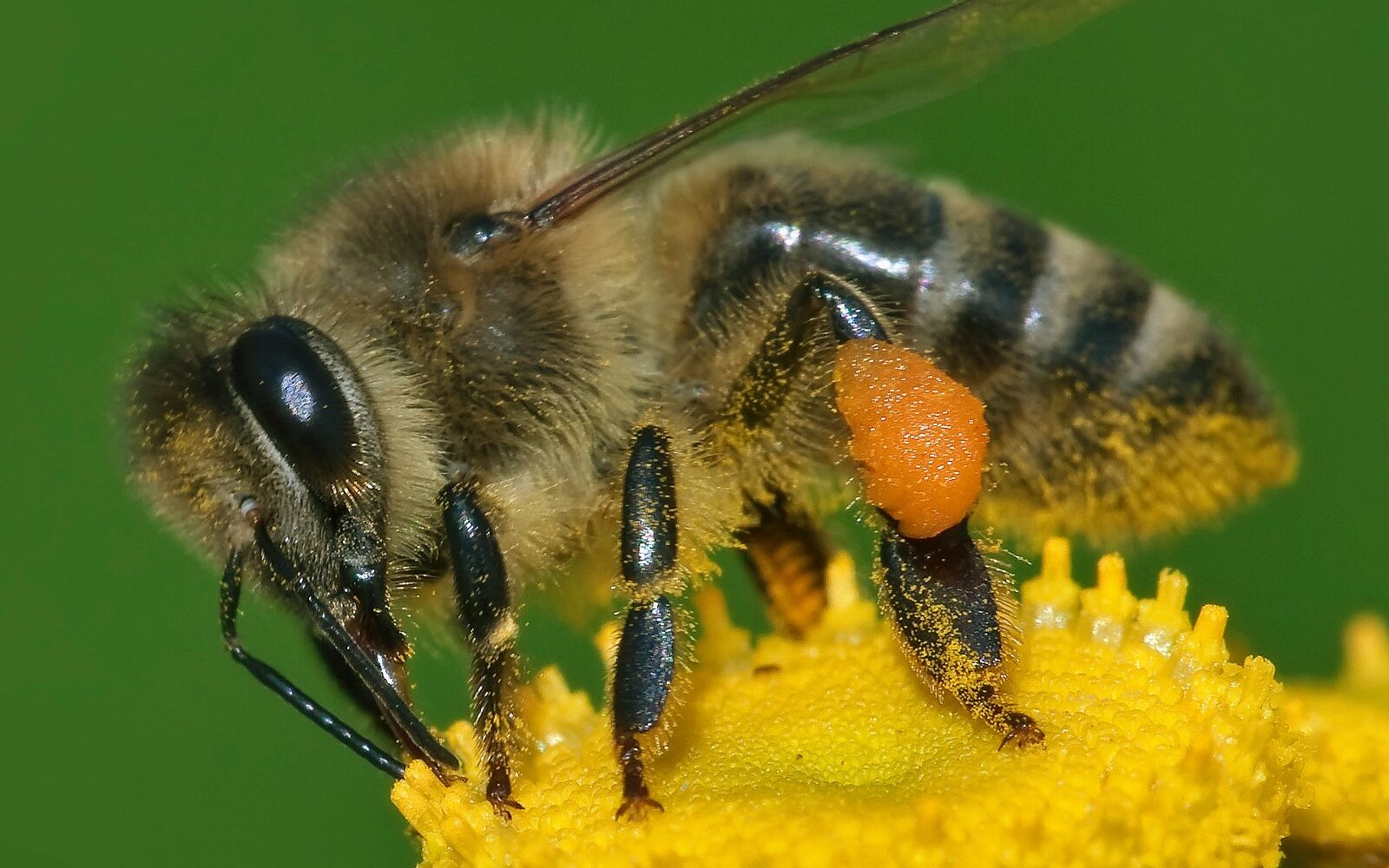
Not every buzzing sound in your wall calls for the same response. Honeybees are pollinators, and in a lot of places they're protected or at least strongly preferred to be relocated rather than exterminated, so our technicians identify the species before deciding how to proceed. A softball-sized comb behind a soffit gets handled differently than a paper wasp nest under a porch rail, and treating them the same way either wastes effort or puts bees at risk that didn't need to be.
The part people underestimate is the comb itself. Killing the bees you can see and leaving wax, brood cells, and honey inside the wall void doesn't finish the job, it just sets up the next problem: wax moths, ants, and rodents are all drawn to that leftover material, and an empty hive scent can pull in a new swarm within a season. We remove the comb along with the colony and seal the void, because a beehive removal that skips that step isn't really done. If bees come back to the same spot after we've treated it, we come back and fix it for free.
Our Approach
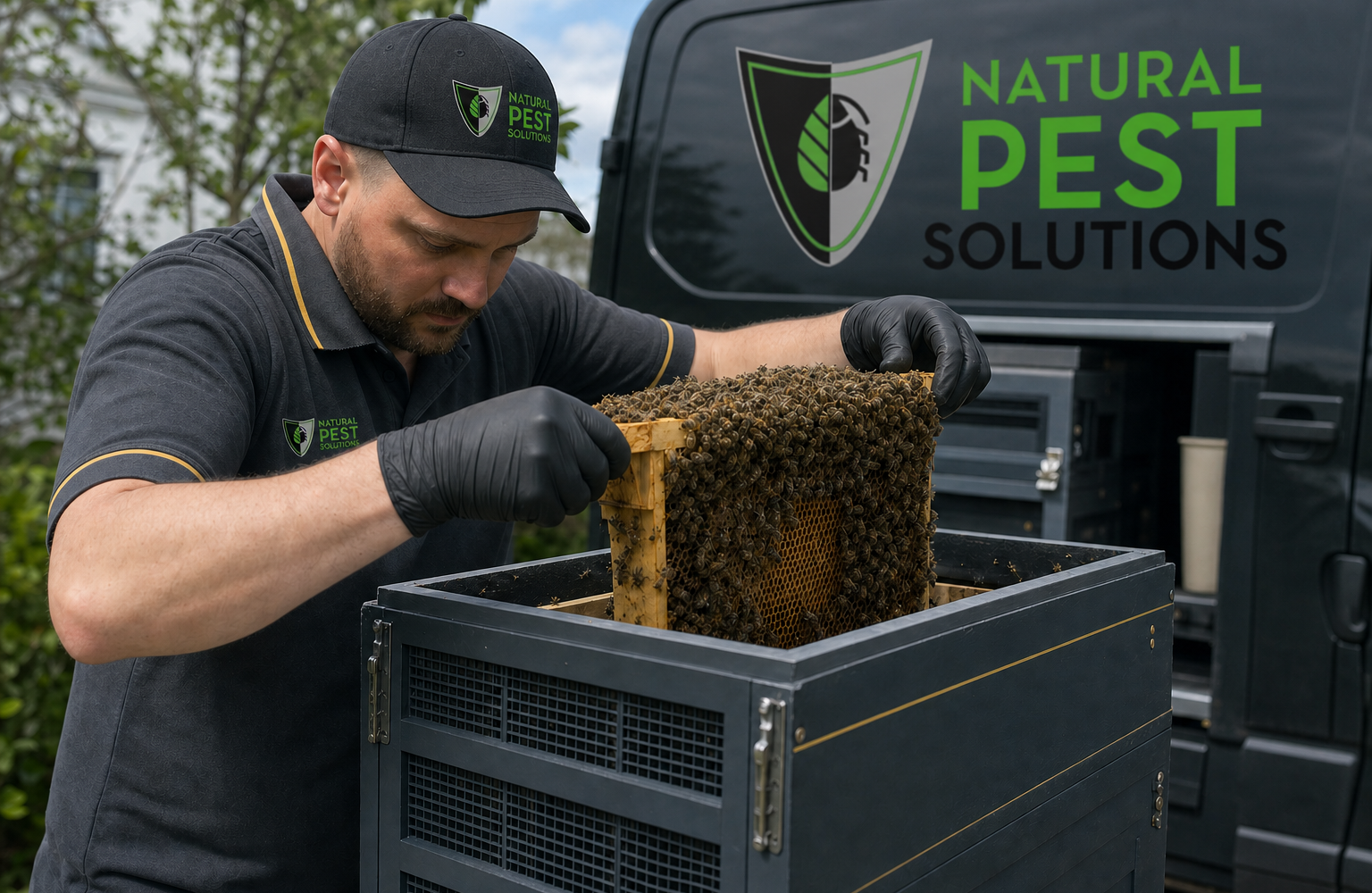
As your exterminators, we start by identifying what's actually living in the space, since honeybees, bumblebees, and wasps get treated very differently and mixing them up leads to the wrong fix. If it's a honeybee colony, our first move is live removal: gentle smoke to calm the hive, then a careful cutout to extract the comb, brood, and bees intact, with the colony relocated to a hive box rather than destroyed. Chemical treatment is a last resort we reserve for situations where live removal genuinely isn't safe, like an aggressive colony in a spot we can't access without risk. Either way, we seal the entry point afterward so the void doesn't just fill back up next spring. If it's not honeybees, or if it comes back, we return and make it right at no extra charge, and you're never locked into a recurring contract to get that.
Satisfaction Guaranteed
If it's not gone, we come back — free.
Safe & Humane
Natural methods, safe around kids and pets.
No Contracts
Stay because it works — not because you're locked in.
The Details
Treatment Options & Products We Use
Treatment Options
Every removal starts with an assessment most people skip: how accessible is the hive, how large is the comb structure likely to be, and can the colony be reached without cutting into a load-bearing wall or putting the technician at risk. That assessment is what decides between live relocation and extermination, not a blanket policy either way.
- Location and accessibility: a hive behind a single layer of drywall or siding is usually a straightforward cutout. A hive deep inside a chimney flue, a two-story soffit, or a cavity with no safe access point may not be.
- Colony temperament: an unusually defensive colony, sometimes a sign of Africanized genetics in warmer regions, can make a live cutout unsafe regardless of location.
- Live relocation process: smoke calms the colony, the wall or structure is opened in sections, comb is cut and transferred into frames in order, and bees are guided or drawn with a low-pressure bee vacuum built not to injure them into a nuc box, with the queen located and secured last so the colony follows her into the new hive.
- Extermination protocol: reserved for hives that genuinely can't be safely accessed. An appropriate insecticidal dust is introduced at the entry point, timed for evening when foragers are back inside, and the colony is left to collapse over several days before the structure is opened.
Either path ends the same way: full comb, wax, and honey removal, since dead bees can be swept away but abandoned comb keeps drawing ants, rodents, and wax moths for months afterward. The void is then cleaned, treated, and sealed.
Products & Methods We Use
- Bee smokers to calm the colony before a cutout
- Low-pressure bee vacuums designed to collect bees without injuring them during live relocation
- Nuc boxes and frames for transferring live comb and colonies to a new hive
- Thermal imaging or an acoustic stethoscope to locate a hive inside a wall, chimney, or soffit before cutting into it
- Insecticidal dust for the rare cases where extermination is the only safe option
- Comb-removal tools and a wet/dry vacuum for full extraction of wax, brood, and honey after treatment
- Exclusion sealant and mesh to close the void and prevent reoccupation
- Full protective bee suits and veils for technicians
What Customers Say
Real reviews from our Google Business Profile.
“I am very happy with the results that Natural Pest Solutions was able to provide as far as the speed of their work and also the problem with ants in my home was able to be resolved quickly which gave me peace of mind. I would recommend this pest control company to anyone having issues with bugs.”
Stefano Merci — Google review
View on Google →“I am really pleased with the guys at Natural Pest Solutions, they got rid of my rodent problem quickly and those mice have not been back. I highly recommend these guys, they are the best pest control company around.”
Shawn Kern — Google review
View on Google →“I really am impressed with the great customer service and how quickly they came to help me with my rodent problem. After doing a pest inspection they found that the problem was much worse than I expected, but the guys at Natural Pest Solutions came to my rescue and got rid of all these nasty pests in my home.”
Phillip Pond — Google review
View on Google →Questions
Frequently Asked About Beehive Removal
How much does beehive removal cost?
Cost depends on where the hive is located, how accessible it is, and whether it's a live cutout and relocation or a smaller exterior removal. A hive tucked into a wall void or chimney that requires cutting into a structure and removing comb costs more than a hive hanging from a tree branch or fence post. Live removal with comb extraction generally runs higher than a straightforward wasp nest treatment because of the extra care involved.
Is beehive removal safe to have done with kids or pets around?
Yes, the removal process is designed to keep everyone clear of the work area while it's happening, and we don't leave chemical residue behind since honeybee colonies are handled through live removal rather than spraying whenever possible. The bigger safety concern is before we arrive — don't spray a hive yourself or disturb it, since an agitated colony is far more likely to sting people or pets nearby.
Can I remove a beehive myself?
We strongly recommend against it — this is best left to a pest control contractor. Honeybees are protected or preferred to be relocated rather than killed in a lot of areas, and removing a hive without extracting the comb, brood, and honey just sets up the next problem — leftover wax and honey inside a wall void attracts wax moths, ants, and rodents, and can pull in a new swarm within a season.
How long does hive removal take, and will bees come back to the same spot?
A live cutout typically takes a few hours in a single visit, involving calming the colony, extracting the comb and bees, and sealing the entry point before we leave. Once the void is sealed, bees generally don't come back to that exact spot, but the leftover scent of an old hive can attract a new swarm if the comb wasn't fully removed, which is why a job isn't done until the comb is out and the gap is closed.
How do I know if I have a beehive instead of a wasp nest?
Look at the traffic pattern first — steady bee traffic in and out of one specific gap throughout the day, rather than a few insects passing through, usually points to an established hive. A low hum audible from inside the room when you put your ear to the wall, especially in the evening, is another strong indicator. Dark staining or a sweet, slightly fermented smell through drywall is honey seeping from comb, which wasps don't produce.
What's the difference between beehive removal and wasp nest removal?
Honeybees are pollinators and, in most cases, are relocated alive rather than exterminated, which takes more time and a different technique — smoke, a careful cutout, and comb extraction. Wasps and hornets are aggressive, don't produce anything worth preserving, and are treated directly at the nest since there's no comb or honey to remove. Misidentifying one as the other is common, and it changes both the approach and the price.
Learn More
Trusted resources on this topic
Guidance from health and regulatory bodies. In Canada, see Health Canada.
- EPA: Protecting Bees and Other Pollinators ↗Why bees matter and how to protect them.
- National Pesticide Information Center ↗Pest-by-pest fact sheets from Oregon State University and the EPA.
- Health Canada: Pesticides and Pest Management ↗Canadian guidance on pest control products.
Keep exploring
Related pest control services
Areas we serve
- Pest control in Beaumont
- Pest control in Berwick
- Pest control in Brisbane
- Pest control in Calgary
- Pest control in Chandler
- Pest control in Chilliwack
- Pest control in DC Ranch
- Pest control in Edmonton
- Pest control in Fountain Hills
- Pest control in Gainesville
- Pest control in Gainey Ranch
- Pest control in Gilbert
- Every location we serve
Ready to deal with it, for good?
Talk to a real expert — no pressure, no toxic chemicals, no contract required.
Recognized by the organizations that set the standard