
Weeding a garden bed without collateral damage takes more care than reaching for a broad-spectrum herbicide. The good news is that several effective methods work with precision instead of force, protecting the plants you actually want while clearing out the ones you don’t. None of these require special equipment, and most cost next to nothing beyond your own time.
1. Hand-pull after rain, not before
Damp soil releases roots far more easily than dry, compacted ground. Pulling weeds a day after rain or a thorough watering means you’re more likely to get the whole root system, including taproots that regrow quickly if left behind. Grip the weed as close to the soil as possible and pull slowly and steadily rather than yanking, a sharp tug is what snaps the root and leaves the part that regrows behind.
2. Use a hoe for shallow, root-level cuts
A sharp hoe run just under the soil surface severs weed roots from their leaves without disturbing nearby plant roots the way deep digging does. This works best on young weeds before they’ve had time to establish a deep root system, ideally within a week or two of germination. A hoe pass on a dry, sunny morning is more effective than on a damp day, since the severed weeds dry out and die on the surface instead of re-rooting.
Not all hoes work the same way. A stirrup hoe, also called a hula hoe, cuts on both the push and pull stroke and works well for open ground between rows. A collinear hoe has a thinner blade suited for close, precise work between closely spaced plants, and a scuffle hoe with a flat blade is a good general-purpose choice for most beds. Any of these beats a traditional garden hoe for this job, since the traditional design is built for chopping and mounding soil rather than slicing just beneath the surface.
3. Spot-treat with boiling water on hardscape weeds
For weeds growing in cracks in a driveway, patio, or walkway, boiling water poured directly on the plant is an effective, chemical-free option. Keep it away from garden beds and lawn edges, since it will kill anything it touches, including grass and desirable plants. A kettle or a watering can with the spout removed gives you enough control to target a single crack without splashing onto nearby soil.
4. Apply a thick mulch layer to block germination
A 5-8 cm layer of mulch around established plants blocks the sunlight weed seeds need to germinate, cutting down significantly on new growth without any product application at all. It also helps the soil retain moisture, which benefits the plants you’re keeping. Keep the mulch pulled back a few cm from plant stems and tree trunks, piling it directly against them holds moisture against the bark and invites rot and insects.
Not all mulch performs the same. Shredded hardwood or bark mulch breaks down slowly and holds up well in beds you don’t replant often, while straw or shredded leaves work better around vegetables since they’re easy to move aside at planting time and add organic matter as they decompose. Cardboard or several layers of newspaper laid down first, then covered with mulch, adds an extra barrier against tenacious perennial weeds and costs next to nothing if you’re already breaking down boxes. A fresh mulch layer typically needs topping off once or twice a year as it breaks down and settles.
5. Try corn gluten meal as a pre-emergent
Corn gluten meal prevents weed seeds from developing roots after germination and is safe around most established plants. It needs to go down before weed seeds sprout, so timing in early spring or fall matters more than the product itself. Applying it too late, after weeds have already germinated, does nothing, so mark your calendar for a few weeks before your typical last frost rather than waiting until you see weeds coming up.
6. Use vinegar carefully, and only where precision matters
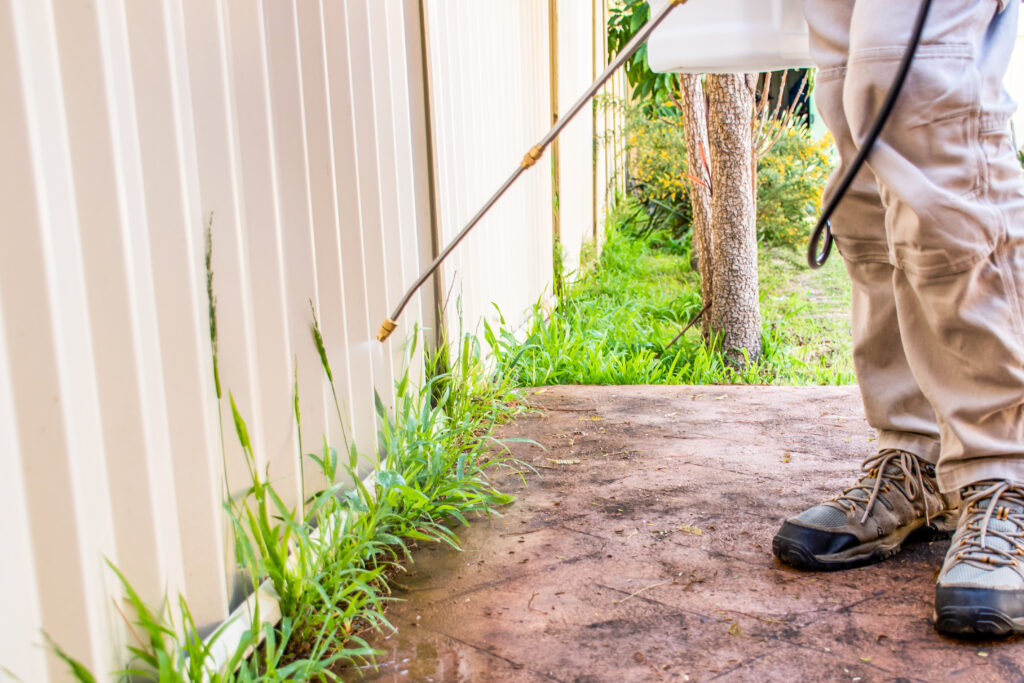
Household vinegar can knock back young, shallow-rooted weeds, but it’s non-selective and will damage any plant leaf it touches. Apply it with a small brush or a shielded sprayer directly onto weed foliage on a sunny day, and keep it well away from anything you want to keep. Horticultural vinegar, which is considerably stronger than kitchen vinegar, works faster but demands even more caution around desirable plants and bare skin.
Check the label before buying: household vinegar is usually five percent acetic acid, while horticultural vinegar can run twenty percent or higher. At that strength it can cause real skin and eye irritation, so gloves and eye protection aren’t optional, and it should never be sprayed on a windy day when it can drift onto skin, pets, or nearby plants. Neither type of vinegar affects the root system of established perennial weeds the way it does young annuals, so expect regrowth on anything with a deep or spreading root system and plan to repeat the application.
7. Solarize persistent patches with clear plastic
For a stubborn patch that keeps coming back, covering it with clear plastic for four to six weeks during the hottest part of the season traps heat and effectively cooks weed seeds and roots in that spot. It’s slow, but it’s thorough, and it doesn’t touch the soil beyond that patch. Weight the edges down well and water the area lightly before covering it, moist soil conducts heat better than dry soil and improves results.
Why this happens: what actually drives weed pressure
Weeds aren’t random. They’re opportunists that fill in wherever soil is bare, compacted, or disturbed. A lawn that’s been cut too short, a bed with gaps between plants, or soil that’s been recently tilled all create the open ground weeds are built to colonize fast. Dense, healthy planting is one of the most effective long-term weed controls there is, simply because it leaves weeds nowhere to establish.
What not to do
Avoid tilling a weedy bed as a first response. Tilling chops roots and rhizomes into pieces, and many common weeds can regrow from a single fragment, so what looked like a fix often multiplies the problem. Skip broad-spectrum herbicide on breezy days too, drift can travel further than expected and damage plants well outside the target area. And resist the urge to compost pulled weeds that have already gone to seed, home compost piles rarely get hot enough to kill weed seeds, and you’ll end up spreading them right back into your beds.
Tools that make each method easier
A hori-hori knife, a narrow serrated blade originally designed for gardening, is one of the more versatile tools for hand-pulling since it lets you slice down alongside a taproot and lift the whole thing out intact. A dandelion weeder or fishtail weeder, with its forked tip, does something similar for smaller lawn weeds without disturbing much surrounding soil. For anything that spreads by rhizome, underground stems that send up new shoots at intervals, hand tools alone often aren’t enough, and repeated cutting to exhaust the plant’s energy reserves over a season or two tends to work better than a single aggressive removal attempt. Knee pads and a low garden stool are worth the small investment too. Weeding in short, comfortable sessions gets done more consistently than one exhausting afternoon that leaves you sore for a week.
Timing shifts depending on where you garden
Warm, humid regions across the southern US and much of Australia see weed germination nearly year-round, so mulch and mechanical methods need to be a repeated routine rather than a one-time spring job. In cooler parts of the northern US, Canada, and the UK, the bulk of germination happens in a shorter spring and early summer window, which makes a well-timed corn gluten application or an early hand-pulling pass before that window opens especially effective. If you’re not sure when your typical last frost falls, your local extension office or a gardening neighbor is usually a faster answer than guessing.
Keeping kids, pets, and pollinators safe while you weed
Boiling water and vinegar are both non-toxic options once they’ve dried or cooled, but wet application areas should stay off-limits to kids and pets until they’re dry, since concentrated vinegar in particular can still irritate paws or skin on contact. Corn gluten meal is safe for pets and doesn’t require any waiting period, which makes it a reasonable choice for households with a dog that’s in the yard constantly. If flowering weeds like clover or dandelion are being visited by bees, treating them in the early morning or evening, when pollinator activity is lowest, reduces the chance of direct contact. None of the methods above require store-bought synthetic herbicide, but if you do keep one on hand for a stubborn patch, look for products labeled for spot treatment and follow label directions on drying time before letting kids or pets back into the treated area.
Quick answers to common weeding questions
Will vinegar or boiling water kill a weed permanently? Usually not on its own for anything with an established root system. Both methods damage the top growth effectively, but perennial weeds with deep taproots or spreading rhizomes typically send up new growth and need repeat treatment. How long does solarization take to work? Plan on four to six weeks of consistently hot, sunny weather for shallow-rooted annual weeds, and up to eight weeks for a patch with established perennials. Is it worth combining methods? Yes, in most cases. Mulch after hand-pulling, for example, prevents the bare soil left behind from immediately inviting new seeds to germinate, which is more effective than either step alone.
Weeds are often a symptom, not just a nuisance
Persistent weed pressure in one area sometimes points to a bigger issue, like poor drainage or compacted soil, that also affects plant health. If you’re dealing with weeds alongside pest activity in the same beds, our pest control contractors treat properties with natural-first methods that protect the plants around them. Call 1-844-783-4821 to talk about what’s happening in your yard.