“Moths in the house” usually means one of two very different problems, and treating the wrong one wastes weeks. Clothes moths and pantry moths look similar in flight but behave nothing alike, and the fix for one won’t touch the other.
Figuring out which one you have
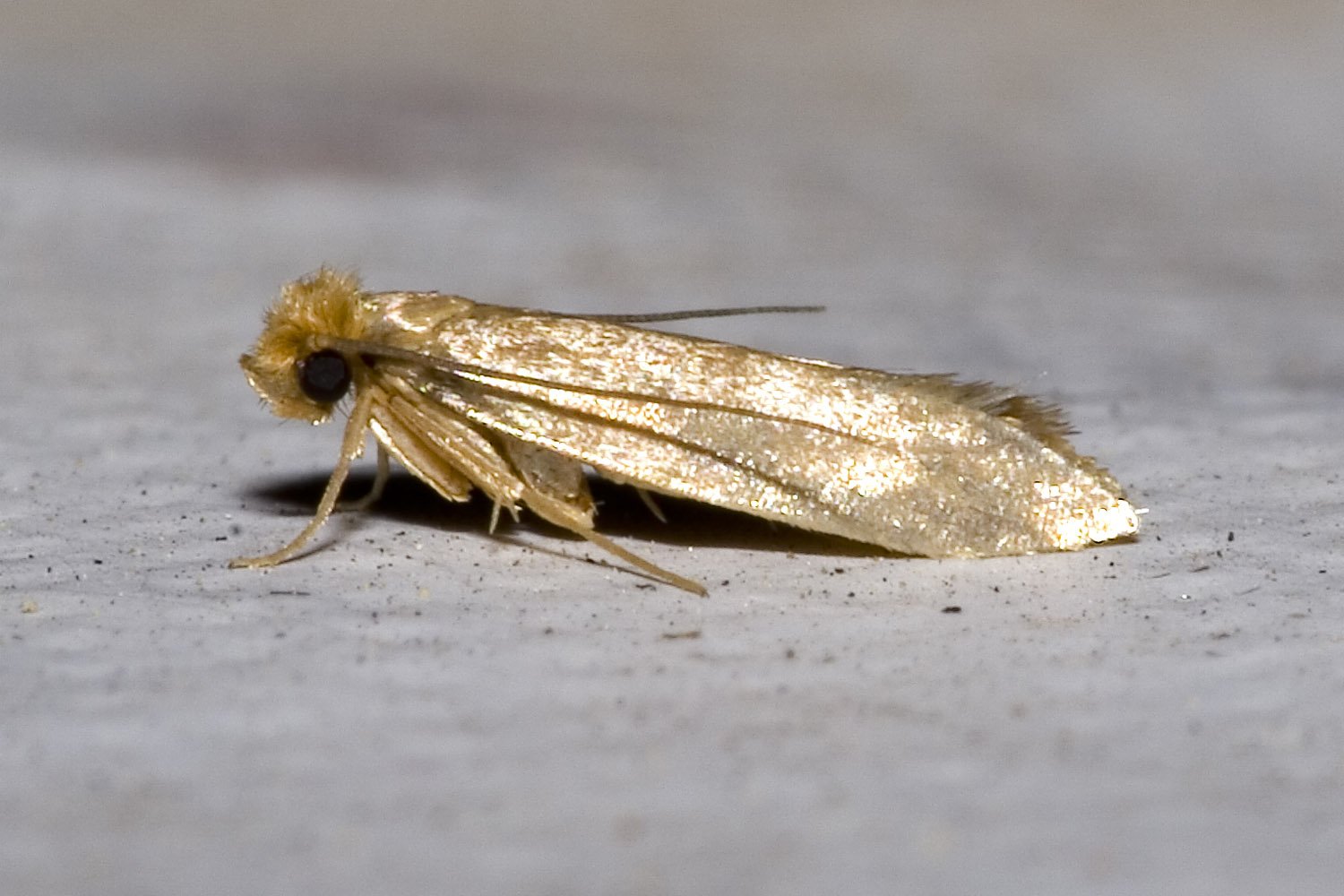
Clothes moths are small, buff or golden-colored, and avoid light, usually turning up in closets, under furniture, or in undisturbed fabric. They feed on wool, silk, fur, and other animal fibers, and it’s actually the larvae doing the damage, not the adult moths you see flying. Pantry moths, most commonly the Indian meal moth, are slightly larger with a distinctive reddish-brown band on their wings, and they’re drawn to grains, cereal, pet food, nuts, and dried fruit. If you’re finding small holes in a sweater, it’s clothes moths. If you’re finding webbing in a bag of flour, it’s pantry moths.
A magnifying glass helps if you’re still not sure. Clothes moth larvae are roughly a 13 mm long, cream-colored with a dark head, and they often spin a thin silken tube or a patch of webbing directly on the fabric they’re eating, which is itself a strong clue. Pantry moth larvae are a similar size but leave loosely spun strands of webbing clumped through the food, sometimes visible as fine threads binding grains of rice or cereal together near the surface of the container. Flight behavior is another tell: clothes moths are weak, low fliers that rarely travel far from the closet or drawer they emerged in, while pantry moths are more erratic and are commonly spotted near light fixtures at night, sometimes well away from the kitchen entirely.
Why they show up in the first place
Clothes moths need protein from keratin, the fiber in wool and fur, and they thrive in dark, undisturbed spots where fabric sits for months without being handled. A wool sweater folded in the back of a drawer since last winter is a far more likely target than one worn and washed regularly. Pantry moths almost always arrive already inside a product, laid as eggs in a grain silo, mill, or warehouse well before the package reaches your kitchen. That’s why a brand-new bag of flour can already be carrying the problem before you’ve opened it.
Secondhand and vintage items are a common entry point for clothes moths that people overlook. A thrift-store coat, an inherited quilt, or an area rug pulled out of storage can carry eggs or larvae that have been dormant for weeks, and they won’t show themselves until the item sits undisturbed again in your closet. It’s worth inspecting or washing secondhand wool and fur before it goes anywhere near your regular wardrobe.
Getting rid of clothes moths
- Wash or dry clean anything you suspect is infested; heat and detergent kill eggs and larvae that vacuuming alone misses
- For items you can’t wash, sealing them in a bag in the freezer for at least 72 hours kills all life stages
- Vacuum closets thoroughly, including corners and baseboards, where larvae and shed casings collect
- Store off-season wool and silk items in sealed, airtight containers rather than open bins
Cedar and lavender have a real but limited repellent effect. They discourage moths from a room, but they won’t kill an established infestation in a closet, and they lose potency over time; cedar blocks in particular need to be lightly sanded every few months to keep releasing enough oil to matter. Mothballs work by releasing naphthalene or paradichlorobenzene, both of which are toxic enough that we don’t recommend them, especially in homes with kids or pets, when washing, freezing, and sealed storage do the job just as well.
Pheromone traps designed for clothes moths can help you confirm an infestation is active and gauge whether your cleaning pass worked, but treat them as a monitoring tool rather than a solution. They only catch adult males, so a trap that stays empty doesn’t necessarily mean the larvae are gone, especially if females are still laying eggs somewhere in the closet you haven’t reached yet.
Getting rid of pantry moths
- Throw out any opened dry goods that show webbing, larvae, or a musty smell, not just the one bag you found them in; they spread between packages on a shelf
- Empty and vacuum the shelf itself, including corners and the underside of shelving, where cocoons attach
- Move flour, rice, cereal, pasta, and pet food into sealed glass or hard plastic containers going forward
- Pheromone traps are genuinely useful here, not to eliminate the population, but to monitor whether you’ve actually resolved it
Give a full pantry clean-out about two to three weeks before declaring it solved. That’s roughly how long a hidden pocket of eggs takes to hatch and start showing up in a trap, so a clean check a few days after cleaning doesn’t tell you much.
It’s worth checking spots people usually skip: the inside seam of cardboard cereal boxes, the underside of a lazy Susan, and any bag of birdseed, dry pet food, or decorative dried corn stored in a pantry, garage, or laundry room. Pantry moths aren’t picky about the product as long as it’s a dry, starchy food source, and a forgotten bag of wild bird seed in a closet is a surprisingly common reason an infestation keeps returning after the kitchen itself checks out clean.
What not to bother with
Spraying general-purpose insecticide in a pantry or closet is a waste of effort and not something you want near food storage anyway. Neither moth responds well to broad fogging, since the eggs causing the ongoing problem are usually tucked into a crack, seam, or the folds of fabric a spray never reaches. Bleaching a shelf doesn’t hurt, but it isn’t doing the actual work; the vacuuming and container-sealing are what break the cycle.
Signs you’re actually past the DIY stage
A single moth flying near a light fixture isn’t cause for alarm. A pattern of them, especially several in the same room over consecutive days, along with visible larvae, webbing, or fresh holes, points to an established population rather than a stray that wandered in. For clothes moths, small irregular holes concentrated on natural fibers, and left alone on synthetic blends, is a strong tell. For pantry moths, small caterpillars crawling up walls or across ceilings near the kitchen, looking for a place to pupate, often shows up before people even notice the source container.
Seasonal patterns worth knowing
Clothes moths tend to be worst in late summer and fall, when off-season wool items have sat undisturbed the longest and indoor humidity is often higher. Pantry moths don’t follow much of a seasonal pattern indoors, since a heated home stays warm enough year-round for them to keep developing, but shipments of certain dried goods, particularly around holiday baking season, bring in a noticeable uptick in new introductions.
Common mistakes that make either problem worse
The most common mistake with clothes moths is treating only the item you found damaged and ignoring everything else in the same closet or drawer. Larvae can be present on multiple garments at once, quietly feeding, well before any of them show visible holes, so a spot treatment on one sweater often leaves the source population untouched. With pantry moths, the equivalent mistake is tossing the contaminated bag but leaving nearby packages on the shelf, since larvae can chew through thin cardboard and plastic film to reach adjacent food, and adult moths lay eggs on anything within reach before you’ve identified the problem. Reusing an unwashed container to store new dry goods is another way an infestation resets itself right after you thought it was solved.
Cost and timeline if you bring in a professional
Most clothes moth and pantry moth cases are solvable with the cleaning steps above, but when an infestation keeps returning after two or three thorough passes, a pest control technician can pinpoint hidden pockets a homeowner tends to miss, like larvae inside a heating vent, behind baseboards, or in insulation. A typical visit involves an inspection to trace the source, targeted treatment of cracks and voids rather than open spraying, and a follow-up a few weeks later to confirm the life cycle has actually been broken. Because both pests have life cycles that stretch several weeks from egg to adult, expect the full process, DIY or professional, to take three to six weeks before you can call it resolved with confidence.
When it’s worth calling in help
A pantry moth infestation that keeps coming back after a full clean-out usually means eggs are hiding somewhere you haven’t checked, sometimes in a crack in a cabinet or a bag of birdseed in the garage. A clothes moth problem in a closet with high-value wool or heirloom textiles is worth a professional look before you risk further damage to items you can’t replace. If either problem is still active after a couple of cleaning passes, call 1-844-783-4821 and one of our pest control contractors will help pin down where the eggs are actually hiding.
A couple of quick questions
Can clothes moths and pantry moths spread to each other’s areas? Not really. Their food sources don’t overlap, so a pantry infestation won’t move into your closets and vice versa, though both can turn up in the same house at the same time by coincidence.
Do I need to throw out furniture with clothes moth damage? Usually not. Vacuuming thoroughly and treating the fabric surfaces handles most upholstered furniture; full replacement is rarely necessary unless the infestation went unnoticed for a long stretch.
How do I keep pantry moths from coming back after a clean-out? Get in the habit of transferring dry goods into sealed containers the moment you bring them home, rather than leaving them in their original bags. It only takes a minute, and it removes the opportunity for eggs already in a product to spread once they hatch.