Services
Flea Control
Flea treatment that breaks the whole life cycle, not just the fleas you can see — natural-first, safe for pets, and built to actually stop the bounce-back infestations.
Natural, guaranteed pest control — free no-obligation quotes, no contract, safe around kids and pets.
Signs You Need This
How to tell it's time to call
Small, fast-moving bugs in carpet or pet bedding. Itchy bites in clusters, usually around ankles. Your dog or cat scratching, biting at their skin, or losing fur in patches. Tiny black specks (flea dirt) in pet fur that turn reddish-brown on a damp paper towel. If one pet has fleas, treat the assumption that your whole home does too — fleas move fast between hosts and rooms.
The Full Picture
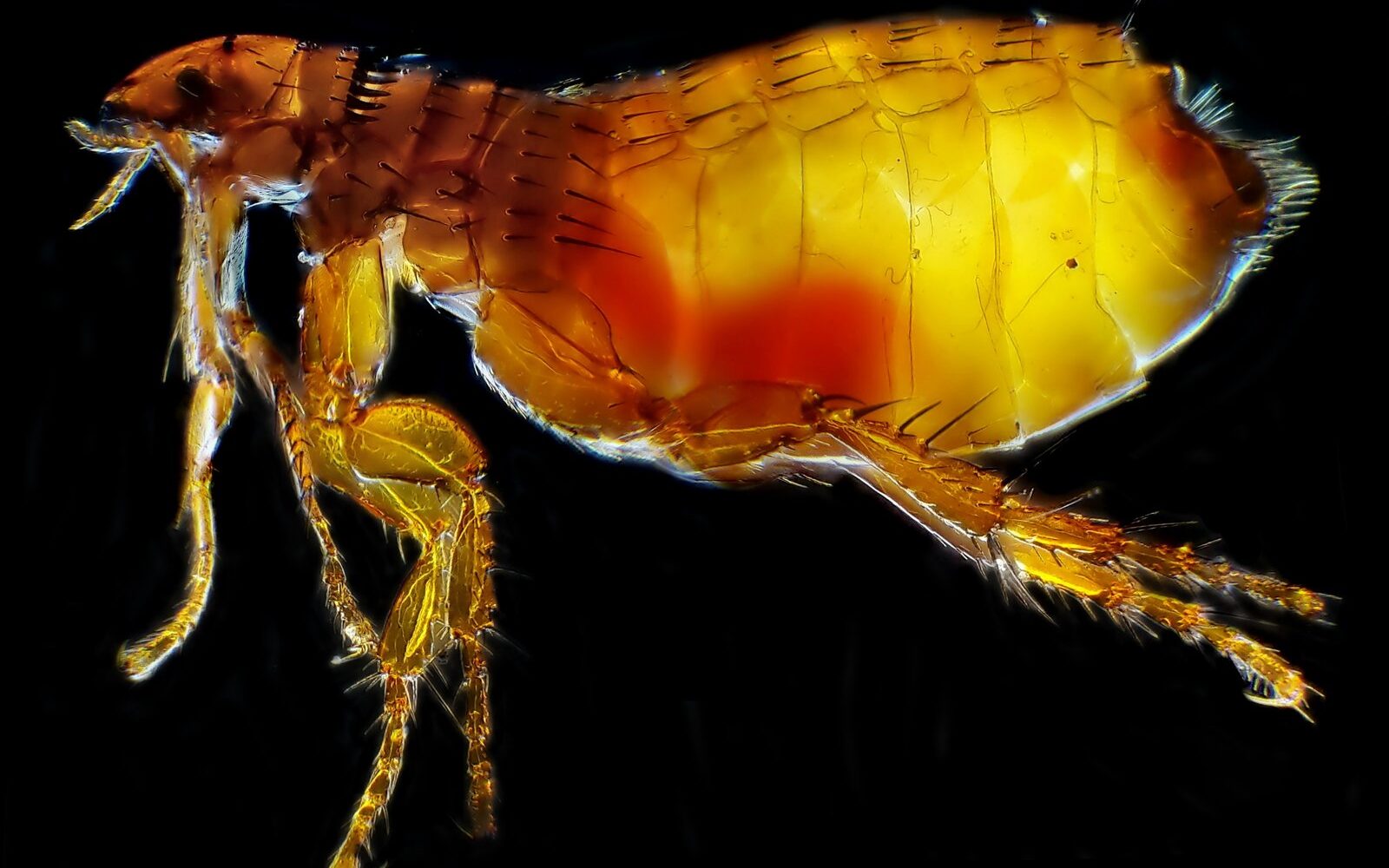
Fleas are deceptive. By the time you notice bites or see fleas jumping on carpet, eggs and larvae are already established in bedding, baseboards, and anywhere your pet spends time — which means spraying the visible adults only buys you a week before the next generation hatches. We treat the full life cycle: adults, eggs, larvae, and pupae, indoors and in the yard where reinfestation usually starts.
As exterminators, our approach is built around homes with pets and kids, since that's who fleas actually affect. No blanket-spraying every room with chemicals — targeted treatment where fleas actually live and breed, paired with guidance on laundering pet bedding and vacuuming that speeds up the whole process.
Our Approach
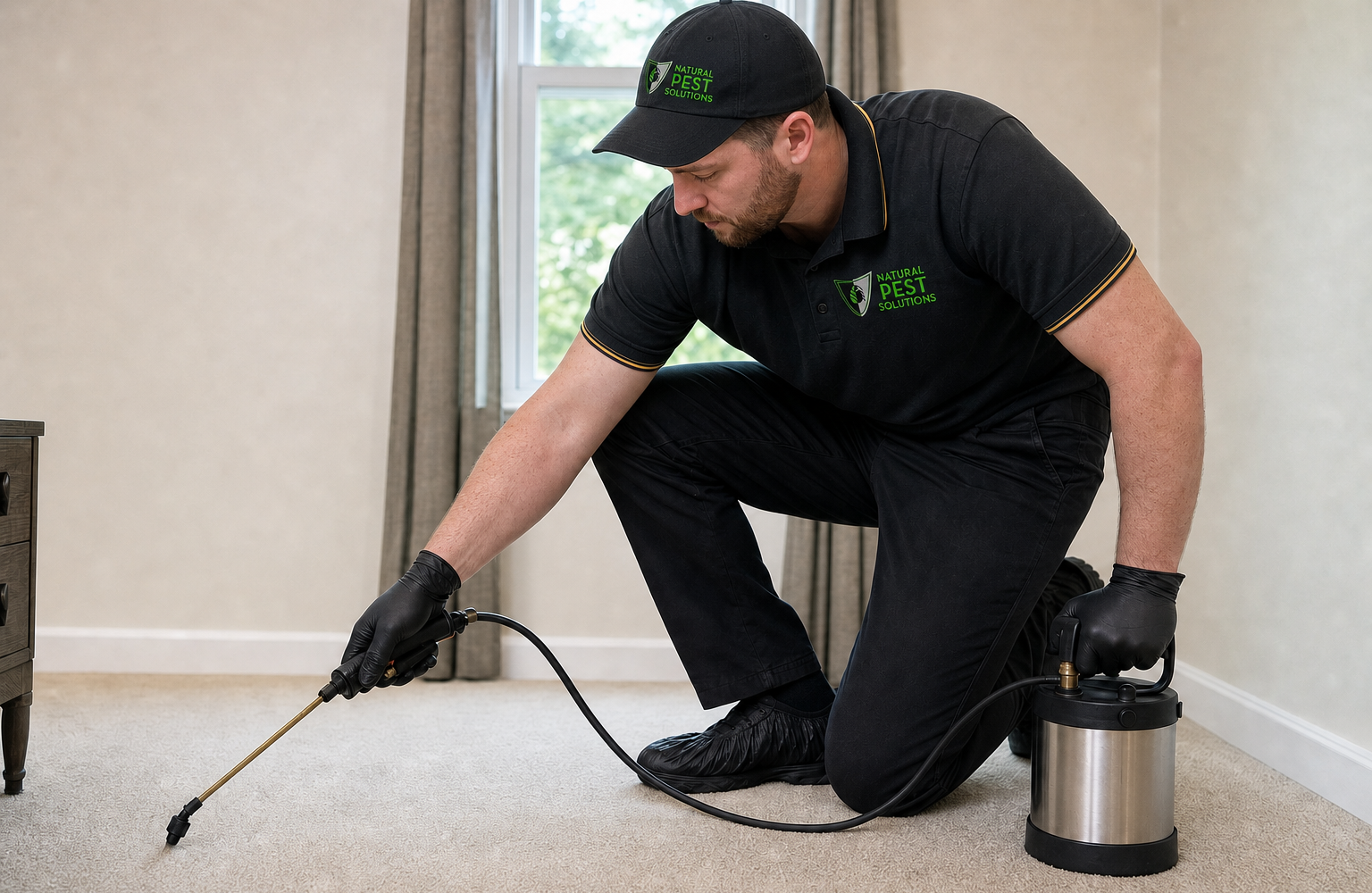
As your pest control contractor, we treat indoor living areas, pet resting spots, and the yard (especially shaded, humid areas where flea larvae survive) with natural, pet-safe products, then follow up to catch the next hatch cycle before it becomes a new infestation. Guaranteed: if fleas are still active after treatment, we come back at no charge. If you're not sure fleas are the only thing going on, a pest inspection rules out bed bugs and other biters before we start treatment.
Satisfaction Guaranteed
If it's not gone, we come back — free.
Safe & Humane
Natural methods, safe around kids and pets.
No Contracts
Stay because it works — not because you're locked in.
The Details
Treatment Options & Products We Use
Treatment Options
Flea treatment fails when it only addresses one piece of the life cycle or one location fleas are using. A thorough plan works indoors, in the yard, and with your pet's care at the same time, since skipping any one of the three usually means fleas re-establish within a few weeks.
- Indoor premise treatment: cracks, baseboards, carpet fibers, and upholstery get a combination application of an adulticide to kill fleas on contact and an insect growth regulator (IGR) that stops eggs and larvae from developing into breeding adults. Pupae in their cocoons are the hardest stage to kill directly, which is why IGRs matter as much as the adulticide.
- Yard treatment: fleas don't tolerate direct sun well, so outdoor treatment focuses on shaded, humid harborage spots, under decks, along fence lines, in mulch beds, and anywhere pets rest, rather than blanket-treating the whole lawn.
- Pet coordination: premise treatment alone doesn't hold if pets aren't also protected, since an untreated pet keeps bringing fleas back in. We coordinate timing with your veterinarian's flea preventative so the home and the pet are covered together rather than one lagging the other.
- Re-treatment timing: because pupae can stay dormant in a protective cocoon for weeks, a second visit roughly two to three weeks out catches the generation that survived the first treatment.
Products & Methods We Use
- Insect growth regulators (IGRs) that interrupt the flea life cycle by preventing larvae from maturing into reproducing adults
- Targeted adulticide applications for carpets, baseboards, and upholstery, selected for low toxicity around pets and kids
- Granular or liquid yard treatments applied to shaded harborage areas rather than the full lawn
- Crack-and-crevice application equipment for baseboards, pet resting areas, and furniture
- Flea combs and monitoring checks to confirm activity before and after treatment
- Steam-cleaning recommendations for carpets and upholstery to physically lift eggs and larvae ahead of chemical treatment
- Coordination guidance for laundering pet bedding, vacuuming, and syncing with veterinary flea preventatives, since premise and pet treatment work as one plan, not two separate efforts
What Customers Say
Real reviews from our Google Business Profile.
“Excellent advice and treatment of carpet beetles. Would recommend them.”
Kathleen Boulanger — Google review
View on Google →“I am very happy with the service I received from Natural Pest Solutions, they took my call right away and came right out and inspected my home and found the source of my ant problem and since they were here I have not seen a single bug around. I would recommend these guys to anyone needing pest control services.”
Rick Gruenke — Google review
View on Google →Questions
Frequently Asked About Flea Control
How much does flea treatment cost?
Cost depends on how much of the home is affected, whether the yard needs treatment too, and how established the infestation is — a single room with a recent flea issue costs less than a whole-house-plus-yard treatment. Most single-visit indoor treatments run in the low-to-mid hundreds of dollars, with yard treatment priced separately since it targets shaded, humid areas where flea larvae actually survive outdoors.
Is flea treatment safe for pets?
Yes — the whole approach is built around homes with pets, since they're usually the reason fleas are there in the first place. We use natural, pet-safe products targeted to where fleas actually live and breed, carpet, bedding, cracks, rather than spraying every room, and we'll tell you exactly when it's safe for pets to be back in a treated area.
Can I get rid of fleas with over-the-counter sprays and pet treatments alone?
Pet-applied flea treatments handle the fleas on your pet, but they don't touch the eggs, larvae, and pupae already established in carpet, bedding, and baseboards, which is why fleas often seem to disappear and then come roaring back within a week or two. A full flea life cycle can run several weeks depending on temperature and humidity, so DIY sprays hitting only visible adults are working against a population that keeps regenerating.
How long does it take to get rid of fleas, and how long until I stop seeing them?
You'll typically see a sharp drop in adult fleas within a few days of treatment, but because eggs and pupae already in the environment can take one to two weeks to hatch, a follow-up visit is often needed to catch that next generation. Full resolution usually lands around two to three weeks, faster if bedding gets laundered and carpets vacuumed regularly during that window.
How can I tell if my pet or home has fleas versus just normal itching?
Look for tiny black specks in your pet's fur, that's flea dirt, and it turns reddish-brown if you wet a paper towel and rub it on. Small, fast-moving bugs in carpet or bedding, itchy bites around your ankles, and a pet scratching or losing fur in patches are all stronger signals than occasional scratching alone. If one pet has fleas, treat it as likely that fleas are already in your carpet and bedding too.
What's the difference between flea bites and bed bug bites?
Flea bites cluster around the ankles and lower legs, since fleas typically jump onto you from carpet or bedding, and they're often accompanied by visible pet symptoms like scratching or hair loss. Bed bug bites tend to show up in a line or cluster on skin that was exposed while sleeping, regardless of where on the body, and come with different evidence, small reddish-brown bugs and dark fecal spots in mattress seams rather than flea dirt in carpet.
Learn More
Trusted resources on this topic
Guidance from health and regulatory bodies. In Canada, see Health Canada.
- CDC: Ticks ↗Tick and flea-borne illness prevention.
- National Pesticide Information Center ↗Pest-by-pest fact sheets from Oregon State University and the EPA.
- Health Canada: Pesticides and Pest Management ↗Canadian guidance on pest control products.
Keep exploring
Related pest control services
Areas we serve
- Pest control in Kamloops
- Pest control in Kelowna
- Pest control in Langley
- Pest control in Lumberton
- Pest control in Merritt
- Pest control in Mesa
- Pest control in Naples
- Pest control in Nederland
- Pest control in North Scottsdale
- Pest control in Orangevale
- Pest control in Orillia
- Pest control in Paradise Valley
- Every location we serve
Ready to deal with it, for good?
Talk to a real expert — no pressure, no toxic chemicals, no contract required.
Recognized by the organizations that set the standard