
Every pest that shows up in a home has its own habits, and the fix that works on one does almost nothing for another. A general house spray might handle a few surface pests for a week, but the pests that keep coming back usually need a strategy built around how that specific species lives, not a one-size-fits-all can from the hardware store.
Ants
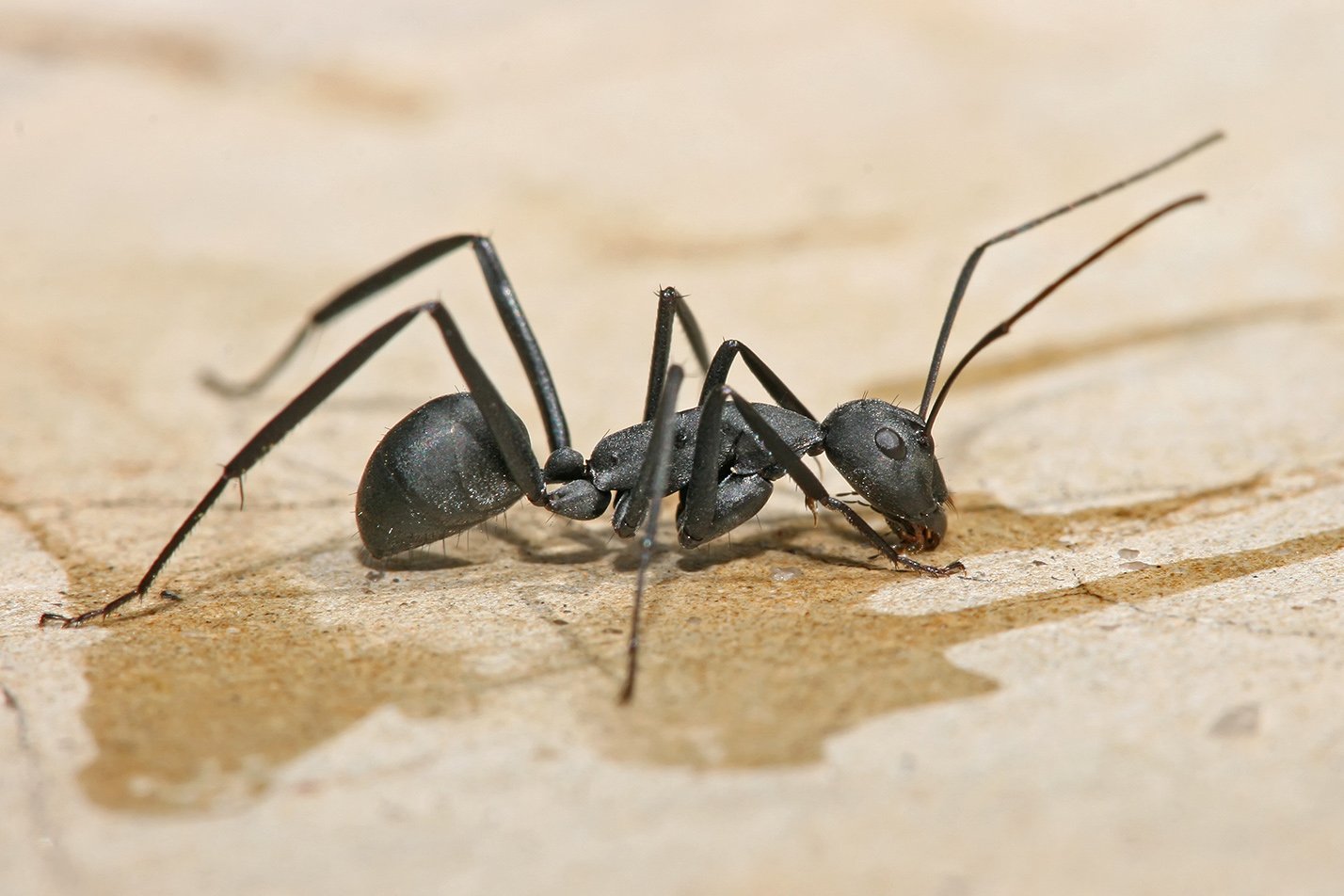
Wiping up a trail of ants only removes the ones you can see. The colony sending them is still there, often outside under a slab, in a wall void, or in a rotting stump nearby. Ant baits that worker ants carry back to the colony work far better than contact sprays, which can actually cause a colony to split and spread into a wall you weren’t dealing with before. Give bait a week or two to work, worker ants need time to carry it back and share it with the rest of the colony, including the queen, before the trail actually disappears for good.
Matching the bait to the species matters more than people expect. Sweet, sugar-based baits work well on odorous house ants and pavement ants, while carpenter ants and some other species respond better to a protein or grease-based bait, especially earlier in the season when colonies are focused on building rather than storing energy. If a bait sits untouched for several days, that’s usually a sign it’s the wrong bait type for the species involved, not that the ants have moved on.
Spiders
Spiders show up because there’s something to eat. Reducing other insects around exterior lighting, sealing gaps around window frames, and clearing clutter in garages and basements where webs go unnoticed all cut down the population without needing much direct treatment at all. Switching outdoor bulbs to a warmer, less insect-attractive light or moving fixtures away from doors also cuts down on the flying insects that draw spiders in the first place.
Most spiders that show up indoors are harmless and, if left alone, actually help by preying on other insects. Regular vacuuming, including in webs, egg sacs, and along ceiling corners, removes both the spiders and the food source drawing them in, and it’s often more effective long-term than any spray. The handful of species worth taking seriously vary by region, so if you’re unsure whether a spider you’re seeing regularly is a concern, a photo sent to a pest professional is a fast way to find out before assuming the worst.
Cockroaches
Roaches need moisture and food debris to thrive, so a kitchen with a leaking sink or a stack of dishes overnight is an invitation. Gel baits placed in cracks and behind appliances outperform sprays, which tend to scatter roaches into new hiding spots rather than eliminate them. German cockroaches in particular reproduce fast enough that what looks like a small problem, one or two sightings a week, can become a real infestation within a couple of months if the moisture and food sources aren’t addressed alongside the bait.
A sticky monitor trap placed under the sink or behind the fridge is a useful, low-cost way to gauge how bad a roach problem actually is before deciding how aggressively to treat it. Seeing one or two roaches a week is a very different situation from a monitor filling up overnight, and the honest answer for that second scenario is usually a professional treatment rather than another round of store-bought gel.
Wasps and hornets
A nest under an eave or in a shed rafter isn’t something to knock down with a broom. Treating at dusk when activity is low, and targeting the nest opening directly, reduces risk. Larger nests, especially ground nests from yellowjackets, are worth having a pest professional handle, since a disturbed ground nest can send dozens of defensive wasps after whoever’s nearby within seconds.
Mice
Mice can squeeze through a gap the width of a pencil, so sealing entry points matters as much as trapping. Snap traps placed along walls, where mice actually travel, work better than traps set out in open floor space where mice rarely go. A single mouse can produce a new litter of five or six pups roughly every three weeks under good conditions, which is why a mouse problem left alone rarely stays small for long.
Pantry pests
Small moths fluttering near cabinets or tiny beetles in a bag of flour or rice usually mean something in the pantry is already infested, not that they flew in from outside. Check opened packages first, especially anything that’s been sitting for a few months, and don’t assume the closest box is the source. Freezing suspect items for a few days kills eggs and larvae, and switching to hard, sealed containers for staples prevents the next generation from spreading to unopened food.
Silverfish
These prefer damp, dark spots, bathrooms, basements, closets with poor airflow, and feed on paper, glue, and starches, which is why they turn up in stacks of old cardboard or books. A dehumidifier in the affected room and sealing gaps around baseboards usually does more long-term good than any spray, since silverfish rarely establish in a space that stays consistently dry.
Fruit flies and drain flies
Fruit flies breed in anything fermenting, overripe produce left on a counter, a sticky spot under a fruit bowl, a recycling bin that hasn’t been rinsed. A simple trap, a small dish of vinegar covered with plastic wrap poked full of tiny holes, catches them fast, but the fix that actually lasts is finding and removing the breeding source, which is often smaller than people expect, a single rotting potato in the back of a cabinet is enough to sustain a population. Drain flies look similar but breed in the gunk lining a slow drain, a bottle brush run through the pipe removes the film they’re laying eggs in, something a drain cleaner alone usually won’t touch.
Centipedes and millipedes
House centipedes, with their long legs and fast, erratic movement, tend to alarm people more than they should; they’re actually predators that feed on other household insects and don’t damage structures or food. Their presence almost always points to excess moisture, a damp basement, a leaky pipe under a cabinet, or a crawlspace with poor drainage, since that’s the environment both they and their prey favor. Millipedes are different: they feed on decaying plant matter and typically wander in from mulch or leaf litter piled against the foundation, especially after heavy rain pushes them out of saturated soil. For both, correcting moisture and creating a dry gap between mulch and the foundation does more than any indoor treatment.
Stink bugs, boxelder bugs, and other seasonal invaders
As outdoor temperatures drop in fall, stink bugs, boxelder bugs, and cluster flies look for a warm place to overwinter, and a house’s sunny south or west-facing wall is exactly the kind of spot they target before working their way in through small gaps around siding, soffits, and window frames. Vacuuming them up, rather than squashing them, avoids the odor stink bugs are named for, and sealing exterior gaps before the fall push begins is far more effective than dealing with them individually once they’re already inside for the winter. These pests are a nuisance rather than a structural or health threat, and once temperatures warm up in spring, most head back outside on their own, though a heavy population is worth addressing at the source with exterior treatment timed to early fall.
What ties it together
- Identify the pest correctly before choosing a treatment
- Address the food, water, or entry point drawing it in
- Use targeted methods over broad sprays whenever possible
- Recheck a few weeks later, since one treatment rarely finishes the job on its own
When a DIY approach isn’t cutting it
A treatment that isn’t working after two honest attempts usually means one of two things: the species was misidentified, or the actual source, a colony, a nest, a moisture problem, was never addressed in the first place. That’s the point where bringing in a pest control contractor who can trace the problem to its source saves more time and money than a third trip to the store for a different spray.
What to expect from a professional visit
A first visit typically starts with an inspection covering both the interior and the exterior perimeter, identifying the species involved and the conditions contributing to the problem before any treatment is applied. Most single-pest issues, ants or roaches in a kitchen, a wasp nest under an eave, are resolved within one to two visits spaced a couple of weeks apart, giving bait or targeted treatments time to work through a colony fully. Recurring or multi-pest situations, especially in older homes with more entry points, often benefit from ongoing seasonal service rather than a single one-time visit, since new pressure tends to build again as the seasons change if nothing is monitoring for it in between.
Where Natural Pest Solutions fits in
Natural Pest Solutions handles all of these under one roof, with treatments built around the pest and the property rather than a one-size approach. If something’s outlasting your own efforts, we back our work with a real guarantee: if it’s not gone, we come back and keep at it, no extra charge and no contract required.