Moths in the house usually mean one of two things: pantry moths in your food storage, or clothes moths in your closets and drawers. They’re different pests with different habits, and treating them naturally works, but only if you match the method to which one you actually have.
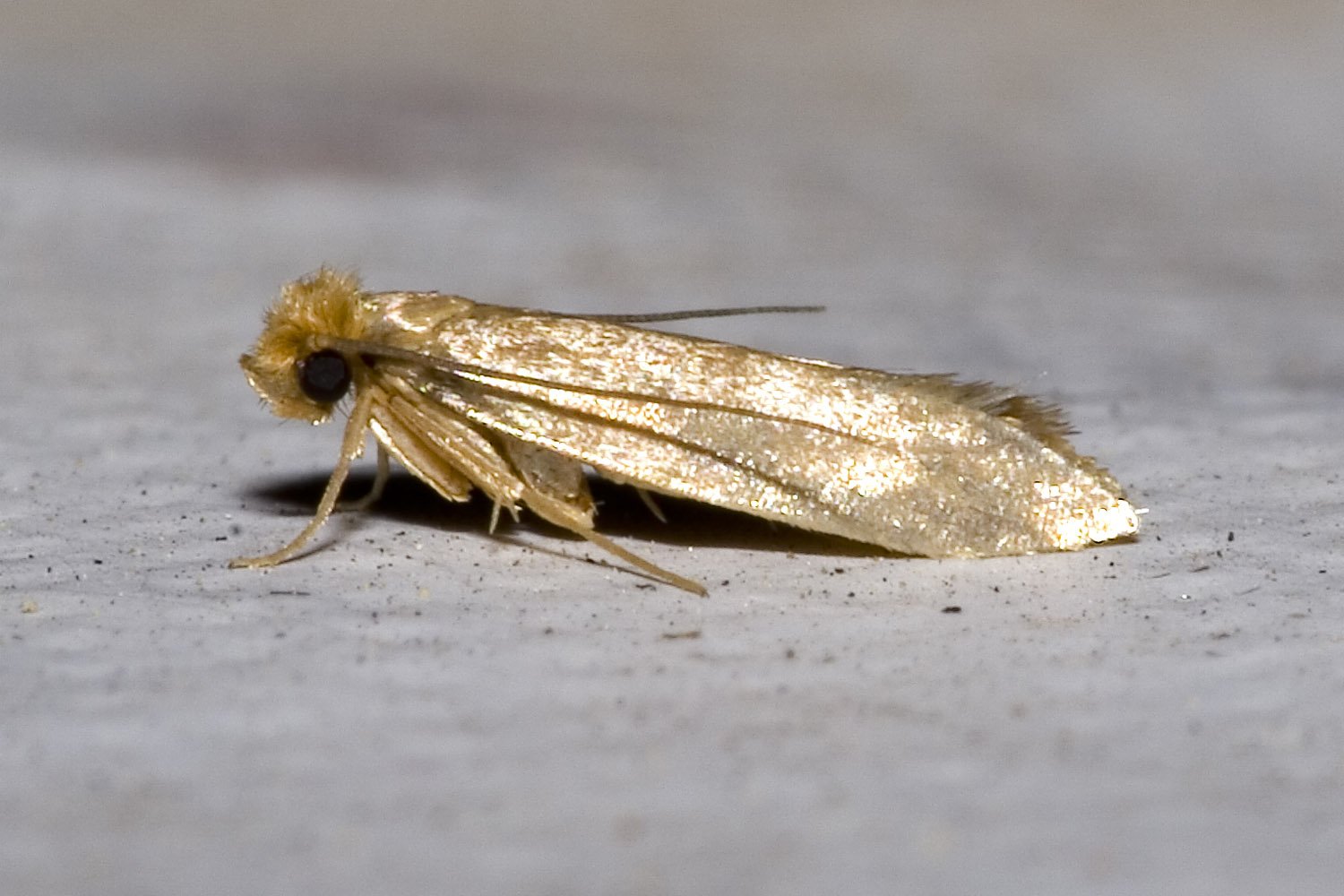
Figure out which moth you’re dealing with
Pantry moths (often Indian meal moths) show up near stored grains, cereal, pet food, and dried goods, and you’ll usually spot small larvae or webbing inside packages before you see the adult moths flying around the kitchen. Clothes moths target natural fibers, wool, silk, fur, feathers, and tend to stay in dark, undisturbed closets and drawers rather than flying around in daylight. A quick way to tell them apart at a glance: pantry moths are usually seen fluttering near the kitchen ceiling or inside cabinets, while clothes moths are smaller, tend to scurry rather than fly when disturbed, and you’ll more often find their damage, small irregular holes in fabric, before you ever see the moth itself.
Two Clothes Moth Species Worth Knowing
Most clothes moth damage in North America and Europe comes from one of two species: the webbing clothes moth (Tineola bisselliella), which spins loose silk webbing over the fabric it’s feeding on, and the casemaking clothes moth, which builds a small portable case out of chewed fibers and drags it along as it feeds. The practical difference for you: webbing clothes moth damage tends to show up as patchy silk threads and holes clustered in one area, while casemaking clothes moth damage looks more like scattered tiny cases stuck to fabric, sometimes mistaken for lint or seed pods until you look closely. Either way, the treatment approach, laundering, cedar, vacuuming, sealed storage, is the same.
Why they show up in the first place
Both types get into a home the same basic way: on something you bought. Pantry moth eggs frequently hitch a ride in bulk grains, birdseed, and pet food from the store shelf, which is why a new infestation often traces back to one recent purchase rather than anything already in the house. Clothes moths are drawn to fibers that carry body oils, sweat, or food residue, which is why an infested sweater is more often one that was stored without cleaning first, not simply one made of wool. Secondhand and vintage items are another common entry point, especially for clothes moths: a wool rug, fur coat, or feathered decor piece bought at an estate sale, thrift store, or off a resale app can carry eggs or larvae that only become obvious weeks later once they’ve had time to feed and multiply in a dark closet or under furniture. It’s worth inspecting or laundering any secondhand natural-fiber item before it goes into long-term storage with the rest of your wardrobe.
For pantry moths
- Find and toss the source: check every open bag of flour, cereal, rice, nuts, and pet food; larvae and webbing can be in one bag while others look fine, so check them all, not just the obvious one
- Freeze new dry goods: four to seven days in the freezer kills any eggs before they hatch, useful for bulk-bought grains and flour
- Switch to airtight containers: glass or hard plastic with sealed lids, since moths can chew through cardboard and thin plastic bags
- Deep clean the pantry shelves: vacuum crevices and corners where spilled crumbs collect, then wipe down with a vinegar-water solution
- Set out pheromone traps: sticky traps baited with pantry moth pheromone catch adult males and help you monitor whether the population is dropping
For clothes moths
- Launder or dry clean affected items: heat from washing or dry cleaning kills eggs and larvae hiding in fibers
- Use cedar, not mothballs: cedar blocks or chips repel moths naturally without the harsh chemical smell of traditional mothballs, though cedar needs occasional light sanding to keep releasing its oils
- Try lavender sachets: another natural repellent that works well layered with cedar in drawers and closets
- Vacuum closets and rugs regularly: clothes moth larvae feed on dust, hair, and fibers collected in carpet edges and closet corners, not just the clothing itself
- Store off-season woolens sealed: airtight bins or vacuum-sealed bags for anything not worn regularly, especially through spring and summer when moths are most active
Signs You Might Be Missing
Pantry moth activity isn’t always obvious at first. Look for fine silk webbing stuck to the inside of a bag or box, small clumped particles of the food itself, and a faint musty smell in a cabinet that’s otherwise clean. For clothes moths, check inside folded sweaters, along the underside of area rugs, and in the corners of closets rather than just the hanging clothes themselves, larvae often feed in spots that don’t get disturbed by regular use, so a rarely-worn coat or a rug under furniture is more at risk than something you wear or walk on weekly.
A realistic timeline
Don’t expect results overnight. A pantry moth’s full life cycle, from egg to breeding adult, typically runs four to six weeks depending on temperature, so pheromone traps may keep catching a few moths for several weeks after you’ve cleaned everything out, simply because eggs already laid are still working through their cycle. Clothes moth larvae can take even longer, sometimes several months, particularly in cooler storage areas, which is part of why an infestation in a rarely-used closet can go unnoticed for a long time before it’s caught.
What not to do
Don’t spray a general household insecticide around food storage areas as a first response; it’s not targeted at the actual problem and creates a new concern in a space where you store what you eat. Don’t assume throwing out the one bag you found solves it, moths spread between packages sitting close together on a shelf. And don’t store cedar or lavender loose against fabric expecting it to work like a pesticide; it’s a repellent, not a killer, so it needs to be paired with cleaning, not used as a substitute for it.
When natural methods aren’t cutting it
If you’ve cleared out infested items, cleaned thoroughly, and traps are still catching moths weeks later, that usually means there’s a hidden source, an unopened bag in the back of a cabinet, or larvae established in a wool rug or upholstered furniture seam. That’s worth a professional look rather than repeating the same steps expecting a different result.
Regional notes worth knowing
Humid climates, the Gulf Coast, much of the UK, and coastal Australia, see pantry moth activity stretch longer through the year since warmth and moisture both speed up the life cycle, while drier inland regions may see it concentrate more in the warmer months. Clothes moths follow a similar pattern indoors: heated homes in winter and consistently warm, humid regions give them a longer active window than a home that runs cooler through the colder months, so a wool coat stored in an unheated garage over winter carries less risk than one left in a warm closet year-round.
Quick answers to common questions
Can moths spread from the pantry to the closet? No, pantry moths and clothes moths are different species with different food sources, so an infestation of one doesn’t turn into or spread as the other. Are the larvae or the adults doing the damage? Almost always the larvae; adult moths in both categories don’t feed on fabric or food themselves, they’re just there to lay the next batch of eggs.
Do cedar and lavender kill moth eggs, or just repel adults? Neither cedar nor lavender kills eggs or larvae already in fabric, they work by discouraging adult moths from laying eggs there in the first place. If you already have larvae or eggs present, laundering, freezing, or vacuuming is what actually removes them; cedar and lavender are there to keep it from happening again.
How do I know an infestation is actually gone and not just quiet? Keep a pheromone trap out for pantry moths for at least one full life cycle, four to six weeks, after your last sighting; for clothes moths, recheck stored items and closet corners after about six to eight weeks. No new larvae, webbing, or trapped adults during that window is a reasonable sign it’s resolved.
Preventing Future Infestations After Treatment
Once an infestation is cleared, a few ongoing habits keep it from coming back. Rotate pantry stock so nothing sits unopened for months, older bags are more likely to have been sitting on a warehouse or store shelf long enough to pick up eggs. Buy grains, birdseed, and pet food in quantities you’ll use within a few weeks rather than stocking up in bulk, unless you’re prepared to freeze or decant everything into sealed containers right away. For closets, an annual deep clean, vacuuming corners, wiping shelves, checking stored woolens, catches a new problem early rather than letting it establish over a season. Keeping humidity down in closets and storage areas also helps, since both pantry and clothes moths tend to reproduce faster in warm, humid conditions than in cool, dry ones.
Beyond cedar and lavender, dried rosemary, cloves, and thyme sachets are sometimes used as additional natural deterrents in pantries and closets, though none of them match the reliability of proper sealed storage and regular cleaning; treat them as a nice-to-have layer, not the main defense.
Our pest professionals treat moth infestations with the same natural-first approach we use for everything else: identify the species and the source before reaching for anything stronger than cleaning, freezing, and targeted traps. If it comes back, we come back too, under our standard guarantee.