Services
Raccoon Removal
Scratching in the attic after dark, a torn-up trash can every morning, or a mother raccoon denned up over your bedroom — we find the entry point, get the raccoon out humanely, and seal it so it can't come back.
Natural, guaranteed pest control — free no-obligation quotes, no contract, safe around kids and pets.
Signs You Need This
How to tell it's time to call
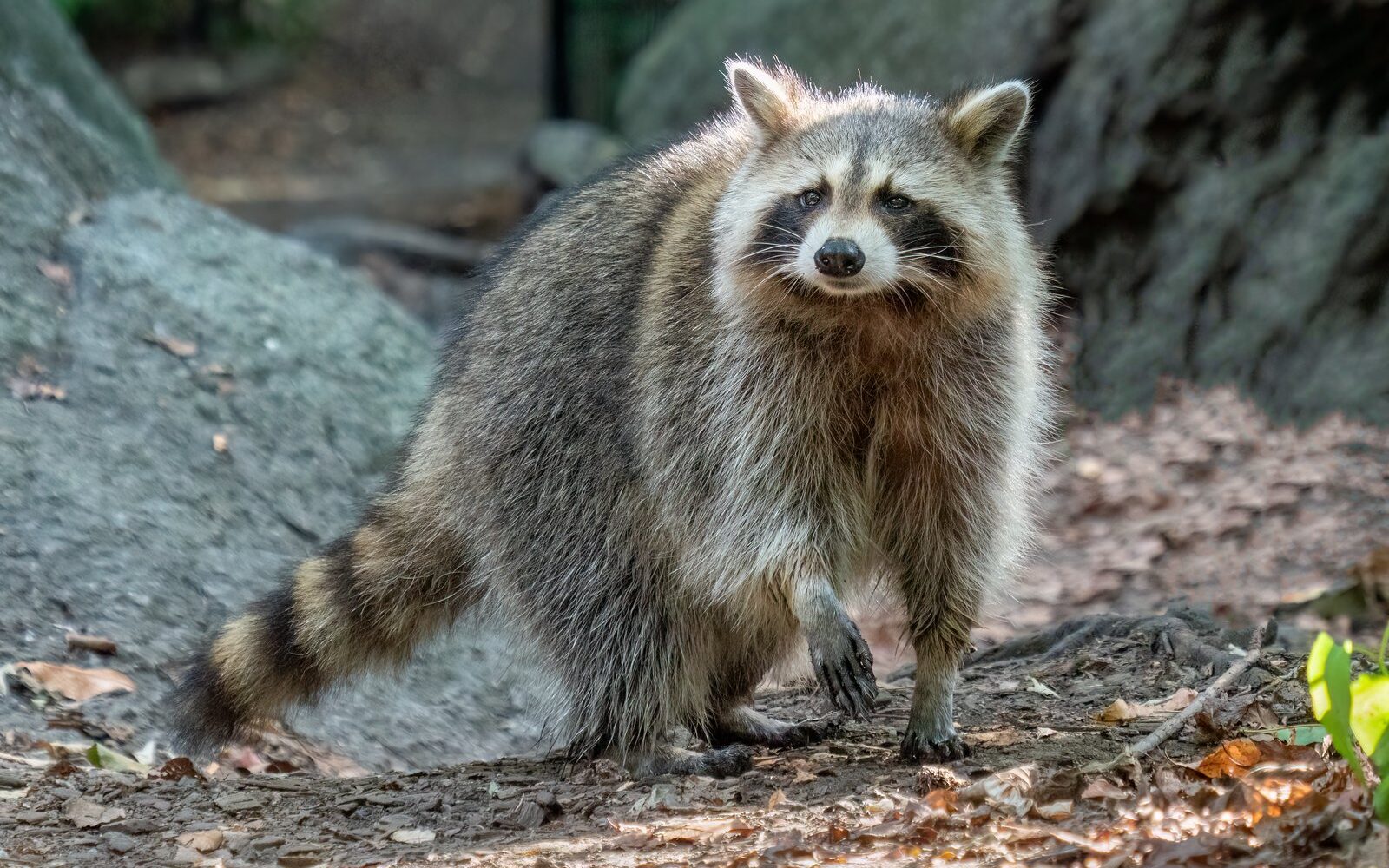
The most common first sign is noise: heavy scratching, rolling, or thumping in the attic or between the walls, usually starting around dusk when a raccoon wakes up and heads out to feed, and again before dawn when it comes back. Check the attic insulation for flattened, matted-down nesting areas and torn or displaced batting, and look for a latrine site — raccoons reuse the same spot to defecate, often near the chimney, in a attic corner, or on a flat section of roof, and it builds up fast. Outside, look for trash cans tipped over and picked through overnight, five-toed prints that look almost like small human handprints in soft dirt near gardens or ponds, koi or goldfish that keep disappearing, and gutters, soffits, or roof vents that show chew marks or have been pried loose at the seam. Seeing a raccoon out during the day isn't automatically a red flag, but one that looks disoriented, is dragging a limb, or won't retreat from people is worth reporting rather than approaching.
The Full Picture
Raccoon problems almost always come down to one thing: an easy way in. A gap at the roofline, an unsecured chimney, a pet door, or a crawlspace vent that's already loose becomes a standing invitation, especially once a female is looking for a quiet place to den and raise a litter. That's usually why people first notice a raccoon problem in spring, when the scratching and thumping overhead is coming from a mother moving kits around, not just one animal passing through.
As your exterminator, we handle raccoons the way we handle every pest on the property: figure out why they chose this specific spot, remove the reason, and close the door behind them for good. That means humane exclusion and permanent sealing, not poison bait stations that can sicken pets or non-target wildlife. We don't lock you into a service contract, and if a raccoon gets back in after we've done the exclusion work, we come back and fix it — no charge, no argument.
Our Approach
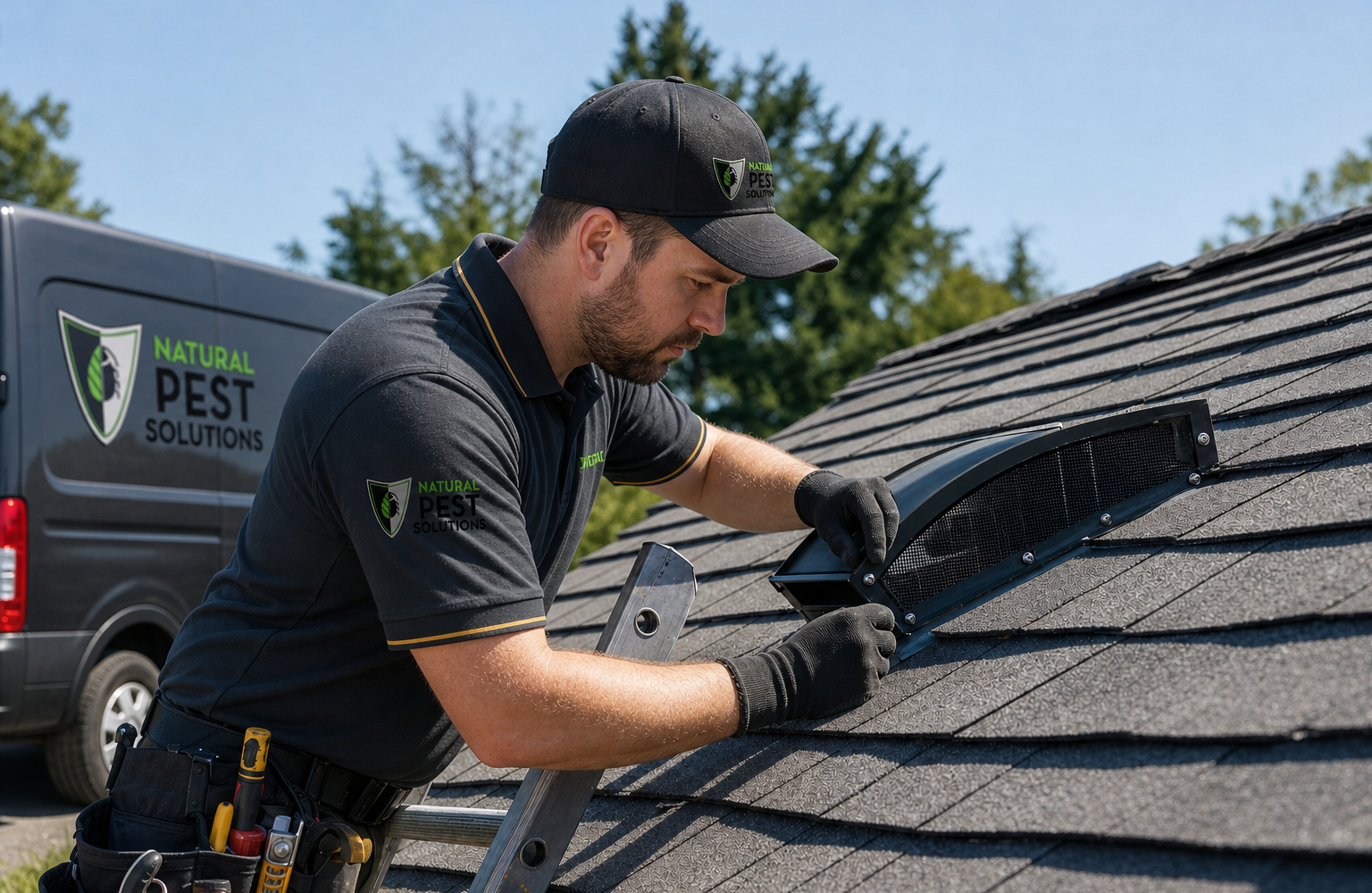
We start by finding how the raccoon is getting in and out, not just where it's denning. Raccoons are creatures of habit — they use the same entry point every night, whether that's a gap where the roofline meets a dormer, a chewed soffit vent, or a loose chimney cap. Once we've confirmed the den is empty of dependent kits, we install a one-way door at that entry point so the raccoon can leave to feed but can't get back in. After a few nights of confirmed activity through the door, we seal the opening permanently with heavy-gauge steel mesh or hardware cloth, repair any chewed fascia or torn soffit, and secure vulnerable points like chimney caps and gable vents so a new raccoon can't just move in behind the last one. If it's early in the season and there's a litter involved, we adjust the timeline so we're not separating a mother from kits that can't survive on their own — that's both the humane call and the one that actually solves the problem, since a trapped-in litter means a much worse odor and cleanup problem later. If the raccoon finds its way back in through a spot we missed, we return and fix it at no charge. If you're hearing noise but haven't confirmed what's up there, a wildlife inspection identifies it before any exclusion work starts.
Satisfaction Guaranteed
If it's not gone, we come back — free.
Safe & Humane
Natural methods, safe around kids and pets.
No Contracts
Stay because it works — not because you're locked in.
The Details
Treatment Options & Products We Use
Treatment Options
Attic exclusion with a one-way door covers most raccoon jobs, but a few situations call for different tools, and cleanup after the animal is gone is its own technical step most people don't think about until the smell doesn't go away. Additional methods a wildlife control technician draws on include:
- Humane live trapping for raccoons denned in spaces without a single confirmed entry point, or for nuisance raccoons repeatedly raiding trash cans, gardens, or koi ponds rather than living inside the structure.
- Trap placement and check schedules that follow state and provincial wildlife regulations, since many jurisdictions restrict how trapped raccoons can be handled and require licensed release or humane euthanasia rather than relocation, which can spread disease between raccoon populations and is illegal in several places regardless of intent.
- Attic and crawlspace decontamination once the raccoon and any latrine sites are cleared, including PPE-protected removal of contaminated insulation, since raccoon droppings can carry Baylisascaris procyonis roundworm eggs that stay infectious in soil and debris for years.
- Enzymatic odor treatment for urine-soaked insulation and subfloor material, since raccoons use the same latrine spot repeatedly and the buildup soaks in deeper than a surface cleaning reaches.
- Exterior deterrents like secured trash enclosures and gap-checked fencing for yard-based conflicts where the raccoon isn't living on the property but keeps returning for food.
Products & Methods We Use
Products and equipment used for raccoon removal include:
- Humane live traps for raccoons that can't be excluded through a single confirmed entry point
- One-way exclusion doors for attic and structural entry points
- Heavy-gauge steel mesh and hardware cloth for permanent sealing
- PPE and HEPA-filtered vacuum equipment for latrine and contaminated insulation removal
- Enzymatic cleaning treatments for urine odor and biohazard decontamination
- Chimney caps, gable vent guards, and secured trash enclosures for ongoing exclusion
We rely on humane trapping and exclusion rather than poison bait, which can sicken pets and non-target wildlife, and trap handling always follows state and provincial wildlife relocation and release regulations.
What Customers Say
Real reviews from our Google Business Profile.
“I am very happy with the service I received from Natural Pest Solutions, they took my call right away and came right out and inspected my home and found the source of my ant problem and since they were here I have not seen a single bug around. I would recommend these guys to anyone needing pest control services.”
Rick Gruenke — Google review
View on Google →“I am very happy with the results that Natural Pest Solutions was able to provide as far as the speed of their work and also the problem with ants in my home was able to be resolved quickly which gave me peace of mind. I would recommend this pest control company to anyone having issues with bugs.”
Stefano Merci — Google review
View on Google →Questions
Frequently Asked About Raccoon Removal
How much does raccoon removal cost?
Cost depends on how the raccoon is getting in, how many entry points need sealing, and whether there's a litter of kits involved, which changes the timeline. Straightforward one-entry-point exclusion jobs tend to run in the low-to-mid hundreds, while multiple entry points, chimney work, or attic cleanup after a den site push it higher.
Is raccoon removal safe for kids and pets?
Yes — we use humane one-way doors and exclusion work, not poison bait, which is what keeps it safe around kids and pets in the first place. Poison baits meant for raccoons carry real secondary-poisoning risk for dogs and cats, which is one of the main reasons we don't use them.
Can I remove a raccoon myself?
You can try, but raccoons can be aggressive when defending a den, and in many areas trapping or relocating wildlife without a permit is illegal, which is why most people call in a pest professional for this one. The bigger issue is timing — seal an entry point while there's still a litter of dependent kits inside, and you end up with a much worse odor and decomposition problem in the attic than you started with.
How long does raccoon removal take, and will it come back?
The one-way door process usually takes a few nights to confirm the raccoon has left and isn't getting back in before we seal the entry point permanently with steel mesh or hardware cloth. If one does find its way back through a spot we missed, we come back and fix it at no charge.
What are signs I have a raccoon in my attic and not something else?
Heavy scratching, rolling, or thumping overhead starting around dusk and again before dawn is the classic pattern, along with flattened insulation and a latrine site that builds up near the chimney or a flat roof section. Outside, look for tipped-over trash cans and five-toed prints that look almost like small human handprints — smaller, quicker scratching is more likely squirrels or rats.
What's the difference between raccoon removal and general wildlife exclusion?
Raccoon removal is a specific version of exclusion work built around their habits — they reuse the same entry point every night and den with kits in spring, which changes the approach and timing. General exclusion for squirrels or bats follows the same sealing principle but different species-specific rules, since bats often have separate legal protections around timing.
Learn More
Trusted resources on this topic
Guidance from health and regulatory bodies. In Canada, see Health Canada.
- CDC: Rabies ↗Staying safe around bats, raccoons and other wildlife.
- EPA: Controlling Pests ↗U.S. guidance on choosing and using pest control safely.
- Health Canada: Pesticides and Pest Management ↗Canadian guidance on pest control products.
Keep exploring
Related pest control services
Areas we serve
- Pest control in Naples
- Pest control in Nederland
- Pest control in North Scottsdale
- Pest control in Orangevale
- Pest control in Orillia
- Pest control in Paradise Valley
- Pest control in Phoenix
- Pest control in Pinnacle Peak
- Pest control in Port Neches
- Pest control in Richmond
- Pest control in Salmon Arm
- Pest control in San Tan Valley
- Every location we serve
Ready to deal with it, for good?
Talk to a real expert — no pressure, no toxic chemicals, no contract required.
Recognized by the organizations that set the standard