Services
Fly Control
Fly problems almost always trace back to something specific — a drain, a dumpster, a piece of forgotten food waste — and finding that source is what actually stops them, not spraying the ones you can see.
Natural, guaranteed pest control — free no-obligation quotes, no contract, safe around kids and pets.
Signs You Need This
How to tell it's time to call
You've got more than a stray fly or two if you're seeing small black or fruit flies gathering around a kitchen sink, garbage can, or bowl of fruit that won't go away even after you clean up; tiny moth-shaped drain flies resting on bathroom or basement walls near a floor drain; clusters of house flies collecting on the inside of windows in a restaurant, break room, or dumpster-adjacent office; or maggots showing up in or around trash bins, compost, or a dumpster pad. Fine dark specks on windowsills, light fixtures, or countertops are fly feces and a sign of an established population, not a one-time nuisance. In older homes across the northern US and Canadian Prairies, hundreds of sluggish cluster flies appearing along sunny window frames each fall as it cools down is its own distinct pattern worth flagging separately from an indoor breeding issue.
The Full Picture
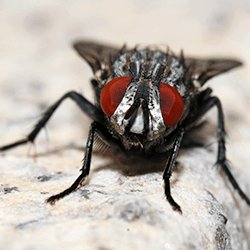
Flies are one of the few pests where the swarm of adults you're seeing is almost never the actual problem. A dumpster corral with a cracked seal, a floor drain that hasn't been scrubbed in months, a bag of pet waste left too long, or a bowl of overripe fruit can each produce dozens of new flies a week, and no amount of swatting the ones in the air touches what's breeding a metre or two away. Different species point to different sources too: fruit flies mean rotting produce or a sugary drain, drain flies mean organic buildup in slow-draining pipes, and house flies usually trace back to garbage, compost, or an animal waste problem nearby.
For restaurants, food processing facilities, and multi-unit properties, flies are also a compliance issue — health inspectors flag fly activity fast, and a walk-in cooler door propped open near a dumpster is a common culprit we see in food service accounts. For homes, cluster flies showing up by the hundreds along sunny window frames each fall as temperatures drop is a different problem entirely from a kitchen fruit fly issue, and it calls for exclusion at the exterior rather than anything indoors. We treat the source and the entry points, not just the flies you can see, and back it with a real guarantee: if they're not gone, we come back free.
Our Approach
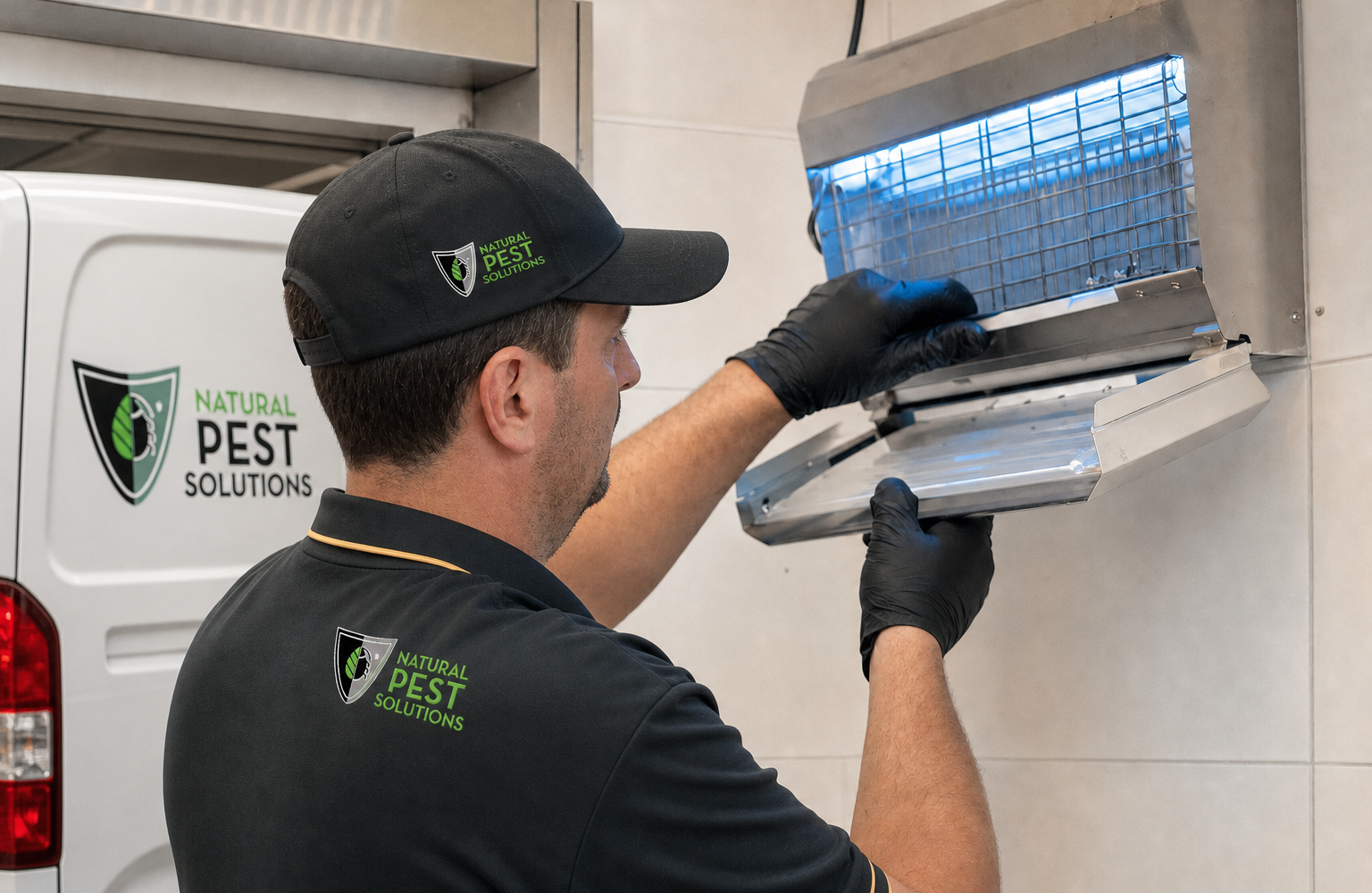
As your exterminators, we start by finding the breeding site, because killing adult flies without it just buys you a few days. That means checking drains with a gel swab test, walking the dumpster pad and grease trap area, checking compost bins, and looking for standing water or forgotten food waste in places that get overlooked, like under equipment or behind a fence line. From there we treat where the flies are actually coming from: enzymatic drain treatments that break down the organic film drain flies breed in, targeted larvicide in dumpster corrals and trash areas, exclusion work like door sweeps and screen repair, and fly light traps or pheromone traps placed to intercept adults without spraying chemicals across a kitchen or living space. It's a natural-first approach because flies are a sanitation and access problem more than a spray problem, and treating the cause instead of fogging the room is what actually keeps them from coming back. If flies return before your next scheduled visit, we come back and treat again at no charge — no contract required.
Satisfaction Guaranteed
If it's not gone, we come back — free.
Safe & Humane
Natural methods, safe around kids and pets.
No Contracts
Stay because it works — not because you're locked in.
The Details
Treatment Options & Products We Use
Treatment Options
Because the adult flies you can see are rarely the actual problem, more of the technical work happens at the source than in the air. Beyond the initial drain and dumpster inspection, we use targeted methods to confirm exactly where a population is breeding and to intercept adults without spraying occupied space.
- Source confirmation: sticky monitoring cards placed near suspected breeding sites over 24-48 hours identify species and confirm activity levels before treatment starts, since fruit flies, drain flies, and house flies each point to a different source and need a different fix.
- Trap placement geometry: UV light traps are positioned away from exterior doors and windows, not near them, since a trap placed too close to an entrance can pull outdoor flies into the building instead of catching the ones already inside.
- Residual perimeter treatment: for cluster flies, a residual insecticide is applied to sun-exposed exterior walls, soffits, and window frames in late summer before flies begin seeking overwintering sites, which is more effective than treating them after they're already inside wall voids or attics.
- Commercial-scale infestations: for restaurants and food facilities with an established breeding population, an ultra-low-volume (ULV) fogging treatment run during off-hours can knock down adult populations quickly while sanitation and exclusion work addresses the source.
Whichever method applies, treatment is layered: source elimination first, exclusion second, adult interception last, since jumping straight to sprays without fixing the source just means the next generation replaces the one you killed.
Products & Methods We Use
- UV insect light traps positioned to intercept adults without drawing flies in from outside
- Glue boards and sticky monitoring cards for species identification and activity tracking
- Pheromone-baited traps for fruit flies and other species-specific populations
- Enzymatic drain treatments that break down the organic film flies breed in
- IGR-based larvicide treatments applied to dumpster corrals, compost areas, and other confirmed breeding sites
- Residual perimeter sprays for exterior walls and soffits, used mainly against cluster flies ahead of fall overwintering
- Ultra-low-volume (ULV) foggers for rapid adult knockdown in commercial kitchens and food facilities
- Exclusion materials, including door sweeps, air curtains, and screen repair, to stop new entry
What Customers Say
Real reviews from our Google Business Profile.
“Natural Pest Solutions just finished a job at my house. They explained everything in detail and answered every question. On time, professional, and neatly attired. Highly recommended!”
William Morgan — Google review
View on Google →“Great company to deal with. They were courteous and they kept their appointment time to deal with my pest control problem. And they gave me a report of things I could do myself to help keep the pests away.”
Marlon Meginbir — Google review
View on Google →“Excellent advice and treatment of carpet beetles. Would recommend them.”
Kathleen Boulanger — Google review
View on Google →Questions
Frequently Asked About Fly Control
How much does fly control cost?
Cost depends on what's driving the problem and how widespread it is — a single fruit fly issue traced to a kitchen drain is a smaller job than a commercial dumpster corral or grease trap treatment. Most residential visits run in the low-to-mid hundreds of dollars, while commercial accounts dealing with drain flies or dumpster-area breeding are often priced as part of an ongoing service plan since flies tend to be a recurring sanitation issue.
Is fly treatment safe for kids, pets, and food-prep areas?
Yes — treatment targets the actual breeding source, drains, dumpster corrals, standing water, with enzymatic drain treatments, targeted larvicide, and light or pheromone traps rather than fogging living or food-prep spaces with chemical spray. Treating the source instead of the swarm keeps product out of areas where kids, pets, or customers are.
Can I get rid of flies myself, or do I need to call a pest control contractor?
Fly swatters and store-bought traps handle the adults you can see but do nothing about the breeding site producing dozens of new flies a week, whether that's a cracked dumpster seal, a slow drain, or forgotten food waste. Finding that source often means a gel swab test on drains or checking spots people don't think to look, under equipment or behind a fence line, which is where professional treatment makes the difference over DIY swatting.
How long does it take to get rid of flies, and how long do results last?
Once the breeding source is found and treated, most people see a sharp drop in adult flies within a few days, since you're cutting off the supply of new flies rather than just killing today's batch. Results generally hold as long as the source stays addressed, though seasonal issues like fall cluster flies need separate exterior exclusion work each year.
How do I know if I have a real fly problem versus just a few flies getting in?
A stray fly or two that got in through a door is normal; small black or fruit flies gathering repeatedly around a sink, garbage can, or fruit bowl even after cleanup means there's an active breeding site nearby. Fine dark specks on windowsills or countertops are fly feces and a sign of an established population. Maggots in or around trash bins, or moth-shaped drain flies resting on bathroom walls near a floor drain, are both clear signs it's past the swatting stage.
What's the difference between fruit flies, drain flies, and cluster flies?
Fruit flies are small and tan-colored, drawn to rotting produce or sugary residue in a drain, and breed fast in warm kitchens. Drain flies are moth-shaped and fuzzy, resting on walls near floor drains, and breed in the organic film that builds up in slow-draining pipes. Cluster flies are a completely different seasonal issue, larger and sluggish, showing up by the hundreds along sunny window frames each fall, which calls for exterior sealing rather than indoor treatment.
Learn More
Trusted resources on this topic
Guidance from health and regulatory bodies. In Canada, see Health Canada.
- National Pesticide Information Center ↗Pest-by-pest fact sheets from Oregon State University and the EPA.
- EPA: Controlling Pests ↗U.S. guidance on choosing and using pest control safely.
- Health Canada: Pesticides and Pest Management ↗Canadian guidance on pest control products.
Keep exploring
Related pest control services
Areas we serve
- Pest control in Gainesville
- Pest control in Gainey Ranch
- Pest control in Gilbert
- Pest control in Kamloops
- Pest control in Kelowna
- Pest control in Langley
- Pest control in Lumberton
- Pest control in Merritt
- Pest control in Mesa
- Pest control in Naples
- Pest control in Nederland
- Pest control in North Scottsdale
- Every location we serve
Ready to deal with it, for good?
Talk to a real expert — no pressure, no toxic chemicals, no contract required.
Recognized by the organizations that set the standard