Beetles are the largest group of insects on the planet, and a handful of species account for almost all the ones homeowners actually deal with indoors. Knowing which type you’re looking at changes what you should do about it.
1. It’s usually the larvae doing the damage
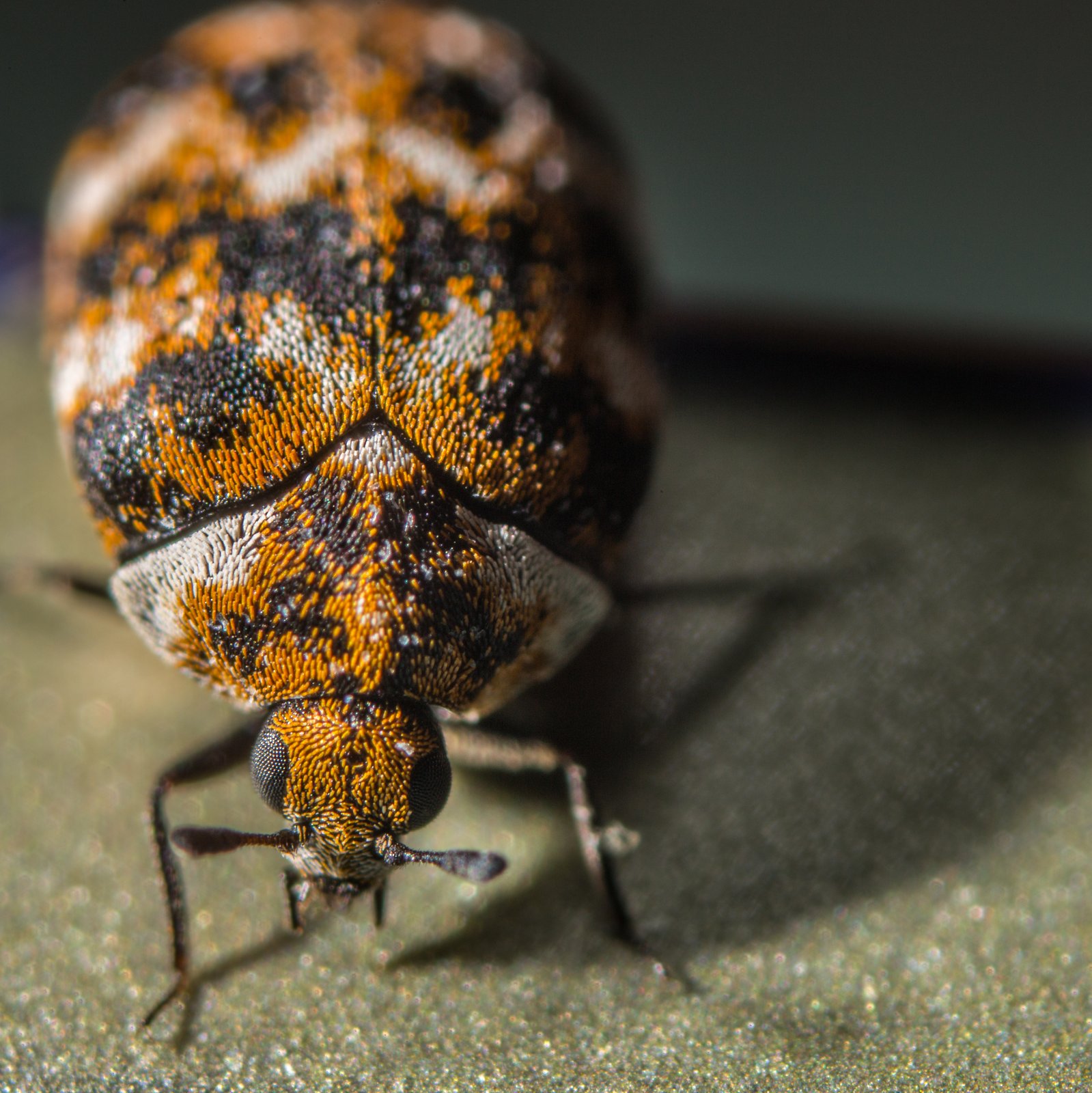
With carpet beetles, the adults are mostly harmless and often wander in through an open window to feed on pollen. It’s the larvae, small, bristly, and easy to miss, that chew through wool rugs, upholstery, and stored clothing. Larvae can take several months to develop, feeding the whole time, which is why damage to a rug or a stored sweater often shows up gradually rather than all at once.
2. Pantry beetles come in with groceries
Weevils and other pantry beetles rarely fly in from outside. They arrive in flour, rice, pet food, or dried goods that were already carrying eggs at the store or during transport. Once inside, they spread from one open container to the next. Checking dry goods for tiny holes, a faint musty smell, or clumping before you put them away catches this before it spreads across the pantry. Once you’ve found an active container, the cleanup has to go beyond tossing that one bag. Empty and vacuum the shelf it sat on, check every other open package nearby since larvae migrate short distances looking for new food, and wipe shelves down before restocking. Sealed glass or hard plastic containers for flour, rice, cereal, and pet food prevent re-infestation far better than the original cardboard or paper packaging, which weevils can chew through without much trouble.
3. Wood-boring beetles can be in a house for years unnoticed
Powderpost beetles lay eggs in untreated wood, and larvae can develop inside structural timber or furniture for a year or more before adults emerge. Small, round exit holes with fine powdery frass nearby are usually the first visible sign. Older furniture bought secondhand, and hardwood flooring installed without kiln-dried lumber, are two of the more common ways these beetles end up inside a home that otherwise has no wood pest history. A single piece of infested furniture can often be treated on its own, sometimes just by isolating it outdoors through a full season while remaining generations emerge and die off, or with a borate-based wood treatment applied to bare, unfinished surfaces. Active infestations in structural framing are a different scale of problem, since the wood can’t be removed or isolated the way a dresser can, and that’s when it’s worth bringing in a pest control professional to assess whether localized borate treatment is enough or whether the extent of the damage calls for something more thorough. The EPA’s guidance on integrated pest management is a useful framework here too: identify the actual pest and its extent first, then match the response to the scale of the problem instead of defaulting to the most aggressive option available.
4. Light is a bigger draw than most people think
Many beetle species are strongly attracted to light at night. Porch lights and uncovered windows left lit after dark are a common, and easily fixed, reason beetles end up inside in the first place. Switching an exterior porch light to a warmer, yellow-toned bulb, or simply turning it off when not needed, measurably cuts down on how many flying insects gather near an entry point each night. Yellow “bug light” bulbs work by sitting outside the wavelength range most flying insects see well, rather than by repelling them chemically, which is why they cut down on gatherings without needing any spray or treatment. Motion-activated exterior lighting is another option worth considering for anyone who wants security lighting without leaving a fixed light source burning, and drawing insects, all night long.
5. They’re everywhere, which is part of the problem
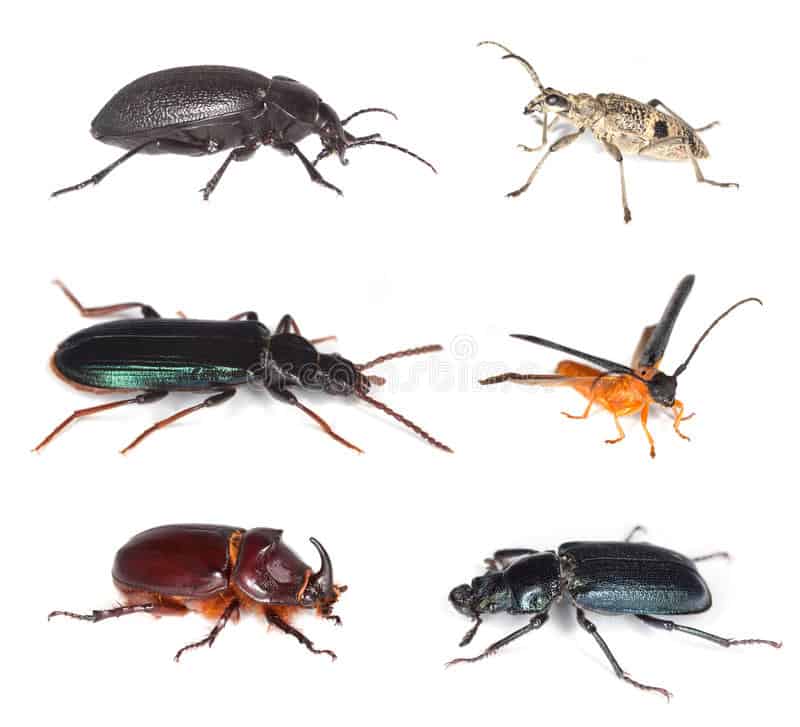
There are over 400,000 described beetle species worldwide, which is part of why ‘a beetle’ isn’t a useful identification on its own. The right response for a carpet beetle looks nothing like the right response for a powderpost beetle. Most homeowners never need to identify a beetle down to species, but narrowing it to one of the handful of categories that actually matter indoors, fabric-feeding, pantry-infesting, wood-boring, or simply a wanderer that came in from outside and poses no threat at all, is usually enough to know what to do next.
Other beetles people mistake for a bigger problem
Not every beetle sighting is one of the three main indoor culprits. Asian lady beetles, close relatives of ladybugs, cluster on sunny exterior walls in fall looking for a place to overwinter, and a crack around a window or siding gap can let hundreds in at once. They’re harmless to fabric, food, and wood, just a nuisance, and the fix is sealing the entry points they used rather than treating them like a fabric or wood pest. Click beetles, named for the clicking sound they make when they flip themselves upright, occasionally wander in from outside and cause no damage indoors at all. Confusing either of these with a carpet beetle or powderpost beetle usually leads to unnecessary treatment for a problem that isn’t actually there.
Regional notes
Carpet beetles and pantry beetles are common across pretty much every climate, since they’re tied to what’s already inside a home rather than the outdoor environment. Wood-boring powderpost beetles are more of a regional concern, showing up more often in older homes across the eastern US, parts of the UK with a lot of period timber-framed construction, and Australian homes with hardwood flooring installed without proper kiln-drying. Warmer, more humid climates generally see beetle activity extend later into the year, since cooler winters elsewhere naturally slow larval development.
How to tell them apart at a glance
- Small, mottled, roundish beetles near windowsills or in dead bugs collecting on a sill: likely carpet beetles or their shed larval skins nearby.
- Tiny beetles inside a container of flour, rice, or pet food: pantry beetles, most often a type of weevil.
- Small round holes in furniture or exposed structural wood with fine powder underneath: a wood-boring species, worth a closer look before assuming it’s cosmetic.
- Larger, dark, hard-shelled beetles wandering across a floor at night: often just a ground beetle that wandered in and isn’t actually a structural or fabric threat.
A couple of quick questions
Are beetles a sign of an unclean home? Not necessarily. Pantry beetles typically arrive already in a product, and carpet beetles often wander in from outside regardless of how tidy a house is. Cleanliness helps limit how far a population spreads, but it isn’t usually the root cause.
Can beetles bite or sting? The species homeowners typically deal with indoors, carpet beetles, pantry beetles, and powderpost beetles, don’t bite or sting people. The larvae of carpet beetles can occasionally cause mild skin irritation in sensitive individuals from contact with their bristles, but that’s the extent of it.
How long does it take to get rid of a carpet beetle problem? With consistent vacuuming, laundering or dry-cleaning affected fabric, and removing infested material, most carpet beetle problems noticeably improve within a few weeks, though a full life cycle can run several months, so occasional larvae turning up for a while after cleanup isn’t unusual. Persistent activity past six to eight weeks despite regular vacuuming is a reasonable point to bring in a professional.
What NOT to do
Don’t spray a general insecticide across a whole room the moment you spot a beetle. Broad spraying does little against larvae hidden inside fabric or wood, and it’s wasted effort against a species it wasn’t meant for. Don’t throw out furniture over a beetle sighting before confirming whether it’s actually an active wood-boring infestation or a beetle that wandered in from outside. And don’t assume one clean pantry sweep solved a weevil problem without checking every open container, since a single overlooked bag restarts the cycle.
What to do next
If you’re finding beetles regularly, the fastest path to solving it is getting an accurate ID first. Treating a wood-boring problem like a pantry problem, or vice versa, wastes time while the real issue keeps going. Call 1-844-783-4821 if you’d rather have a pest professional identify what you’re looking at than guess from a photo online.
Prevention that applies across all three types
Vacuuming regularly, especially along baseboards, under furniture, and inside closets, removes eggs and larvae before they mature, regardless of which beetle you’re dealing with. Sealing dry goods in hard containers the moment groceries come home closes off pantry beetles at the source. And keeping stored wool, wood furniture, and flooring dry, since several wood-boring and fabric-feeding species are drawn to slightly damp material, addresses a shared root cause across otherwise unrelated beetle problems. For most carpet and pantry beetle situations, these habits are enough on their own and don’t require a service call at all. Wood-boring beetles are the exception where a professional inspection earns its cost fastest, since the damage is largely hidden inside the wood itself and a trained eye reading exit hole patterns and frass can tell active from long-dormant activity in a way that’s difficult to judge from photos or guesswork alone.