
Bees are one of the few things people call a pest professional about that we’d genuinely rather not kill. Honeybees are in decline in a lot of regions, and a swarm or hive on your property is usually a relocation job, not an extermination one.
Why relocation, not extermination
A honeybee colony is doing useful work for the ecosystem around your home, whether or not it’s welcome in your soffit. Where it’s safe and practical, our approach is to remove the colony intact and relocate it, rather than treat it as a straightforward kill job. That’s not always possible, structural bees embedded deep in a wall cavity are a harder job than a swarm resting on a tree branch, but it’s the starting point, not the exception.
Why swarming happens in the first place
Swarming is how a healthy honeybee colony reproduces at the colony level. When a hive gets crowded and resources are strong, the existing queen leaves with roughly half the workers to found a new colony elsewhere, while the bees left behind raise a new queen to keep the original hive going. That’s why a swarm cluster, often a dense, football-shaped mass hanging from a branch, can look alarming but is usually one of the calmer phases of a bee’s life cycle: the bees have gorged on honey before leaving and have no comb or brood to defend yet, which makes them noticeably less defensive than an established colony would be. It’s also why swarm season, generally late spring through early summer in most temperate regions, is when we get the highest volume of calls.
What Happens on the Call
When you call about a swarm or hive, the first thing we’re trying to figure out is what you’re actually looking at and how urgent it is. A swarm resting on a tree branch or fence post is usually temporary, a scouting group that hasn’t chosen a permanent site yet, and it can sometimes be relocated within a day with minimal disruption. A colony that’s already established in a wall void, chimney, or attic space is a longer job, since it involves opening up the structure enough to access the comb, brood, and queen, then sealing the entry point afterward so a new colony doesn’t move into the same spot. We’ll ask about how long you’ve noticed activity, roughly how large the group is, and where the entry point seems to be before anyone comes out, since that shapes what equipment and approach make sense.
What the protective gear is actually for
A full bee suit, veil, gloves, and sealed boots aren’t overkill for a routine removal; they’re what makes a calm, careful extraction possible without triggering a defensive response from the colony. Ventilated suits let a technician work for the length of a removal without overheating, and sealed cuffs and ankles keep bees from finding their way inside, which matters because a startled or crushed bee in a suit is far more likely to trigger the rest of the colony. The gear is about working slowly and deliberately, not about treating the bees as a threat to be neutralized.
What happens to the bees, comb, and honey afterward
A structural removal usually involves carefully cutting away the comb, which holds developing brood as well as stored honey, and transferring it along with the queen and as many workers as possible into a proper hive box. From there, most removals go to a local beekeeper who can integrate the colony into their apiary, rather than the bees being released and left to fend for themselves, since a colony separated from its comb and queen for too long won’t survive on its own. Leftover honey and comb inside the wall void need to be fully cleaned out during the same visit, not just the live bees, because residual honey left behind can seep into insulation and drywall, and its scent is exactly what draws a new swarm to the same spot months later.
Bees vs. wasps and hornets: a different call
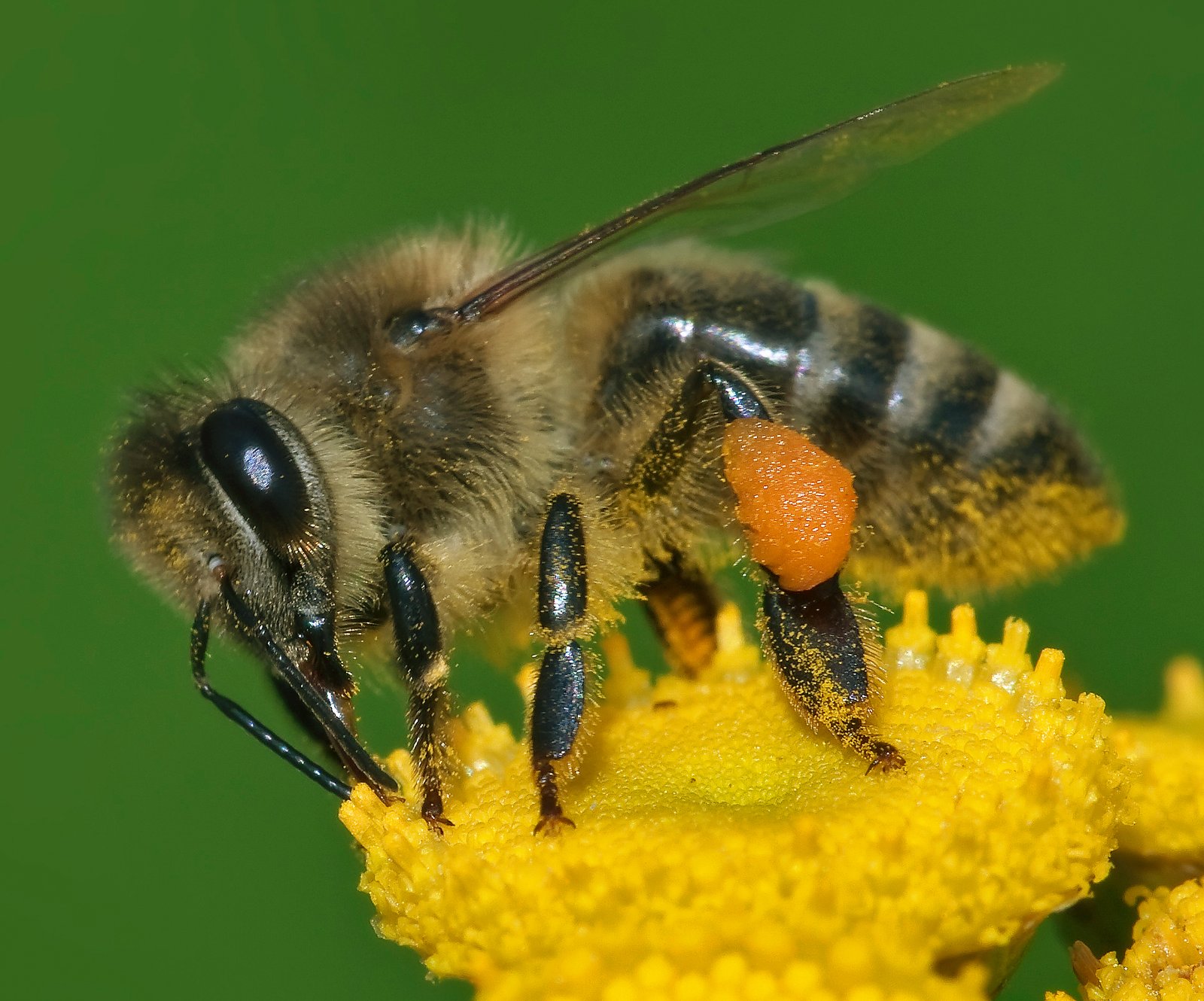
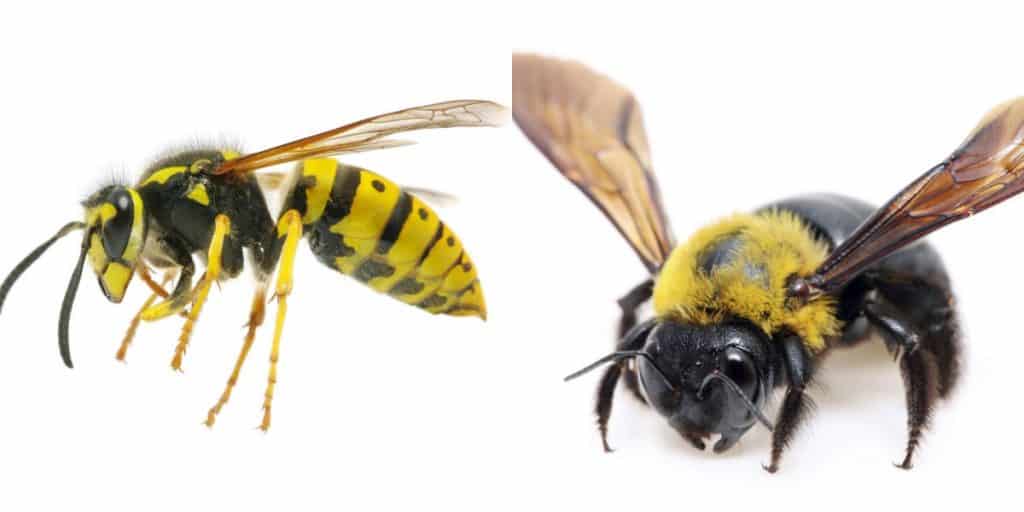
Not every stinging insect on your property gets the same treatment. Wasps and hornets, unlike honeybees, are more commonly a genuine pest control situation, particularly ground-nesting yellowjackets or a hornet nest near an entryway, and those typically do call for elimination rather than relocation. Wasps and hornets are also far more aggressive when their nest is disturbed and, unlike honeybees, most species can sting repeatedly, which is part of why we treat them differently. Correctly identifying which one you’re dealing with before anyone approaches the nest matters, and it’s not always obvious from a distance. A general rule: honeybees are fuzzy, golden-brown, and move in a dense cluster when swarming, while wasps and hornets are smoother-bodied, often brighter yellow or black, and tend to fly individually around a nest rather than clustering.
Regional notes worth knowing
In the southern US, particularly Texas, Arizona, and parts of California, Africanized honeybee hybrids are established and noticeably more defensive than typical European honeybees, which changes how a removal is approached. In Australia, European wasps have become a significant problem in cooler states like Victoria and Tasmania, and are frequently confused with native bees. UK and Canadian bee colonies are generally the calmer end of the spectrum, though a hive that’s been disturbed by a DIY spray attempt behaves very differently than one that hasn’t.
What NOT to Do
- Don’t spray a hardware-store wasp product on what might be a honeybee colony, since it can agitate the hive without solving anything and makes a professional removal harder afterward.
- Don’t block, seal, or cover the entry point while bees are still active inside, since trapped bees will often find another way into the living space rather than staying put.
- Don’t attempt to knock down or disturb a swarm cluster yourself, even a calm-looking one, since a disturbed swarm can scatter and become harder to safely relocate.
- Don’t wait through an entire season hoping they leave on their own. An established colony tends to grow, not shrink, and comb left behind after bees eventually die off can attract other pests and cause damage from melting wax and honey inside a wall.
Allergies and when a bee problem becomes urgent
For most people, a bee sting is painful but not dangerous, and calm, professional removal keeps the risk of a sting to begin with quite low. But if anyone in the household has a known bee sting allergy, especially a history of a severe or anaphylactic reaction, that changes the urgency of the call regardless of how calm the colony seems from a distance. Mention that when you call, since it can affect how quickly a technician is dispatched and what extra precautions are taken, like clearing the area more thoroughly beforehand or timing the work for early morning when bees are least active.
What to do while you wait
Keep kids and pets away from the area, don’t spray a hardware-store wasp product on what might be a honeybee colony, and avoid blocking the entrance they’re using. Take a photo from a safe distance if you can do so without getting close, since it helps with identification before anyone arrives. A pest control contractor can usually tell a lot about the right approach just from a photo and a description before ever arriving on site, which helps make sure the right equipment and plan are ready when they get there.
What a typical visit costs and how long it takes
A simple exterior swarm relocation is often a same-day, one-visit job that takes well under an hour once a technician is on site. A structural removal from a wall, chimney, or attic space is a bigger undertaking, since it usually requires opening a section of the structure, extracting comb by hand, and then repairing or resealing the opening, which can take several hours and sometimes a follow-up visit to confirm no bees have returned to the same cavity. Pricing reflects that difference: a straightforward swarm capture is typically far less expensive than a structural extraction that involves construction-level access work.
A Few Common Questions
Will the bees come back to the same spot after relocation? Once a colony is fully removed and the entry point is sealed, the odds of the same spot being reoccupied drop significantly, though a strong-smelling residual attractant, like old wax or honey left behind, can sometimes draw scouts from a different colony later. That’s part of why proper cleanup after removal matters as much as the extraction itself.
How fast do I need to act on a swarm resting outside? A resting swarm on a branch or fence is usually temporary, sometimes gone within a day or two as scouts find a permanent site. It’s still worth a call, since a swarm that decides your soffit or wall void looks appealing can move in and start building comb within days.
Is it ever appropriate to just leave bees alone? If a hive is in a genuinely low-traffic area of your property, away from doors, walkways, and where kids or pets spend time, some homeowners choose to coexist with it. That’s a reasonable call for an established colony with no access issue, but it’s worth having someone confirm there’s no structural entry point actively being enlarged first.
What if the colony is already inside a finished wall and drywall needs to come out? That’s not unusual for a structural removal that’s gone undetected for a while, and it’s worth discussing upfront who handles the drywall patch afterward, whether that’s included in the removal service or something you’ll need a contractor for separately, so there’s no surprise once the bees are out.