
Termites get a reputation as a silent, sudden threat, the kind of thing that supposedly eats through a house before anyone notices. That framing causes more panic than it prevents damage. The reality is slower, more visible, and far more manageable than the scare stories suggest, and understanding the actual timeline is what lets you catch a problem while it’s still cheap to fix.
The actual timeline
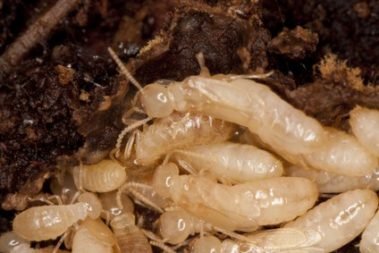
A subterranean termite colony starts small. A pair of winged reproductives, called alates, swarm from an existing colony, land, shed their wings, and pair off to start a new nest. In the first year, that colony might number only a few hundred workers, not enough to do noticeable damage to a structure. It typically takes several years to mature to full foraging strength, sometimes building to tens of thousands or more workers, and visible structural damage generally builds up over years of sustained activity, not weeks. That doesn’t mean termites are harmless if ignored, but it does mean there’s usually a real window, often measured in years, to catch and treat activity before it becomes a repair bill.
A mature colony’s caste system is part of why growth speeds up over time rather than staying steady. Workers, the caste doing nearly all the wood consumption, make up the bulk of the population and are constantly being produced as the colony matures, while soldiers defend the nest and a king and queen handle reproduction, sometimes for a decade or more in an established colony. As the worker population compounds year over year, the rate of wood consumption compounds along with it, which is why a five-year-old colony can do meaningfully more damage in its next twelve months than it did in its first three years combined.
What speeds the timeline up
Damage accelerates when conditions favor the colony: a warm, humid climate that lets termites forage year-round instead of slowing in winter, a persistent moisture source like a leaking pipe or poor drainage that softens wood and makes it easier to tunnel through, or direct wood-to-soil contact, a deck post set straight into dirt, a stack of firewood against the foundation, that gives the colony a direct highway into the structure without needing to build mud tubes at all. Remove those conditions and even an established colony does damage more slowly.
It isn’t actually silent
Most termite activity leaves signs if you know where to look:
- Pencil-width mud tubes running up a foundation wall, exterior siding, or a crawlspace support
- Discarded wings near windowsills or doors, left behind after a swarm
- Wood that sounds hollow or papery when tapped, or gives slightly under pressure
- Small piles of frass, termite droppings that look like fine sawdust, near baseboards or window frames
- Paint that’s bubbling or sagging in a way that doesn’t match a moisture leak
- Tight-fitting doors or windows that suddenly stick, sometimes caused by warping as termites hollow out surrounding frame wood
The reason termites feel invisible is that these signs show up in places people don’t regularly inspect, crawlspaces, foundation perimeters, attic framing, rather than that the damage happens without any trace at all. A homeowner who never looks in the crawlspace won’t see mud tubes that have been there for a year.
Risk varies a lot by region
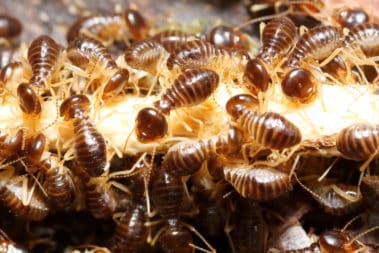
The Southeastern US, including the Gulf Coast, carries the country’s highest subterranean and Formosan termite pressure, with Formosan colonies in particular capable of growing larger and foraging more aggressively than native subterranean species. The Pacific Northwest deals more with dampwood termites tied to moisture-compromised wood, often around leaking roofs or poorly ventilated crawlspaces rather than soil-based colonies. In Canada, termite activity is far more limited and concentrated, with Southern Ontario and parts of coastal British Columbia seeing the most documented cases, largely because colder winters limit how far north colonies can establish and survive. Australia is genuinely high-risk nationwide outside Tasmania, with species like Coptotermes acinaciformis capable of serious structural damage and colonies that can number in the millions. The UK, by contrast, is essentially termite-free; the one known established colony, discovered decades ago in Saunton, Devon, was contained and eradicated, and termites aren’t a realistic concern for most UK homeowners, though imported infested timber or furniture is still worth a second look.
Within a single region, risk also varies block by block based on soil type and drainage more than most homeowners expect. Clay-heavy soil that holds moisture near a foundation, homes on a slab built directly over graded fill, and properties backing onto wooded areas or a tree line all carry higher baseline pressure than a well-drained lot with a raised foundation and open space between the house and the treeline. Two houses a few streets apart can have genuinely different risk levels for reasons that have nothing to do with either owner’s maintenance habits.
What to do if you find signs
Don’t disturb mud tubes or treat the area yourself before an inspection; scraping away a mud tube just sends the colony looking for another route in, and it destroys evidence a pest professional would otherwise use to gauge how active and how large the colony is. Take photos, note the location, and get an inspection scheduled. A confirmed active colony treated promptly is a straightforward, contained job. A colony left for another few years, especially in a high-pressure region, gets more expensive to treat and more likely to have caused damage that needs repair on top of pest control.
What treatment and repair actually cost at each stage
Cost is where the “catch it early” advice pays off in real terms. A colony caught early, before any structural wood has been compromised, is typically resolved with a liquid soil treatment or a bait station system, and the home needs no repair work at all beyond the pest treatment itself. A colony that’s gone unnoticed for several years and has damaged a support beam, subfloor, or wall framing adds structural repair costs on top of treatment, sometimes requiring a contractor to open up drywall or replace load-bearing members, which is a materially different bill than pest control alone. This is the practical reason an annual inspection is worth the modest cost: it’s cheap insurance against a repair bill that can run many times higher than the treatment itself.
Termite bonds and warranties
Many pest control companies offer a termite bond or warranty after an initial treatment, which typically covers re-treatment and sometimes limited repair costs if termites return within the coverage period, usually renewed annually. If you’re buying a home in a termite-prone region, ask whether an existing bond transfers to a new owner, since a transferable bond on a home with a treatment history can be a meaningful point in its favor, and a lapsed one is worth factoring into your own inspection and treatment planning after closing.
What actually protects a home
Regular monitoring, whether that’s an annual check from a licensed fumigator in higher-risk regions or bait station monitoring for a property with prior activity, catches colonies while they’re still small and inexpensive to treat. Fear doesn’t do that job. A yearly walk of your foundation and crawlspace, paired with knowing what to look for, does. Pair that with basic prevention, keeping wood off the soil, correcting drainage that pools near the foundation, and ventilating crawlspaces, and you’re addressing both the early-warning side and the conditions that let a colony grow fast in the first place.
Frequently asked questions
If I see a swarm of winged termites, does that mean my house is already infested? Not necessarily. Swarms often originate from a colony in the yard, a nearby tree stump, or a neighboring property, and the termites are simply looking for a new place to start a colony. It’s still worth an inspection, since a swarm near your home means conditions there are attractive to termites generally.
How often should a home actually be inspected? In high-pressure regions like the Southeastern US or most of Australia, annually is a reasonable baseline. In lower-risk regions, every two to three years, or after any major landscaping or renovation work that disturbs soil near the foundation, is usually enough.
Does homeowners insurance cover termite damage? Almost never. Termite damage is generally classified as a preventable maintenance issue rather than a sudden, accidental loss, so standard policies exclude it. That’s part of why regular inspection matters financially, not just structurally; there’s typically no insurance safety net if a colony goes unnoticed.
Can a single treatment guarantee termites never come back? No treatment offers a permanent guarantee, since new colonies can always swarm in from elsewhere and find the same conditions attractive again. What a good treatment plan does is eliminate the current colony and, paired with ongoing monitoring or a bait system, catch any new activity early enough that it never becomes a repeat of the original problem.