
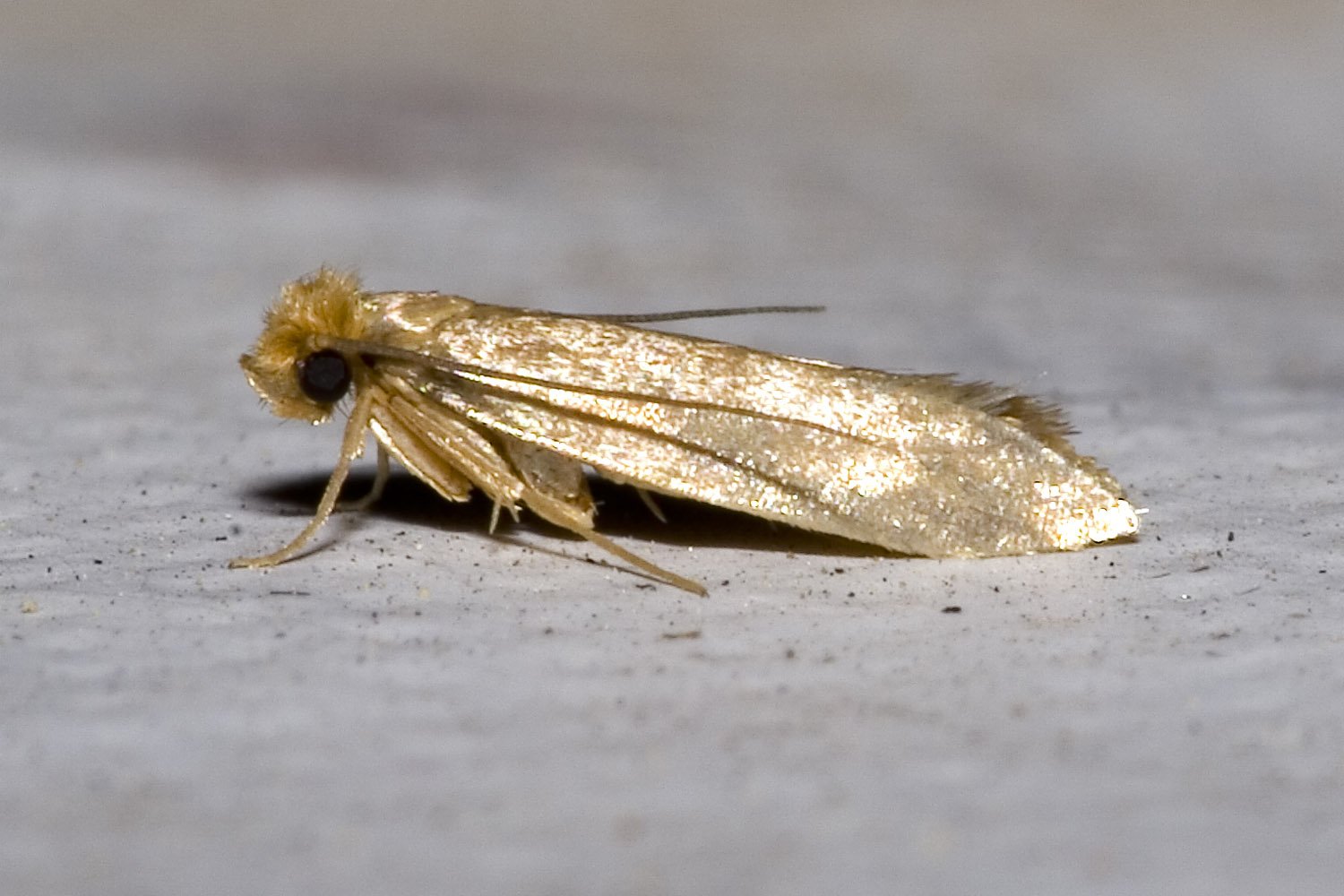
By the time you see moths flying around the kitchen, the larvae have usually already been feeding in your pantry for a while. Adults are just the reproductive stage; getting rid of them without addressing the larvae and eggs means the problem returns within a couple of weeks.
How the Infestation Usually Starts
Most pantry moth infestations begin with eggs or larvae already present in a product when it’s purchased, often in bulk grains, birdseed, pet food, or dried fruit that sat in a warehouse or store shelf longer than it should have. It’s rarely a sign of a dirty kitchen. Once inside the home, a single female can lay 100 to 400 eggs over her short life, and in warm conditions those eggs can hatch within a week, which is how a small, unnoticed problem in one bag turns into moths in several cabinets within a month or two.
Find Every Infested Container
Pantry moth larvae feed on flour, cereal, rice, pasta, dried fruit, nuts, pet food, and birdseed, essentially any dry goods that were not sealed tightly. Check every open package, not just the obvious ones, larvae travel between containers stored close together, so a bag of rice next to an infested box of cereal is worth checking even if it looks fine. Larvae leave behind fine webbing, small silken threads near the surface of the food or along the inside of the container, which is the clearest sign of an active infestation even before you spot a larva itself.
Throw Out Anything Infested
There is no salvaging food with visible webbing or larvae. Bag it immediately and take it straight to an outdoor bin, not the kitchen trash, since larvae can crawl out of an indoor bag and continue their life cycle inside your house, some can even pupate and emerge as adults from inside a sealed kitchen trash bag left indoors for a few days.
Life Cycle: From Egg to Flying Moth
Understanding the timeline helps explain why a cleanout that misses even a few eggs seems to “fail” a couple of weeks later. Eggs typically hatch within four to ten days depending on temperature, faster in a warm kitchen than a cool pantry. The larval stage, the part actually doing the feeding and webbing, lasts anywhere from two to four weeks, and this is the stage most cleanout efforts are trying to interrupt. Once a larva is ready to pupate, it often crawls away from the food source entirely, which is why cocoons turn up in ceiling corners, door hinges, and even inside light fixtures nowhere near the pantry. Pupation takes another one to two weeks, and the adult moth that emerges lives only about one to two weeks, just long enough to mate and lay the next batch of eggs. In practice, that means a population can cycle from egg to egg in as little as five to six weeks in a warm kitchen, so a cleanout that isn’t thorough can look successful for a month before the next generation shows up.
Non-Toxic Options Worth Adding
Food-grade diatomaceous earth, a fine powder made from fossilized algae, can be dusted lightly along shelf edges and back corners where larvae travel to pupate. It works mechanically rather than chemically, damaging the outer coating of larvae and small insects on contact, which makes it a non-toxic and safe option for kids and pets when kept out of open food containers themselves. Bay leaves and dried lavender in cabinets have long been used as a mild deterrent, the evidence for them is more anecdotal than for freezing or sealed storage, but they’re low-cost and low-risk enough to add alongside the steps that actually matter. Cedar blocks work on the same principle. None of these substitute for finding and discarding the infested source, they’re a supporting layer, not the fix itself.
Deep Clean the Shelves
Empty the entire pantry, not just the affected shelf. Larvae migrate to find a place to pupate, and that often means they end up in shelf corners, seams, and even nearby crevices in the wall, far from the original food source, sometimes traveling several feet before settling to spin a cocoon. Vacuum every surface thoroughly, then wipe shelves down with a vinegar and water solution, which helps break down the pheromone trails larvae and adults use to communicate. Don’t skip the underside of shelves and the gap behind where a shelf meets the wall, both common spots for pupation cases that a quick wipe misses.
Freeze New or Suspect Items
Any dry goods you are not ready to throw out, or new purchases coming from a store where you have had moth issues before, can be frozen for 96 hours. This kills eggs and larvae at any stage without affecting the food. For particularly vulnerable items like bulk-bought grains, nuts, or birdseed, freezing new purchases as a routine step before they ever reach the pantry shelf prevents an infestation from starting in the first place rather than just catching it after the fact.
Switch to Sealed Storage
Cardboard and paper packaging is not a barrier to pantry moths, they chew straight through it. Moving grains, flour, cereal, and pet food into airtight glass or hard plastic containers is the single change that prevents recurrence more than anything else on this list. A tight-sealing lid with a rubber gasket makes a real difference here, containers that only click shut without an actual seal still let determined larvae in.
Set Pheromone Traps
Sticky traps baited with pantry moth pheromone catch adult males and disrupt the breeding cycle, which helps prevent the current larvae from becoming the next generation. Place a couple near the pantry and check them weekly. A trap that keeps catching moths after two or three weeks of cleanout and sealed storage is a sign the source hasn’t been fully found yet, not that the traps aren’t working.
It helps to understand what a pheromone trap is actually doing: the lure mimics the scent female pantry moths release to attract mates, so the sticky trap only catches males. That makes it more of a monitoring tool than a standalone control method, a trap that keeps filling up tells you breeding is still happening somewhere nearby, while a trap that goes quiet is a reasonable sign the cleanout worked. Traps won’t meaningfully reduce a population on their own if there’s still an active food source, but they’re useful for confirming whether one exists.
What Not to Do
Don’t spray insecticide directly onto food storage areas or open shelving, most household insecticides aren’t labeled for use around food and won’t solve a larvae problem hiding inside sealed packaging anyway. Don’t assume one round of cleaning is enough if you skipped freezing suspect items first, unfrozen eggs in a “safe-looking” package can restart the whole cycle within days. And don’t store new purchases directly next to older stock without a quick inspection, that’s one of the most common ways a resolved infestation gets reintroduced within a month.
What a Full Cleanout Actually Involves
A thorough pantry moth cleanout usually takes a weekend rather than an afternoon once you account for emptying every shelf, inspecting each container, and wiping down every surface, corner, and seam. Replacing cardboard packaging with airtight containers is the main ongoing cost, expect to spend on the order of a shopping trip’s worth on glass or hard plastic containers with real gasket seals, which is a one-time expense that prevents most future infestations rather than a recurring one. If you’ve gone through two full cleanouts within a few months and moths keep returning, that recurring pattern is usually worth having a pest control technician look at, since they can often spot a hidden source, like a gap behind a built-in shelf, that’s easy to miss from the outside.
Regional and Seasonal Notes
Pantry moth activity often ticks up in late summer and early fall in the US and Canada, tied to warmer indoor temperatures and the arrival of new bulk grain and birdseed stock ahead of winter. In warmer climates, including much of Australia and parts of the southern US, activity can stay elevated nearly year-round since indoor temperatures rarely drop enough to slow the life cycle down.
A Couple More Questions
Do pantry moths bite or spread disease? No. They’re a nuisance and food-contamination issue, not a health hazard the way cockroaches or rodents can be. The main cost is wasted food and the time spent on cleanout, not illness.
How long does a full pantry moth cleanout take? Plan on a few hours for a single affected cabinet, closer to a full weekend if the infestation has spread across multiple shelves or into a pantry closet, since every container needs individual inspection and every surface needs a real wipe-down, not just the visibly affected shelf.
If It Keeps Coming Back
A recurring infestation despite sealed storage usually means there is a source you have not found, sometimes it is birdseed in a garage, sometimes it is a forgotten bag in the back of a cabinet, and sometimes it’s a secondary spot like a junk drawer with a stray box of crackers. If you have gone through this process twice with the same result, it is worth having someone locate the source rather than repeating the cleanout.