
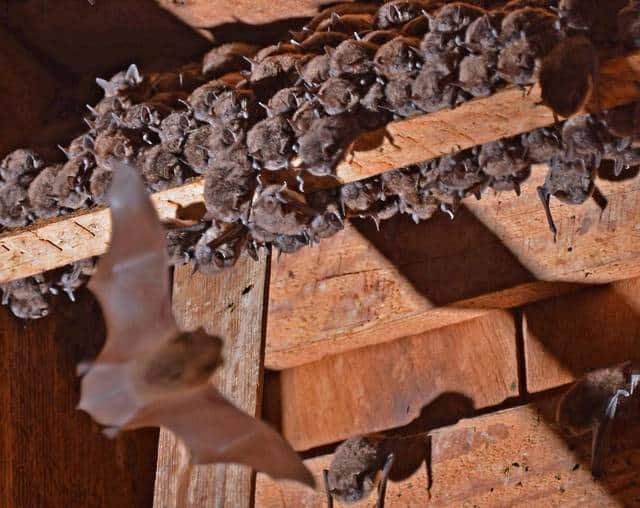
Bats and birds are two of the most common nuisance wildlife issues in and around homes and commercial buildings, and while they’re very different animals, they cause similar problems: both look for small gaps in rooflines, soffits, vents, and chimneys to get inside and set up a roost or nest. Bats, such as the little brown bat (Myotis lucifugus), are protected in many jurisdictions and provide real ecological benefit by eating enormous numbers of night-flying insects, including mosquitoes, but a colony roosting in an attic or wall void creates noise, odor, and health concerns that need to be addressed carefully and legally. Birds like pigeons, starlings, and sparrows nest in eaves, vents, signage, and rooflines, and their droppings and nesting debris can damage roofing, clog gutters, and create slip hazards on walkways.
Because both groups are wildlife, and bats in particular are frequently protected species, removal isn’t as simple as pest extermination. It requires humane exclusion methods, correct timing around breeding seasons, and permanent entry-point sealing once the animals have safely left on their own.
What It Looks Like
Bats found in and around homes are typically small, with big brown bats measuring 10-13 cm long with a wingspan up to 33 cm, dark brown fur, and leathery wings, while little brown bats are smaller with glossy brown fur. Nuisance birds vary by species: pigeons are stocky gray birds with iridescent neck feathers, house sparrows are small brown-and-gray birds with stout bills, and starlings are dark, glossy black birds with speckled plumage in winter and yellow bills in breeding season.
Where It’s Commonly Found
Bats roost in dark, sheltered spaces such as attics, soffits, chimneys, and gaps behind shutters or siding, often entering through openings as small as 10 mm. Nuisance birds nest in eaves, gutters, vents, rooflines, and ledges, with pigeons frequently favoring flat roofs and building overhangs. Both groups are drawn to structures that offer protection from weather and predators along with proximity to food sources.
Signs of an Infestation
- Accumulations of guano (droppings) below roost or nest sites, on attic insulation, or on windowsills and siding
- A strong, musty or ammonia-like odor near roosting or nesting areas
- Scratching, squeaking, or fluttering sounds in walls, attics, or soffits, especially around dusk for bats
- Grease or rub marks around entry points where bats repeatedly squeeze through gaps
- Nesting material such as twigs, feathers, or debris in gutters, vents, or eaves
- Visible bats exiting the structure at dusk or birds repeatedly entering the same gap or vent
Health & Property Risks
Accumulated bat and bird droppings can harbor the fungus that causes histoplasmosis, a respiratory illness, and bat guano buildup also poses a contamination concern in attics and insulation. Bats can carry rabies, though transmission to humans is rare and generally requires direct contact such as a bite or scratch. Bird droppings can carry pathogens including histoplasmosis and psittacosis and are corrosive to roofing materials, gutters, and HVAC equipment over time. Importantly, most bat species and virtually all native wild birds are protected under state wildlife laws and, for migratory species, the federal Migratory Bird Treaty Act, which prohibits killing, capturing, or disturbing active nests. Because of this, removal must rely on humane exclusion rather than extermination, and timing is often restricted around maternity and nesting seasons.
Treatment Options
- Species identification and a full inspection of the roof, attic, soffits, and exterior to locate all active entry and exit points
- Installation of one-way exclusion doors or valves that let bats or birds leave a roost but prevent them from re-entering
- Timing exclusion work outside maternity or nesting seasons whenever possible to avoid trapping flightless young inside a structure, in keeping with humane and legal best practices
- Permanent sealing of all secondary entry points with exclusion-grade materials once the primary colony or flock has vacated
- Installation of deterrents such as bird spikes, netting, or sloped ledge covers to discourage birds from re-landing on treated areas
- Attic or roost decontamination, including guano removal and sanitization, once the animals have been safely excluded
- Coordination with local wildlife authorities when protected species or active nests require permitted handling
Products & Methods We Use
- One-way exclusion doors and valves for bat roosts
- Exclusion netting, mesh, and caulking for sealing entry gaps around rooflines and siding
- Bird deterrent spikes, sloped ledge guards, and netting systems
- Chimney caps and vent covers designed to keep wildlife out while maintaining ventilation
- Personal protective equipment and HEPA-filtered equipment for safe guano removal
- Enzyme-based cleaners and sanitizing treatments for attic and roost decontamination
Prevention Tips
- Seal gaps around the roofline, soffits, and chimney with exclusion-grade materials before bats or birds move in
- Install and maintain chimney caps and vent covers
- Trim tree branches away from the roof to reduce easy landing and access points
- Avoid leaving pet food, birdseed, or open food sources outside that attract birds
- Repair damaged fascia, soffits, and roof gaps promptly, since even small openings can allow bats entry
- Contact a wildlife control technician at the first sign of activity rather than attempting to seal openings while animals may still be inside