
Bees are essential pollinators, and honey bees (Apis mellifera) are the species most likely to show up as a swarm or established colony on a residential or commercial property. A healthy bee colony pollinates gardens, orchards, and local ecosystems, which is why our approach to bees is fundamentally different from how we handle other stinging insects — the goal is always removal and relocation, not extermination.
When a swarm lands in a tree or a colony moves into a wall void, chimney, or shed, it’s usually because scout bees found a sheltered cavity that meets their needs: enough space, good insulation, and a defensible entrance. Left alone, an established colony can grow to tens of thousands of bees and produce a significant amount of comb and honey, which creates real problems if it’s inside a structure — heat, moisture, and eventually structural staining or damage as unattended comb breaks down. Because honey bees are protected and ecologically valuable in the US, Canada, Australia, and the UK, professional live removal is both the responsible and often the only appropriate option, and it takes real skill to do safely.
What It Looks Like
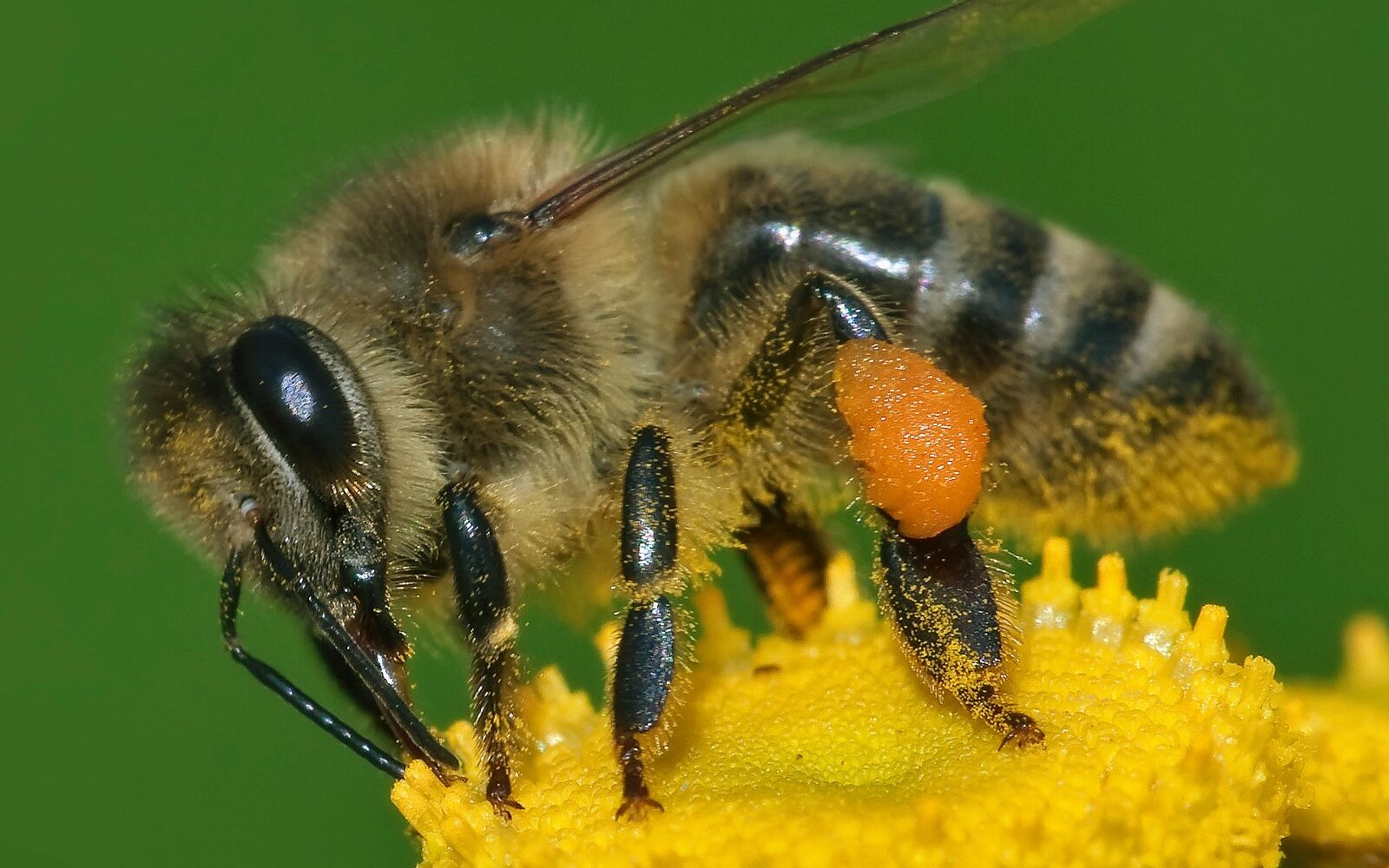
Honey bees are about 1/2 to 5/8 inch long with a fuzzy, golden-brown and black striped body, noticeably hairier than wasps. Bumblebees are larger and rounder, covered in dense black-and-yellow fuzz, and fly with a distinctive slow, heavy hum. Both have flattened hind legs adapted for carrying pollen.
- Dense body hair, unlike the smooth exoskeleton of wasps
- Robust, rounded body shape
- Pollen baskets visible on the hind legs of foraging workers
Where It’s Commonly Found
Honey bees form large perennial colonies, often in hollow trees, but they will readily occupy wall voids, chimneys, or attic spaces on a property, building wax comb structures that can persist and grow for years. Bumblebees typically nest in smaller colonies in the ground, in abandoned rodent burrows, or under sheds and decking, and their colonies die off annually. Both species are most active from spring through fall.
Signs of an Infestation
- Steady in-and-out bee traffic at a single gap, vent, or crack in the exterior
- Audible humming from within a wall or ceiling cavity
- Visible wax comb or honey staining seeping through drywall or siding, a sign of an established colony
- A cluster or swarm of bees resting on a tree branch, fence, or structure, typically a temporary event rather than a permanent nest
- Small ground-level entry holes with bee activity for bumblebee colonies
Health & Property Risks
Honey bees and bumblebees are far less aggressive than wasps and generally only sting when directly threatened or when their colony is disturbed, though stings still pose a serious risk to individuals with bee venom allergies. Because honey bees are critical pollinators for gardens, crops, and the broader ecosystem, many pest control companies prioritize live relocation over extermination whenever the colony can be safely accessed and moved. This is a key distinction from wasps and hornets, which are typically eliminated due to their more defensive, multi-sting behavior. Extermination of an established honey bee colony is generally reserved for cases where the nest location makes safe relocation impossible, such as deep within an inaccessible wall void.
Treatment Options
- Live colony relocation: when the nest is accessible, a pest control technician or a partnering beekeeper removes the comb and queen and relocates the colony to a managed hive, preserving the bees and preventing future recolonization of the void
- Cut-out removal: for colonies established inside a wall or ceiling void, this involves opening the structure, extracting all comb and bees, and treating the void to remove pheromone traces that could attract a future swarm
- Swarm capture: temporary swarms clustered on a branch or structure are usually collected and relocated rather than treated, since they have not yet established a nest
- Targeted extermination: reserved for cases where the colony is in an inaccessible location or poses an immediate safety risk and live removal is not feasible
- Bumblebee ground nest management: small, low-risk bumblebee nests away from high-traffic areas are often left undisturbed given their seasonal die-off and pollinator value, unless they pose a direct sting hazard
Products & Methods We Use
- Bee-safe smoke or calming agents used during live cut-out removals
- Specialized vacuum equipment designed to collect bees without harming them for relocation
- EPA-registered insecticide dusts, used selectively only when extermination is the necessary option
- Comb and void cleanup materials to remove pheromone and wax residue after removal
Prevention Tips
- Seal exterior gaps around siding, fascia boards, chimneys, and vents where scout bees could find entry
- Screen attic, soffit, and gable vents with fine mesh
- Address old, unused chimneys or wall cavities that could serve as attractive nesting voids
- Have swarms in trees or on structures assessed promptly, since an established swarm can become a permanent colony within days
- Avoid sealing an active entry point yourself, which can trap bees inside a wall and force them into living spaces
- Maintain trimmed vegetation away from the home to reduce attractive nesting cover near the foundation