
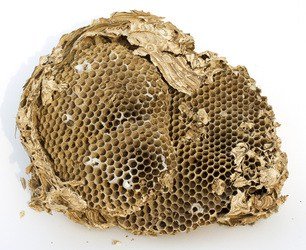
Wasps and hornets are stinging insects in the family Vespidae, common across the US, Canada, Australia, and the UK. Unlike bees, most wasp species are predators as well as scavengers, feeding on other insects, spiders, and human food scraps — which is why they show up at barbecues, garbage cans, and outdoor dining areas in late summer and fall. The most troublesome species around homes are yellowjackets, paper wasps, and hornets, all of which build papery nests from chewed wood pulp and can sting repeatedly when threatened.
For homeowners and businesses, wasps matter because a nest near an entryway, deck, or eave isn’t just a nuisance — it’s a real safety hazard, especially for anyone with a sting allergy. Colonies can grow to several thousand workers by late summer, and nests built inside wall voids or attics are often bigger and harder to reach than they appear from outside. Aggressive defense of the nest, not random attacks, is what causes most stings, so removal timing and technique matter.
What It Looks Like
Wasps and hornets are narrow-waisted, smooth-bodied insects, distinct from the fuzzy appearance of bees. Yellowjackets are typically 3/8 to 5/8 inch long with bold black-and-yellow banding, while hornets such as the bald-faced hornet can reach up to an inch with black-and-white markings. Paper wasps are slender with long legs that dangle in flight and range from brownish-red to black with yellow accents.
- Smooth, shiny exoskeleton, not hairy like bees
- Pinched, narrow waist (petiole)
- Wings fold lengthwise along the body at rest
Where It’s Commonly Found
These insects build nests both outdoors and, when voids are accessible, inside structures. Yellowjackets often nest in underground burrows, wall voids, or beneath decking, while paper wasps construct open, umbrella-shaped combs under eaves, railings, and overhangs. Bald-faced hornets build large, enclosed gray paper nests in trees, shrubs, or on the sides of buildings. Nest activity peaks in summer and early fall as colonies reach maximum size.
Signs of an Infestation
- Visible paper-like nests under eaves, in trees, or attached to structures
- Increased wasp traffic near a specific entry point on the home, often a sign of a nest in a wall void or attic
- Audible buzzing or scratching sounds inside walls or ceilings
- Wasps foraging repeatedly around trash cans, outdoor dining areas, or sugary and protein food sources
- Small holes in soil or mulch beds indicating ground-nesting yellowjackets
Health & Property Risks
Wasps and hornets can deliver painful stings and, unlike honey bees, are capable of stinging multiple times, which increases the danger for individuals with venom allergies. Ground and void nests near high-traffic areas of a property raise the likelihood of accidental disturbance and defensive swarming. Because of their aggressive nest-defense behavior, wasp and hornet colonies are typically eliminated rather than relocated, unlike many bee species.
Treatment Options
- Direct nest treatment: a pest control technician applies a labeled insecticide directly into the nest void or exterior nest structure, targeting the colony at its source
- Void treatments: for nests inside wall cavities, soffits, or attics, dust or aerosol formulations are injected into the void through small access points to reach the colony without extensive drywall removal
- Ground nest treatment: underground yellowjacket nests are treated with a residual dust or liquid applied directly into the entrance, which worker wasps carry back into the colony
- Physical nest removal: once activity has stopped, exposed paper nests are physically removed to prevent reuse and eliminate the visual nuisance
- Perimeter and exclusion work: sealing gaps, vents, and eaves after treatment helps prevent new colonies from establishing in the same void the following season
Products & Methods We Use
- EPA-registered aerosol foams formulated for wasp and hornet nest voids
- Residual insecticide dusts for underground and wall-void nests
- Non-repellent liquid concentrates for perimeter treatment around entry points
- Protective equipment and specialized nest-removal tools for technician safety
Prevention Tips
- Seal cracks, gaps, and utility penetrations around the roofline, siding, and foundation
- Keep outdoor trash cans tightly lidded and away from doorways and patios
- Inspect eaves, sheds, and playsets in spring for early-stage nest starts, which are much easier to remove than mature colonies
- Avoid leaving sweet drinks, fallen fruit, or pet food uncovered outdoors
- Install screens on attic and soffit vents to block entry into voids
- If a nest is spotted, avoid disturbing it and contact a pest control professional rather than attempting removal without protective gear