
Cockroaches are among the most resilient household pests, capable of surviving on minimal food and water, squeezing through gaps as thin as a coin, and reproducing quickly enough that a small population can become a major infestation within a few months. In the US, Canada, Australia, and the UK, the species homeowners most commonly encounter are the German cockroach, which thrives indoors in kitchens and bathrooms, and the larger American and Oriental cockroaches, which often come in from outdoor or below-ground areas like sewers, drains, and basements. Beyond the discomfort factor, cockroaches matter because of what they leave behind: shed skins, droppings, and saliva that can trigger asthma and allergy symptoms, particularly in children. They’re also opportunistic feeders, contaminating food prep surfaces, dishes, and pantry items as they forage at night. Because cockroaches reproduce fast and hide in tight, hard-to-reach spaces — behind appliances, inside wall voids, under sinks — a single visible roach usually means many more are hiding nearby. Effective control depends on eliminating food and water access, sealing entry points, and using treatments that reach roaches in their harborage areas, not just the ones caught out in the open.
What It Looks Like
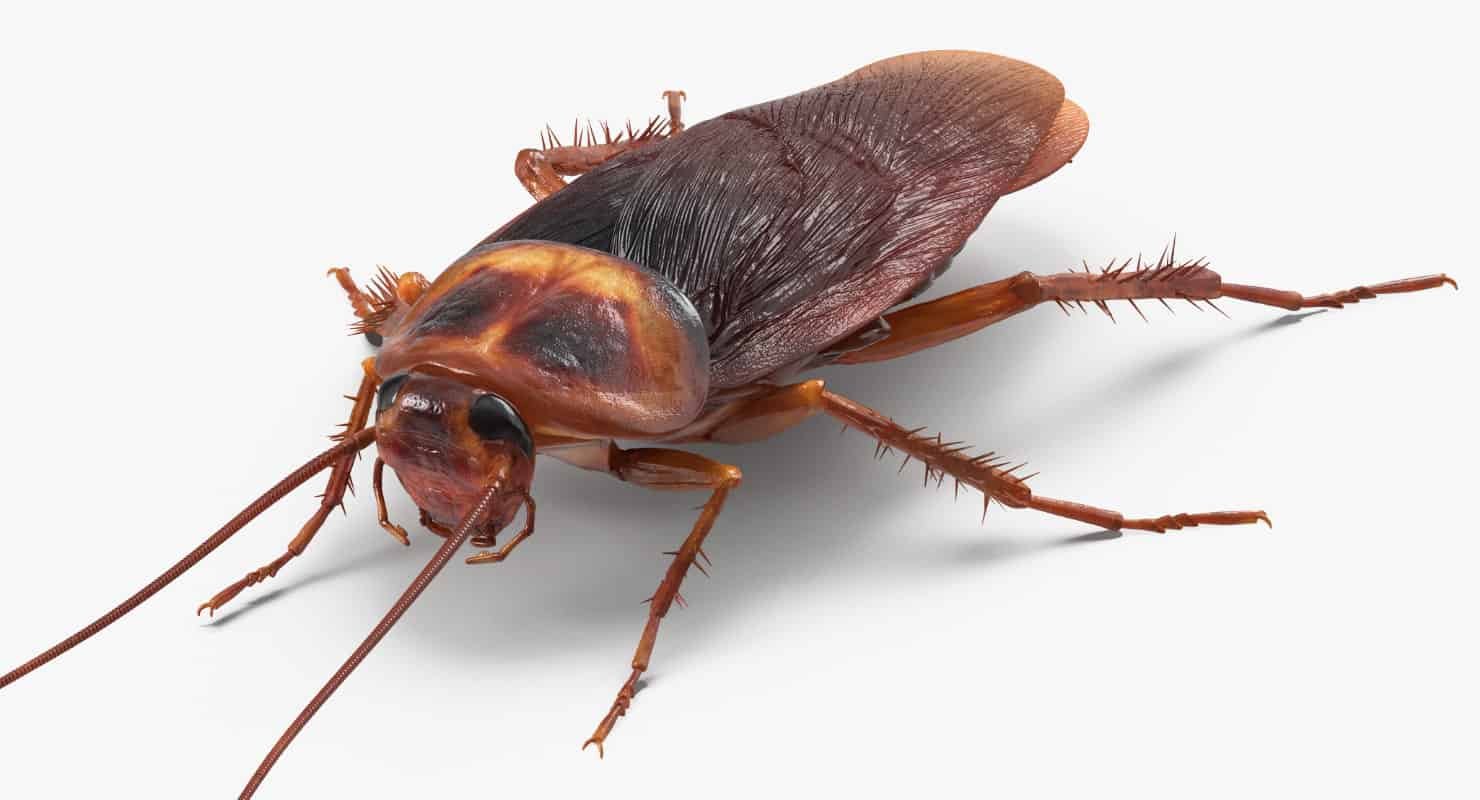
Appearance varies by species. German cockroaches are small, about 1/2 to 5/8 inch, light brown to tan with two dark parallel stripes running behind the head. American cockroaches are much larger, reaching 1.5 to 2 inches, reddish-brown, with a pale yellowish figure-eight marking behind the head. Oriental cockroaches are dark brown to black, shiny, and roughly 1 inch long.
All three species share an oval, flattened body, long thread-like antennae, and six spiny legs built for fast movement across floors and walls.
Where It’s Commonly Found
Cockroaches favor warm, humid, dark environments, which makes kitchens and bathrooms prime territory — especially under sinks, around drains, behind appliances, and near water heaters. German cockroaches are almost entirely an indoor species and spread quickly once established in a kitchen.
American cockroaches are common in sewers, basements, and other damp areas and often move indoors from the outside. Oriental cockroaches, sometimes called water bugs, favor basements, crawlspaces, and other ground-level, moisture-heavy spaces.
Signs of an Infestation
- Droppings that resemble ground black pepper or coffee grounds along baseboards and in cabinets
- Egg cases (oothecae) tucked into cracks, behind appliances, or in cabinet corners
- A musty, oily odor in areas of heavy activity
- Shed skins left behind as nymphs grow
- Live roaches spotted at night when a light is suddenly switched on
- Smear marks along frequently traveled routes near pipes or baseboards
Health & Property Risks
Cockroaches are a recognized asthma and allergy trigger — proteins in their saliva, droppings, and shed skin can accumulate in dust and worsen respiratory symptoms, particularly in children and people with existing asthma or allergies.
As they move between drains, garbage, and food prep surfaces, cockroaches can also mechanically transfer bacteria onto countertops, dishes, and stored food, making sanitation a genuine concern alongside the allergen risk.
Treatment Options
- Inspection to identify the species present, locate harborage areas, and find likely entry points
- Gel baiting placed in cracks, crevices, and other harborage sites where roaches feed and shelter
- Targeted crack-and-crevice application of residual insecticide along travel routes and hiding spots
- Insect growth regulator (IGR) application to interrupt the reproductive cycle and prevent nymphs from maturing
- Exclusion work sealing gaps around pipes, cabinets, and baseboards to cut off entry and movement between units
- Sanitation recommendations addressing food storage, garbage handling, and moisture sources that sustain a population
- Follow-up treatments, since egg cases are resistant to many products and can hatch after an initial treatment
- Sticky monitoring traps placed to track activity and confirm treatment is working
Products & Methods We Use
- Gel bait formulations designed to match roach feeding behavior and be carried back to shared harborage areas
- Insect growth regulators (IGRs) that prevent nymphs from developing into reproducing adults
- Non-repellent residual insecticides for crack-and-crevice application
- Dust formulations, such as boric acid or diatomaceous earth, applied in wall voids and other dry, protected spaces
- Sticky monitoring traps to track activity levels and hot spots
Prevention Tips
- Fix leaky faucets and eliminate standing water, since roaches need a reliable moisture source
- Store food, including pet food, in sealed containers and clean up crumbs and grease promptly
- Take out garbage regularly and use trash cans with tight-fitting lids
- Declutter storage areas, cabinets, and cardboard boxes that provide hiding spots
- Seal cracks and gaps around pipes, baseboards, and cabinetry
- Inspect grocery bags, boxes, and secondhand appliances before bringing them into the home