
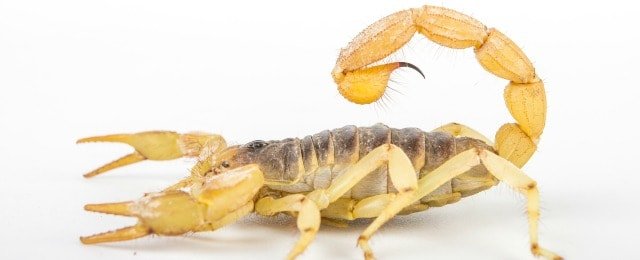
Scorpions are a common concern in warmer, arid parts of our service area, particularly in the southwestern United States and other hot, dry climates where they thrive. They are nocturnal arachnids that spend daylight hours hidden in cool, dark places and become active at night in search of insects and other small prey. While the sight of a scorpion in a home or yard is unsettling, most species encountered around residential properties deliver a sting comparable to a bee sting: painful but not medically dangerous for most healthy adults.
The exception that matters most is the bark scorpion, found throughout the desert Southwest, whose sting can cause more serious symptoms, especially in young children, older adults, and people with health conditions. Because scorpions are excellent climbers, expert hiders, and can survive for long periods without food or water, an infestation can persist quietly in wall voids, block walls, attics, and landscaping for a long time before it is noticed. Effective control depends on exclusion, since scorpions can flatten their bodies to slip through gaps as thin as a credit card, combined with targeted treatment of harborage areas and ongoing monitoring.
What It Looks Like
Scorpions have a segmented, armored body, eight legs, a pair of pincer-like pedipalps in front, and a long, curved tail ending in a venomous stinger. Coloring ranges from pale tan or yellow to dark brown depending on species, with adult sizes typically running two to six inches long.
- Bark scorpions: slender body, pale yellow-tan, often seen climbing walls or ceilings
- Desert hairy scorpions: larger and darker with fine hairs on the legs and tail
- All scorpions fluoresce a blue-green color under ultraviolet (blacklight) light, which makes nighttime inspections effective
Where It’s Commonly Found
Scorpions thrive in warm, arid climates and are most active at night, hiding during the day in cool, dark, moisture-retaining spots. Outdoors, they shelter under rocks, tree bark, woodpiles, landscaping timbers, and block walls. Around structures, they commonly enter through gaps in stucco, weep holes, expansion joints, and utility penetrations, and once inside they gravitate toward crawl spaces, garages, and bathrooms where humidity is higher.
Signs of an Infestation
- Live sightings, particularly after dark or when moving stored boxes, firewood, or rocks
- Shed exoskeletons (molts) left behind as scorpions grow
- Scorpions spotted in sinks or bathtubs, which they can fall into but not climb out of
- Confirmed activity when scanning the yard or interior with a UV blacklight at night
- Scorpions found in shoes, closets, or piles of laundry left on the floor
Health & Property Risks
Most scorpion stings cause immediate, sharp pain, localized swelling, and numbness, but are not medically dangerous to healthy adults. The Arizona bark scorpion is the exception in this region: its sting delivers a neurotoxic venom that can cause more significant symptoms, including numbness that spreads, muscle twitching, and difficulty breathing in severe cases. Young children, older adults, and people with health conditions are at higher risk of a serious reaction and should seek prompt medical attention after any bark scorpion sting, or if symptoms worsen after any scorpion sting.
Treatment Options
- Inspection: Daytime assessment of harborage areas plus a nighttime UV blacklight inspection to pinpoint active scorpion activity indoors and out
- Exclusion: Sealing cracks, gaps around stucco, weep holes, and utility line penetrations to block entry points
- Harborage reduction: Removing or relocating rock piles, woodpiles, and dense ground cover away from the foundation
- Granular and liquid perimeter treatment: Applying labeled residual products around the foundation, base of exterior walls, and known travel paths
- Crack-and-crevice dust application: Treating wall voids, expansion joints, and other hidden gaps where scorpions hide during the day
- Monitoring: Placing glue boards in garages, crawl spaces, and closets to track ongoing activity between visits
- Follow-up service: Repeat treatments are often needed, since scorpions can survive on very little prey and may re-enter from surrounding landscaping
Products & Methods We Use
- EPA-registered residual perimeter sprays and granular treatments for the foundation and yard
- Crack-and-crevice dust formulations for wall voids and structural gaps
- Glue board monitors for tracking indoor activity
- UV blacklight tools used during inspection to locate active scorpions
- Non-toxic, kid- and pet-safe treatment options available for interior application on request
Prevention Tips
- Seal cracks, weep holes, and gaps around stucco, doors, and windows
- Install door sweeps on all exterior doors, including garage service doors
- Remove rock piles, woodpiles, and leaf litter from around the foundation
- Trim tree branches and shrubs that touch the roof or exterior walls
- Reduce outdoor lighting near entry points, since it attracts the insects scorpions feed on
- Shake out shoes, towels, and clothing left on the floor, and check bedding before use in scorpion-prone areas