
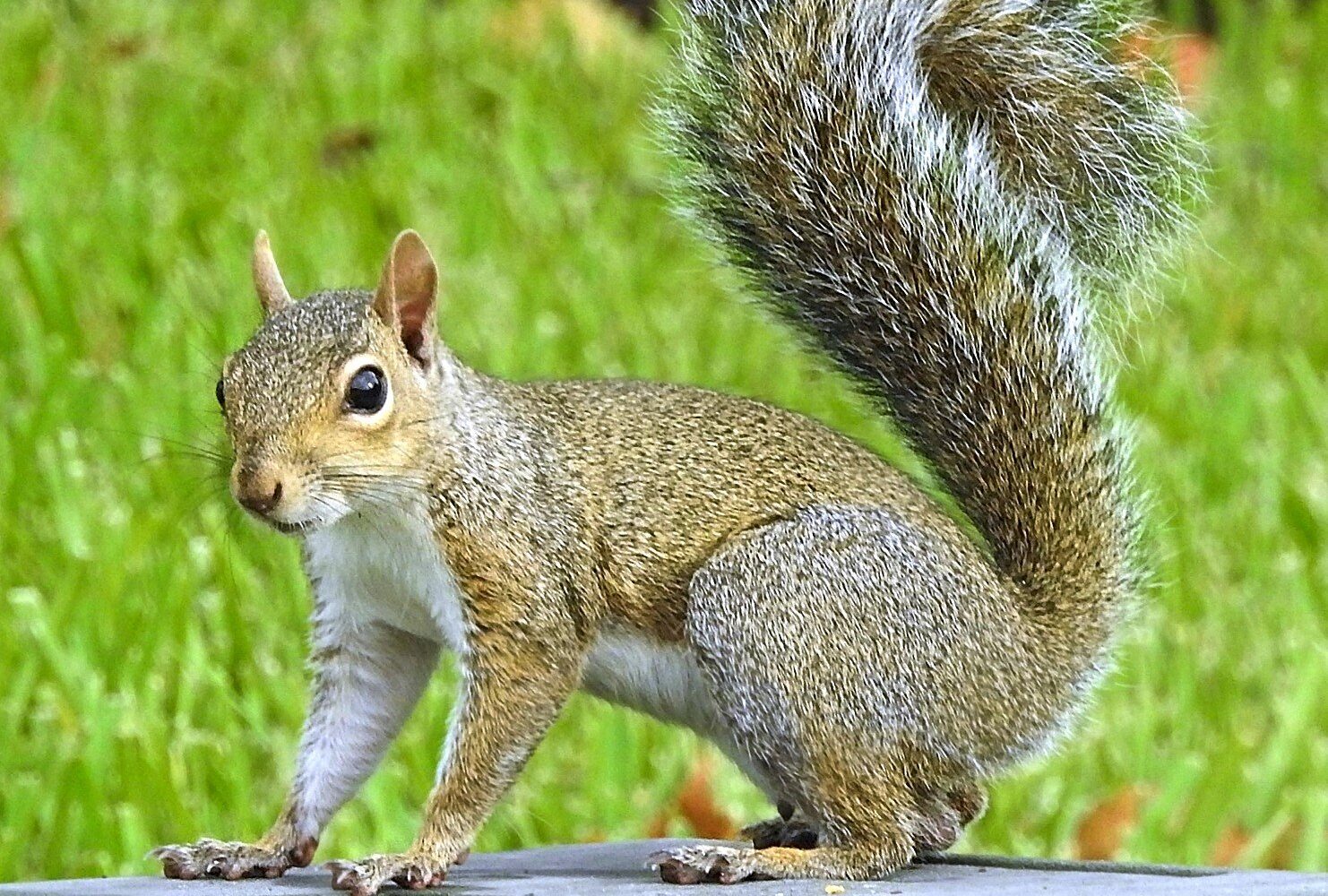
What It Looks Like
Squirrels are small to medium-sized rodents, typically 20-50 cm long including a long, bushy tail, with the eastern gray squirrel and fox squirrel being the most common nuisance species in North American neighborhoods. Coloring ranges from gray and brown to reddish, often with a lighter underside, and all species have large dark eyes, rounded ears, and continuously growing incisors used for gnawing. Their bushy tails aid balance while leaping between branches and rooflines, and their sharp claws make them excellent climbers capable of scaling brick, stucco, and downspouts with ease.
Where It’s Commonly Found
Squirrels are equally at home in wooded yards, gardens, and urban neighborhoods, building leaf nests (dreys) in trees or seeking out warmer, more sheltered spots once temperatures drop. Attics, soffits, chimneys, and wall voids are common entry points, especially near overhanging tree limbs or utility lines that provide easy access to the roofline. Once inside, they often nest in insulation near the warmest part of the structure and may return to the same denning site year after year if it isn't sealed.
Signs of an Infestation
- Scratching, running, or scampering sounds in the attic or walls, most noticeable early morning and evening
- Gnaw marks on fascia boards, soffits, wires, or wood trim
- Chewed entry holes around roof edges, vents, or eaves
- Accumulated nesting material (leaves, insulation, shredded debris) in attic spaces
- Squirrels seen repeatedly entering or exiting the same point on the roofline
- Droppings resembling large grains of rice near attic entry points
Health & Property Risks
The primary risk squirrels pose to homes is gnawing damage: their incisors grow continuously, so they chew on wood trim, soffits, and electrical wiring to keep them worn down, and chewed wiring in an attic is a genuine fire hazard. Their entry points can also let in moisture and other wildlife once created, and nesting in insulation can compress or soil it, reducing its effectiveness. While squirrels can bite if cornered or handled, they aren't typically aggressive toward people and don't pose a significant direct health risk in normal circumstances; the real cost is usually structural and electrical damage from their gnawing and nesting habits.
Treatment Options
- Inspection of the roofline, attic, and exterior to identify active entry points and nesting sites
- Installation of one-way exclusion doors that allow squirrels to exit but not re-enter, timed outside of birthing season when possible to avoid separating a mother from dependent young
- Humane live trapping and relocation where local regulations allow, since trapping and relocation rules vary by state and province
- Permanent exclusion sealing of entry points with heavy-gauge materials squirrels can't gnaw through once the animals have vacated
- Habitat modification such as trimming overhanging branches that provide roof access
Products & Methods We Use
- One-way exclusion doors
- Humane live traps
- Heavy-gauge exclusion mesh and metal flashing
- Chew-resistant sealants
- Attic insulation cleanup and sanitizing treatments
Prevention Tips
- Trim tree branches back a metre or two from the roofline to remove easy access points
- Install chimney caps and vent covers
- Inspect and repair soffits, fascia, and roof gaps regularly, especially after storms
- Store bird feeders and pet food away from the house, and clean up fallen seed and nuts
- Cap or screen attic vents with squirrel-proof mesh
- Contact a wildlife control technician promptly at the first sign of activity, before nesting is established