
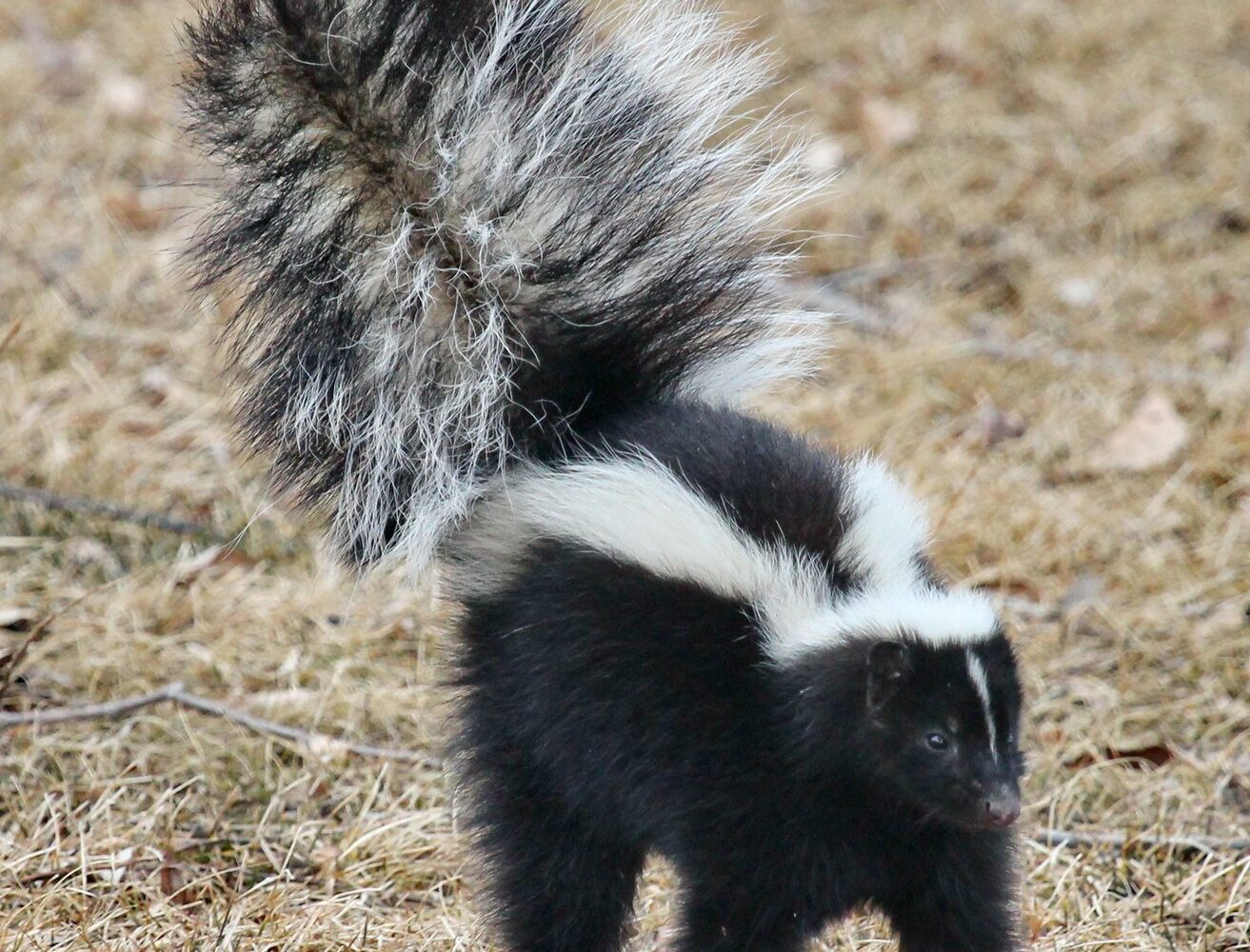
What It Looks Like
The striped skunk, the species most commonly encountered around homes, is a stocky, cat-sized mammal roughly 50-75 cm long including its bushy tail, with black fur and a distinctive white stripe or pair of stripes running from the head down the back and tail. Short legs, long front claws built for digging, and a slow, unhurried walk are all typical, and skunks rarely run unless startled.
Where It’s Commonly Found
Skunks favor yards, gardens, and open ground where grubs and insects are easy to dig up, and they den in burrows, brush piles, woodpiles, or, very commonly, in the sheltered space under decks, porches, sheds, and outbuildings. They're opportunistic and will use an existing burrow dug by another animal rather than always digging their own, and a den site is often reused across seasons.
Signs of an Infestation
- Small, cone-shaped holes or patches of overturned lawn where the skunk has dug for grubs
- A strong, musky odor near a suspected den site, even without a spray incident
- Digging or disturbed soil along foundations, decks, and garden beds
- Sightings of a skunk foraging at dusk or during the night
- Tracks showing long claw marks, especially in soft soil or snow
- A sudden strong spray odor, often after the skunk has been startled by a pet or person
Health & Property Risks
The most common concern with skunks is their defensive spray, an oily, sulfur-based secretion that can be sprayed a few metres with startling accuracy and is difficult to fully eliminate from fabric, fur, and outdoor surfaces once it sets in. Skunks are also one of the wildlife species that can carry rabies, so any skunk behaving erratically, appearing disoriented, or active in full daylight should be treated with caution and reported rather than approached. Beyond the odor and disease risk, skunks dig for grubs in lawns and garden beds, leaving small holes and patchy turf damage, and a den established under a deck or shed can create ongoing odor problems even without a spray event.
Treatment Options
- Inspection to confirm active den locations under decks, sheds, porches, or foundations
- Humane live trapping and relocation performed with care to avoid triggering a spray response, where trapping and relocation is permitted under local wildlife regulations
- One-way exclusion doors placed at den entrances to allow the skunk to leave without re-entering
- Grub control and lawn treatment to remove the food source drawing skunks to dig
- Exclusion sealing of gaps under structures once the den has been vacated
Products & Methods We Use
- Humane live traps designed for low-stress skunk handling
- One-way exclusion doors
- Exclusion mesh and barriers for decks and foundations
- Grub control treatments for lawns
- Odor-neutralizing treatments for affected areas
Prevention Tips
- Treat lawns for grubs if digging damage is recurring, since grubs are the main food draw
- Install mesh or hardware cloth barriers around the base of decks, porches, and sheds
- Secure trash cans and remove outdoor pet food at night
- Seal foundation and crawlspace gaps that could serve as a den entrance
- Keep woodpiles and brush piles away from the house
- Avoid approaching or cornering a skunk, and keep pets leashed or supervised in the yard at dusk and night when skunks are most active