
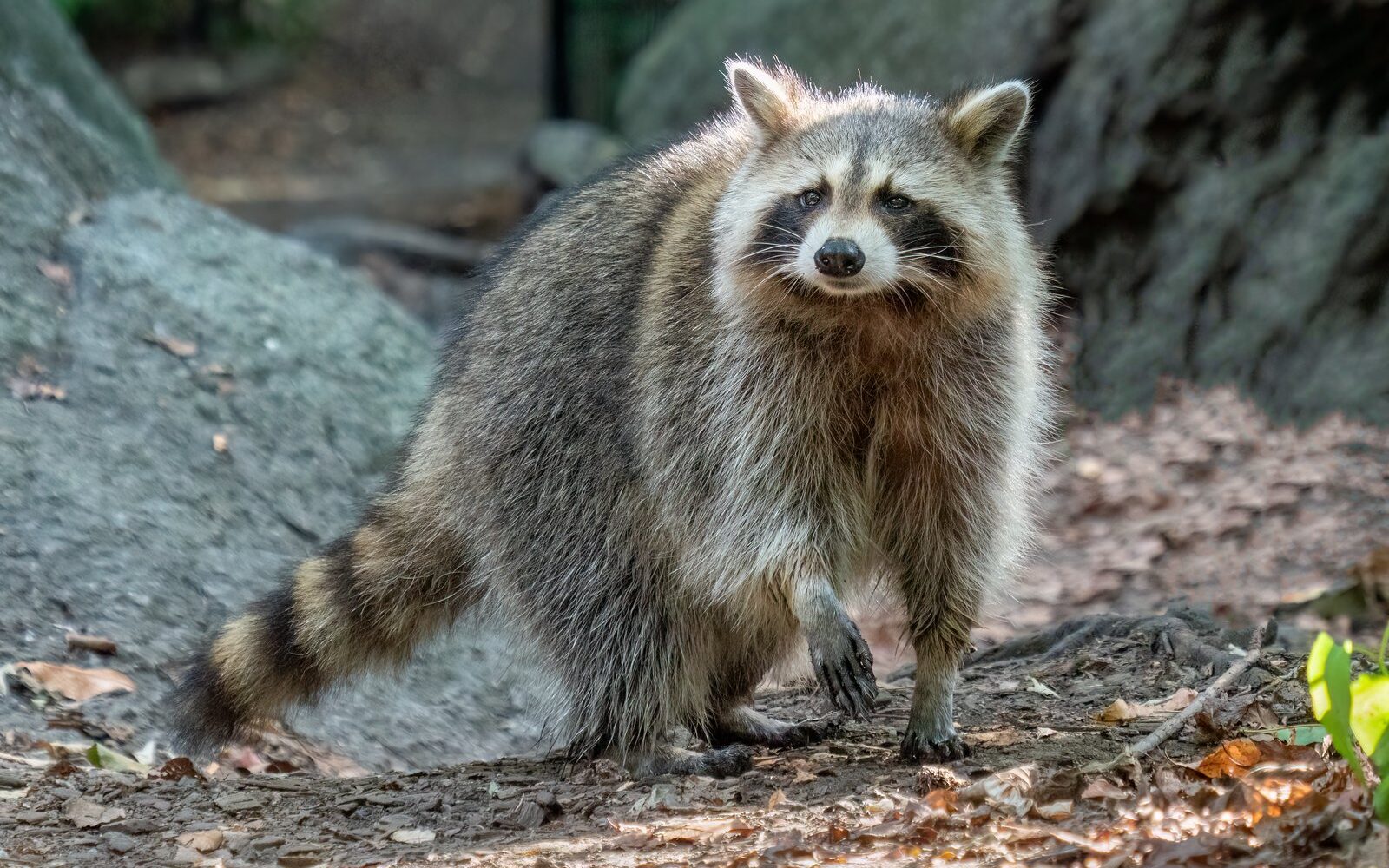
Raccoons (Procyon lotor) are highly intelligent, adaptable mammals found throughout most of the US and Canada, with growing urban and suburban populations that have learned to thrive alongside people. Their dexterous front paws, near-human hand-like grip, and problem-solving intelligence make them exceptionally good at opening latches, prying open vents, and getting into attics, chimneys, sheds, and garbage containers that would keep out most other wildlife.
For homeowners, a raccoon isn’t just a messy visitor. A female raccoon (a ‘sow’) looking for a den site will readily tear into roof vents, soffits, or chimney caps to create a safe, warm space to raise her kits, often causing significant structural damage in the process. Raccoons are also a leading rabies vector species in North America and can carry a roundworm parasite shed in their droppings that poses a real health risk to people and pets. Because raccoons are strong, resourceful, and can become aggressive when defending young, removal requires humane methods, correct timing, and careful, professional handling rather than DIY trapping.
What It Looks Like
Raccoons are stocky mammals typically 40-70 cm long plus a bushy, ringed tail, weighing between 4.5 and 14 kg. They are easily recognized by their black facial "mask" markings, grayish-brown fur, and dexterous front paws that resemble small hands. Raccoons are excellent climbers and have a distinctive waddling gait when moving on the ground.
Where It’s Commonly Found
Raccoons are highly adaptable and commonly den in attics, chimneys, crawlspaces, and wall voids, especially when a female is seeking a secure spot to raise young. Outdoors, they shelter under decks, sheds, and porches, and in tree hollows near a reliable food source. They are most active at night and are drawn to residential areas with accessible garbage, pet food, or gardens.
Signs of an Infestation
- Loud thumping, scratching, or vocalizing noises in the attic or chimney, particularly at night
- Torn or pulled-back roof shingles, vents, or soffits where raccoons have forced entry
- Large, tubular droppings often deposited in a consistent latrine area
- Overturned trash cans, scattered garbage, or damaged garden areas
- Matted insulation and a strong odor in attics used as a den site
- Visible tracks resembling small human handprints in mud or snow
Health & Property Risks
Raccoons can carry rabies and are a primary rabies vector species in many parts of the country, making any direct contact a serious concern. Their droppings can contain raccoon roundworm (Baylisascaris procyonis), which is dangerous if accidentally ingested, so latrine areas should never be cleaned without proper protective equipment. Beyond disease, raccoons cause significant property damage by tearing into rooflines, insulation, ductwork, and soffits to create den access, and a cornered raccoon or a mother protecting young can become aggressive.
Treatment Options
- Inspection to locate den sites, entry points, and confirm whether young are present, since a mother with kits requires a different approach than a lone adult
- Humane live trapping using appropriately sized cage traps placed along travel routes or near den entrances
- One-way exclusion doors installed at the primary entry point once it's confirmed no young remain inside, allowing the raccoon to leave but not return
- Hand removal of young when necessary, followed by reuniting them with the mother outside the structure before completing exclusion
- Permanent sealing of entry points with heavy-gauge, chew-resistant materials after the den has been fully vacated
- Attic and insulation cleanup, including decontamination of latrine sites and damaged materials
- Compliance with state trapping and relocation regulations, since many jurisdictions restrict how nuisance wildlife can be captured and relocated
Products & Methods We Use
- Humane live cage traps sized for raccoons
- One-way exclusion doors for attic and chimney entry points
- Heavy-gauge steel mesh and chew-resistant sealants for permanently closing access points
- Chimney caps and reinforced vent covers
- Personal protective equipment for safe handling of latrine sites and contaminated insulation
- Enzyme-based cleaners and odor-neutralizing treatments for den decontamination
Prevention Tips
- Secure trash cans with locking or clamped lids and store them in a garage or shed when possible
- Avoid leaving pet food or bird feeders accessible outdoors overnight
- Install chimney caps and cover roof and attic vents with sturdy mesh
- Trim tree branches away from the roofline to reduce climbing access
- Seal gaps around the roofline, soffits, and foundation before raccoons look for a denning site
- Install motion-activated lights or deterrents around decks, sheds, and porches where raccoons might try to den